Last Updated on September 23, 2026 by Umar Farooq
Jumping jack vs plate compactor comes down to soil type and space, and not, despite the name, to which one is more fun to watch. A jumping jack (also called a rammer or tamping rammer) pounds the ground with a small shoe several hundred times a minute. That impact squeezes air and water out of cohesive soils like clay and silt, and the machine fits in trenches and tight corners. A plate compactor vibrates a wide flat plate thousands of times a minute, which shakes granular material like sand, gravel and crushed base stone into a dense layer fast. For a paver patio, the plate does most of the work. The jumping jack earns its place when the subgrade is clay, or when you're backfilling a trench or working against a wall.
Impact versus vibration: what each machine actually does
Both are walk-behind machines with a small engine. One hits, one shakes.
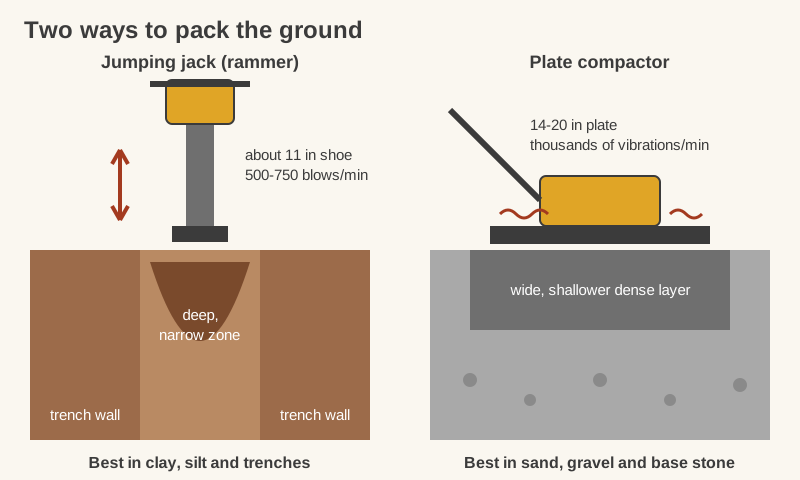
Jumping jack. The engine drives a crank and a spring-loaded ram inside a tall leg. The machine lifts off the ground and slams its shoe down, typically around 500 to 750 blows per minute, according to this tamping rammer vs plate compactor comparison. The shoe is small, usually around 11 inches across. Each blow puts a lot of force into a small area, so the energy reaches deep and kneads sticky soil together. (It also kneads the operator a bit. Nobody mentions that on the rental tag.)
Plate compactor. A spinning eccentric weight makes a wide plate vibrate at a much higher frequency, in the thousands of vibrations per minute. The force is spread over a plate usually 14 to 20 inches wide on rental machines. Granular particles rattle into the gaps between their neighbors and lock together. For the mechanics, see our explainer on what a plate compactor is.
I went looking for a source that disagreed with the basic split and couldn't find one. Wikipedia's tamper tool entry says it plainly: the jumping jack suits cohesive, clay-heavy soils, and the plate compactor suits granular materials like gravel and sand.
Jumping jack vs plate compactor, side by side
| Jumping jack (rammer) | Plate compactor (forward) | |
|---|---|---|
| Action | High-impact blows, shoe lifts and strikes | High-frequency vibration, plate stays on the ground |
| Rate | About 500–750 blows per minute | Thousands of vibrations per minute |
| Footprint | Small shoe, about 11 in wide | Plate about 14–20 in wide |
| Best soils | Clay, silt, mixed cohesive fill | Sand, gravel, crushed stone, paver base |
| Where it shines | Trenches, footings, post holes, along walls | Open patios, walkways, driveways, over laid pavers |
| Coverage speed | Slow; small shoe, you walk it along | Fast on open ground |
| On pavers | Never; it will crack them | Yes, with a urethane pad |
| Handling | Tall, top-heavy, bounces; tiring to guide | Low, walks itself forward; easy to steer |
| Rental | Common at rental stores | Common at rental stores |
Clay and silt call for the jumping jack
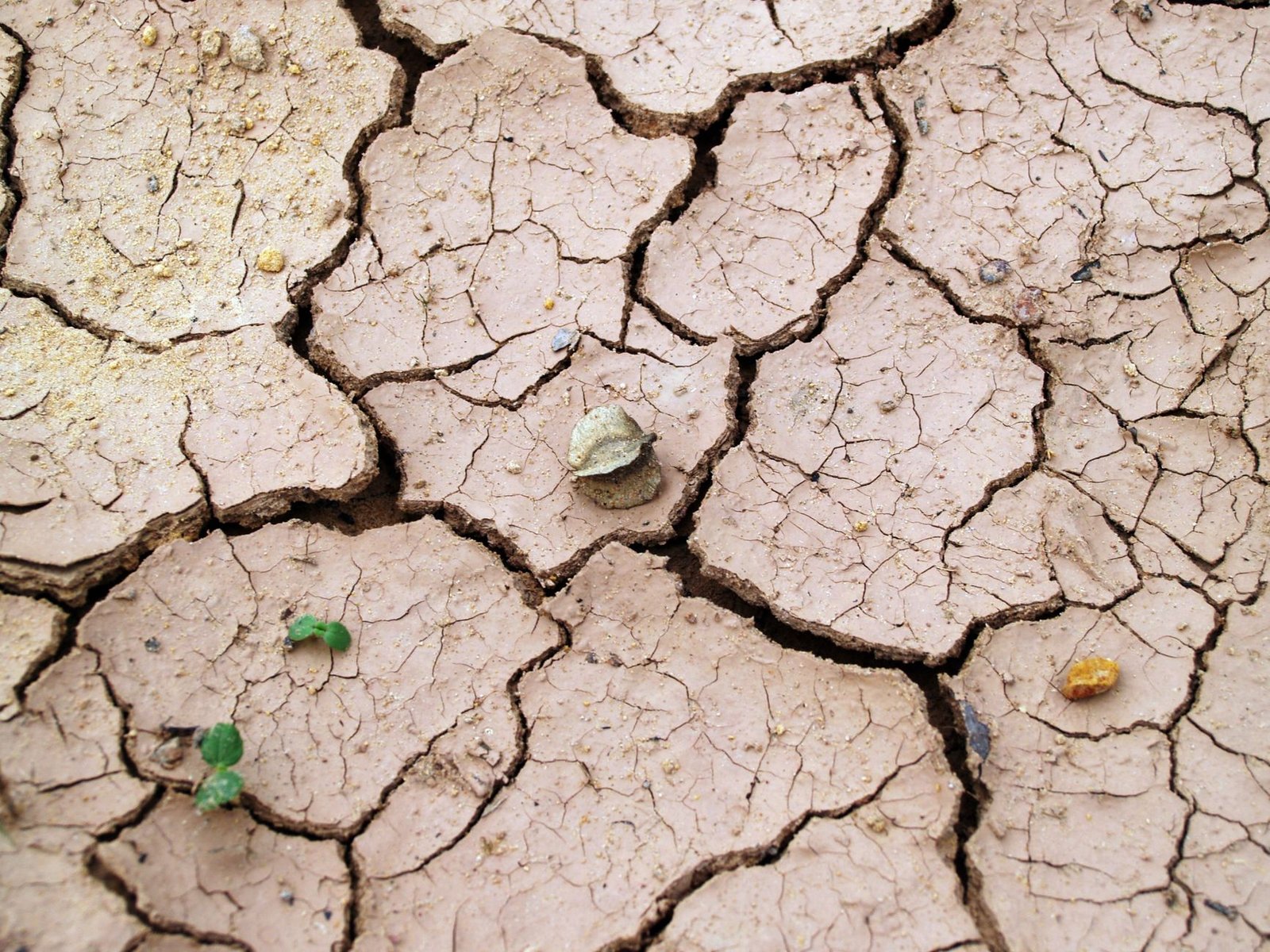
Clay particles are microscopic and flat, and they stick to each other and hold water. Vibration doesn't slide them into a tighter pack. It mostly makes the soil bounce, and wet clay can "pump" or ooze out from under a plate. A rammer's heavy, repeated blows force the particles together and push out trapped air and water, much like kneading dough, if dough fought back.
That matters on a paver job when the excavation bottoms out in clay. The subgrade has to be firm before any base stone goes on. With a clay subgrade:
- Get the moisture right first. Clay that's too wet can't be compacted by anything. Clay that's bone dry and cracked, like the photo above, needs a light watering and time to soak in. Squeeze a handful: it should hold together without smearing water on your palm.
- Ram it, then check it. Walk the rammer over the whole floor of the excavation in overlapping passes. Your boot heel should barely mark the surface when you're done.
- Then switch machines. Once the base stone goes down, the plate takes over.
Clay also means a deeper base: ICPI adds 2 to 4 inches to the usual 4-inch patio minimum on wet or weak soil. Many installers put down geotextile there too. Our paver base guide covers both.
Sand, gravel and base stone call for the plate
Granular material is the plate compactor's home turf. Crushed stone, road base, concrete sand and sandy soils respond to vibration because the particles can slide and rotate into place. A plate covers a patio base quickly and leaves a flat surface, and the pavers can only be as flat as the stone under them.
A rammer on the same gravel base is the wrong tool. It's slow, it leaves a dimpled surface of shoe prints, and it kicks loose stone around rather than knitting it together. The finished base looks like it was compacted by a very determined pogo stick. The plate is also the only one of the two that can go over laid pavers, with a pad fitted, to set them into the bedding sand.
Trenches, footings and tight spots
Width decides the machine. A plate compactor needs room to travel and turn, and it can't reach the bottom of a trench narrower than its plate. A jumping jack's shoe fits in a trench a little more than a foot wide and compacts the backfill in layers as you fill it. That makes the rammer the standard tool for:
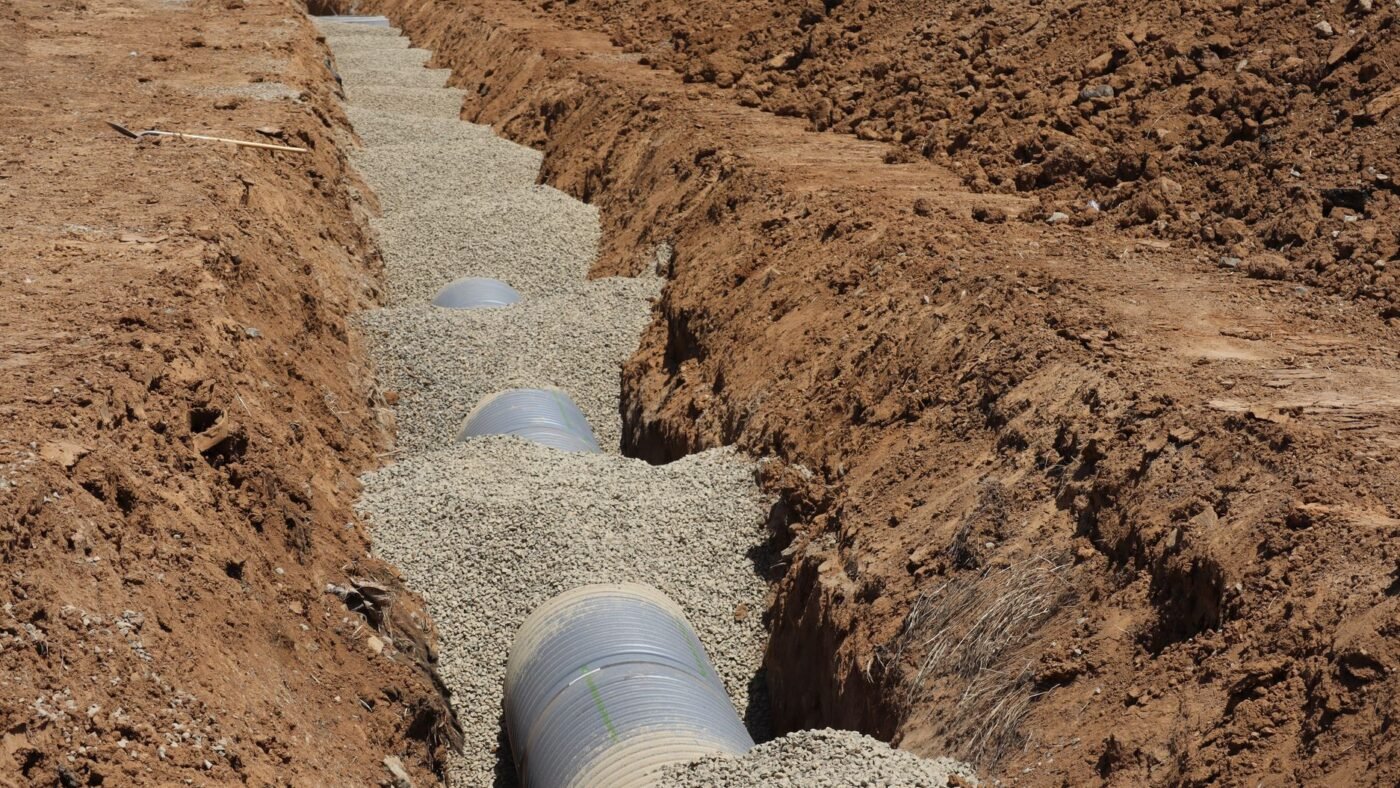
- Backfill over drain pipes and utility lines.
- Footings for a seat wall, pergola posts or a step foundation.
- The strip along a house wall or retaining wall where a plate's front edge can't get close.
- Around catch basins, downspout boots and other obstacles.
Before digging any trench, contact 811. The call 811 service arranges for buried utility lines to be marked for free, and a rammer bouncing on an unmarked gas line is not a risk worth taking. Near the marks, dig by hand.
Speed and coverage on an open patio
On open ground, the plate wins easily. Its wide plate and self-propelled walk cover a typical backyard patio base in a few overlapping passes per lift. The same area with a small rammer shoe takes far longer, and hours of guiding a bouncing, top-heavy machine wear out your arms and back.
The plate's weak spot is the edges. The first few inches along a wall, a step or an existing slab are hard to reach, and there a rammer or a steel hand tamper finishes the job.
Using both machines on one paver project
On a patio over clay, the two machines divide the job cleanly:
- Excavate to depth and remove organic topsoil.
- Jumping jack on the clay subgrade, at the right moisture, with overlapping passes. Also ram any trench for a drain line or a footing.
- Geotextile, if you're using it, laid over the compacted subgrade.
- Plate compactor on each lift of base stone, keeping lifts thin and the stone damp. ICPI pegs its 4 to 6 inch lift to a 7,000 lbf plate; a rental forward plate is smaller, so go thinner.
- Hand tamper or rammer along the walls where the plate can't reach.
- Plate compactor with a urethane pad over the laid pavers, then again as the joint sand goes in.
My blunt opinion: rent both, buy neither. On sandy or gravelly native soil, skip the rammer entirely and use the plate for the subgrade too. On clay, rent the rammer for the one day the subgrade needs it. A homeowner who buys a jumping jack for one patio owns a very loud garage ornament.
Noise, fuel and fatigue: the practical differences
- Engine. Many rammers run on 4-stroke gasoline engines; some use 2-stroke engines that need oil mixed into the fuel. Ask which one you're getting. Plates almost always run on straight gasoline.
- Handling. A rammer jumps and wants to wander, so you guide it constantly. A forward plate walks itself.
- Transport. Both are two-person lifts. Haul the tall rammer upright so fuel and oil don't leak.
- Exhaust. Both produce carbon monoxide, which can pool in a trench. Keep the air moving and don't lean into a deep, narrow cut while the engine runs.
Hit the clay, vibrate the gravel
Pick the machine by what you're compacting and where. Clay, silt and trenches go to the jumping jack, whose impact reaches deep into cohesive soil and whose small shoe fits where a plate can't. Sand, gravel, base stone and laid pavers go to the plate compactor, which is faster and flatter on open ground. On most DIY paver patios the plate does nearly all the work. If you hit clay, rent the rammer for that part, return it, and enjoy the quiet.
FAQ
Is a jumping jack better than a plate compactor?
Neither is better overall. A jumping jack is better for clay, silt and narrow trenches. A plate compactor is better for sand, gravel, crushed base stone and pavers across open areas. Many paver projects on clay use both.
Can I use a jumping jack for a paver base?
You can use it on a clay subgrade under the base and in tight spots along walls. For the crushed stone base itself, use a plate compactor. A rammer is slow on gravel and leaves an uneven, dimpled surface. Never run a rammer over laid pavers.
Can a plate compactor compact clay?
Poorly. Vibration makes clay bounce and pump instead of packing, especially when it's wet. A heavy reversible plate on thin, properly moist lifts does better than a light forward plate, but a jumping jack rammer is the usual tool for cohesive soils.
What is a jumping jack compactor used for?
It compacts cohesive soils and backfill in confined spaces: utility and drain trenches, footings, post holes, and strips along foundations and retaining walls. Its small shoe and high-impact blows reach deep into clay.
How wide a trench can a jumping jack fit in?
A typical rental rammer has a shoe about 11 inches wide, so it works in trenches a little over a foot wide. A plate compactor needs a trench wider than its plate, plus room to steer.
Should I rent a jumping jack or a plate compactor for a patio?
For most patios, rent a plate compactor. Add a jumping jack only if the excavation reaches clay that needs compacting, or if you have trenches or footings to backfill.