

Last Updated on October 20, 2026 by Umar Farooq
Limestone screenings for pavers are the finely crushed stone left over when a quarry makes gravel, and they work as neither bedding nor joint filler. The Concrete Masonry & Hardscapes Association's guide specification says it directly: "Do not use limestone screenings, stone dust, or sand for the bedding sand material that does not conform to… ASTM C33." Under pavers, screenings are a tolerated base for foot traffic in some regions, not a recommended one, and the limestone version carries an extra problem called efflorescence.
The confusing part is that some bags and supplier pages say the opposite. This page sorts out who says what, layer by layer.
What a yard means by screenings
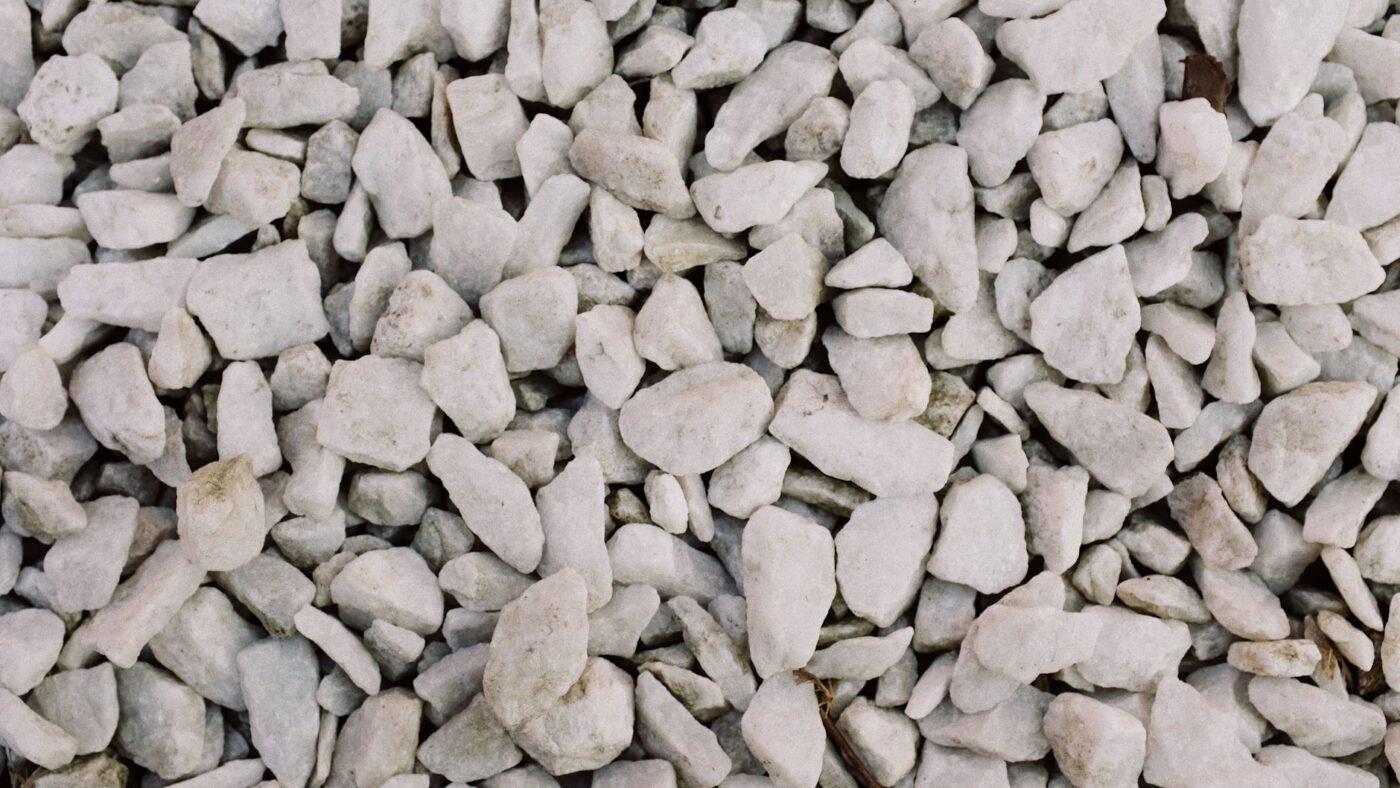
Screenings, stone dust, crusher fines and "limerock screenings" are mostly one family: crushed rock, graded from small chips down to powder. The Sakrete bag from King Packaged Materials is sold as limestone screenings that "pass a 5 mm (3/16 inch) screen." One supplier lists its grade as 1/4 inch minus, with a texture finer than gravel and close to coarse sand.
That fine fraction is the whole story. It lets screenings pack tight, and it is also why they hold water. Our stone dust vs polymeric sand article covers the joint-filler side, and sand for pavers covers what belongs in the bedding layer. This page is about the limestone version and the layers beneath.
The three layers screenings get used in

Bedding (1 inch). CMHA's rule is the quote above: ASTM C33 concrete sand, not screenings. Unilock goes further, saying stone dust absorbs water readily and releases it slowly, which can cause efflorescence and let pavers settle or shift. It adds that problems can take years to appear, because gentle weather and light traffic hide the weakness.
Base. CMHA's base is dense-graded aggregate, either local highway base or ASTM D2940, which is a crushed stone with a range of sizes. That is not the same product as screenings. A supplier page I opened lists screenings for leveling layers and says they are not ideal for structural bases. If you want the base, paver base material and crushed stone size for pavers list what to ask for.
Joints. CMHA calls for ASTM C144 sand with no more than 5 percent passing the No. 200 sieve. Screenings are exactly the opposite. See the stone dust article above.
Why limestone screenings for pavers worry people more
Pine Hall Brick's technical bulletin on bedding and joint sand is the best document I found on this. (It is written for clay brick pavers, but the sand and screenings points apply to sand-set pavers generally.) It says screenings "typically contain a high percentage of fine material and are subject to breakdown over time," and it strongly discourages them for vehicular areas. Then comes the line about limestone: testing at Clemson University documents that some types of screening, and some aggregates, cause efflorescence, and "limestone based screening (and aggregates) should be avoided, if possible, for this reason."
It adds that ICPI studies of well-performing sands found higher permeability, higher coarseness, lower shale, carbonate and chert content, and a predominance of silica. Limestone is a carbonate, so that is the opposite of the profile it wants. I could not find a source that says how likely efflorescence is on a given patio, so treat it as a known risk and not a certainty.
There is also an angularity point. Pine Hall cites research finding that the sharp edges of manufactured, crushed-rock sands chip away over time and make finer, rounder particles. That is the mechanism behind "subject to breakdown."
Where the bag disagrees with the spec
The Sakrete limestone screenings data sheet says the product "provides an excellent base for leveling interlocking pavers and patio slabs." Pour, level, compact, set the pavers, and fill the joints with polymeric or jointing sand. A different supplier lists the 1/8 inch minus grade as ideal for bedding.
So this is a real conflict, and I'm not going to pretend it away. The CMHA specification, Pine Hall and Unilock say no to screenings as bedding. Some bag and supplier pages say yes. For concrete pavers, I'd follow the people who make and specify the pavers, because their installation guides are what you would be measured against if something failed. My honest opinion: screenings save very little on a bedding layer that is only 1 inch thick, so the risk isn't worth the savings.
What to do when the yard only has screenings
- Ask for a sieve analysis. Pine Hall suggests specifying sieve analysis and certification for aggregates used under segmental paving.
- Ask what rock it is. If it is limestone and your pavers are concrete or clay, ask for concrete sand for the bedding and dense-graded stone for the base.
- Use them where the spec is silent. Informal paths and flagstone already laid on stone dust are the cases our stone dust article discusses.
A quick sizing check, my arithmetic from the Sakrete data sheet: its 30 kg (66 lb) bag yields about 0.67 cubic feet compacted at 4 inches. A 10 by 10 foot area at 4 inches deep is about 33 cubic feet, so roughly 50 bags. That is the scale of what you would be buying, and bulk is the only sane way to do it.
Sand on top, stone below, screenings elsewhere
For a paver patio, buy ASTM C33 concrete sand for the 1 inch bedding layer, dense-graded crushed stone for the base, and keep limestone screenings for paths and jobs where nothing needs to drain or interlock. If your supplier insists the bag is a paver base, ask for the paver maker's installation guide and read the line about bedding yourself. Screenings are a perfectly good material. They just aren't the one the spec asked for, and the patio will remember.
FAQ
Can you use limestone screenings under pavers?
For bedding, no. CMHA's guide specification says not to use limestone screenings or stone dust and to use ASTM C33 concrete sand. Some suppliers sell screenings as a base for leveling pavers, but the paver industry's own documents do not recommend it.
What is the difference between limestone screenings and stone dust?
In practice they are the same family, crushed rock with a lot of fine particles. Sakrete's limestone screenings pass a 5 mm (3/16 inch) screen. Stone dust is the more general name and screenings is the more specific product name from a yard.
Do limestone screenings cause efflorescence?
Pine Hall Brick cites Clemson University testing that found some screenings and aggregates cause efflorescence, and says limestone-based ones should be avoided if possible. How likely it is on a specific patio is not documented.
Can you use limestone screenings as a paver base?
CMHA's base is dense-graded aggregate, such as ASTM D2940, not screenings. One supplier lists screenings as not ideal for structural bases. Pine Hall discourages them for vehicle areas.
What should I use instead of limestone screenings?
Concrete sand (ASTM C33) for the 1 inch bedding layer and dense-graded crushed stone for the base.


