

Last Updated on October 20, 2026 by Umar Farooq
The right crushed stone size for pavers is 3/4 inch minus: angular crushed stone graded from 3/4 inch down to fine dust, compacted in a layer 4 to 6 inches deep. It goes under a 1 inch layer of concrete sand, never in place of it. Clean single-size stone such as No. 57 is the answer for permeable pavements, not for a standard sand-set patio, and that one distinction clears up most of the confusion online.
Stone yards sell this material under half a dozen names (3/4 minus, crusher run, road base, dense-graded aggregate, paver base), so the number on the ticket matters less than what the pile actually contains. Here is how to read it. For the depth and compaction side, see our guide to paver base.
Crushed stone size for pavers, layer by layer
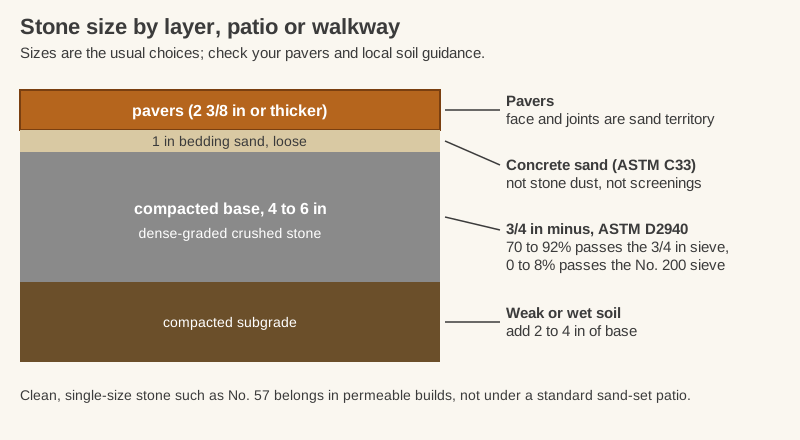
A paver patio is not one gravel decision. It is three, and each layer wants something different from its material.
- The base needs to compact into a hard, load-spreading slab. That wants a graded mix with fines in it, so smaller particles fill the gaps between the bigger ones.
- The bedding is only about 1 inch thick, screeded loose and never compacted before the pavers go on (ICPI Tech Spec 2). It needs to be sand. Stone of any size makes a lumpy surface and leaves voids under the pavers.
- The joints hold either polymeric sand or a fine jointing sand, so the stone question ends at the base.
My opinion, and I will back it with the spec: for a patio or walkway, buy the cheaper stone. Bulk 3/4 minus is normally the least expensive crushed product at the yard, and it is also the one that behaves like the specification says it should. Paying more for washed clean stone to go under pavers is paying more for a worse result.
What 3/4 minus actually is
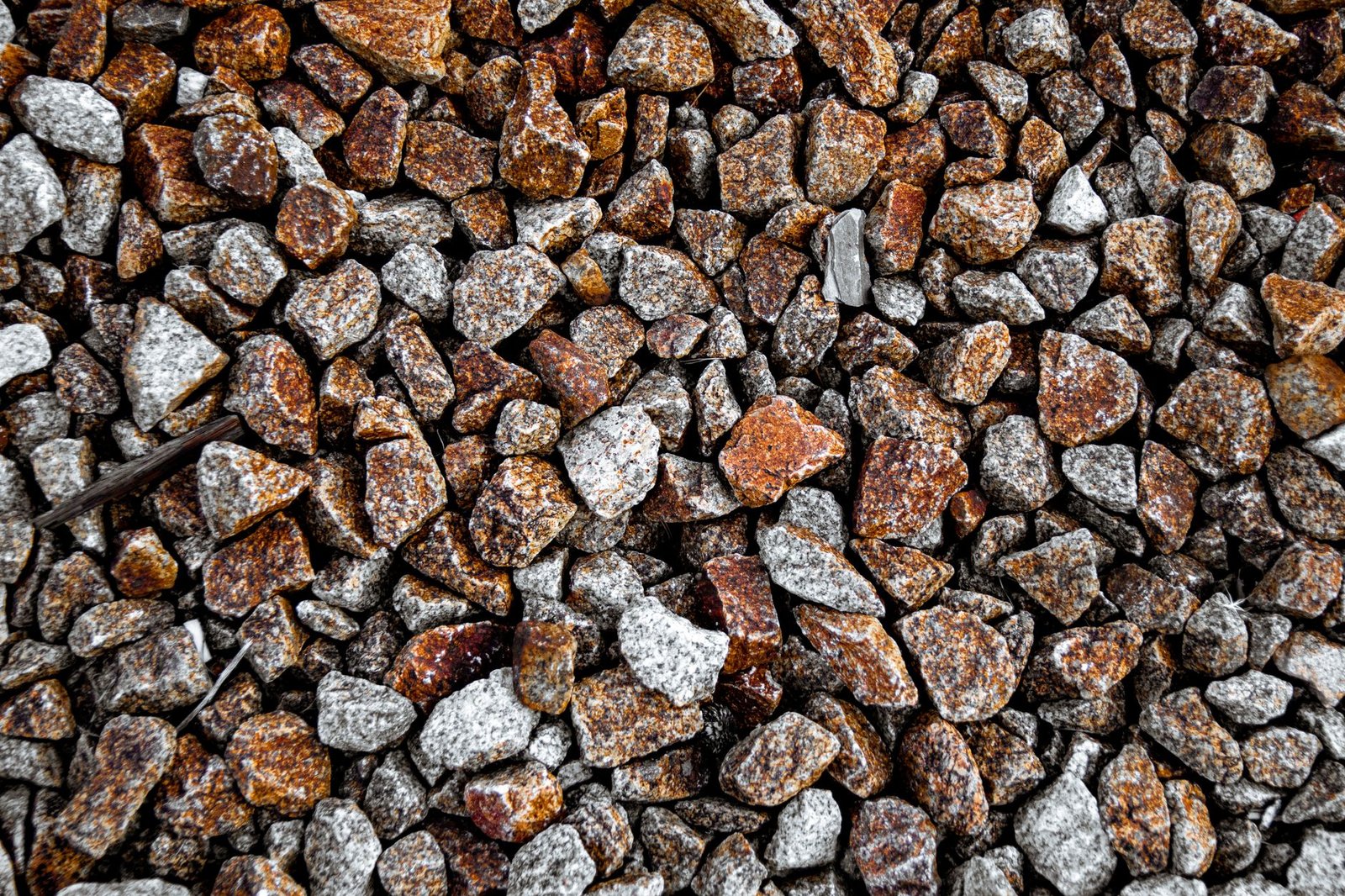
"Minus" means the stone is graded from the top size down to dust. ICPI's recommended grading for dense-graded aggregate base (it cites ASTM D2940) gives a feel for the mix: all of it passes a 2 inch sieve, 70 to 92 percent passes 3/4 inch, 50 to 70 percent passes 3/8 inch, and only 0 to 8 percent passes the very fine No. 200 sieve (ICPI Tech Spec 2). In other words, mostly stone with enough fines to bind, but not mud.
That grading is why the pile packs hard. Under a plate compactor, the fines settle into the voids between angular stones and lock them. Rounded pea gravel cannot do that, because round pieces roll past each other, which is why pea gravel is a poor base under pavers.
Two things to check when you buy:
- Angular, not rounded. Pick up a handful. It should look like broken rock, with sharp faces.
- Fines in the mix. If the pile looks like uniform marbles with no dust, it is the wrong product, whatever the sign says.
Ask the yard for the grading of the material, or for the state highway department base spec, which is what ICPI points to when no other specification exists. The same guide recommends spreading and compacting the base in 4 to 6 inch lifts with a 7,000 lbf reversible plate, and thinner lifts for smaller machines (ICPI Tech Spec 2).
Where clean No. 57 stone belongs
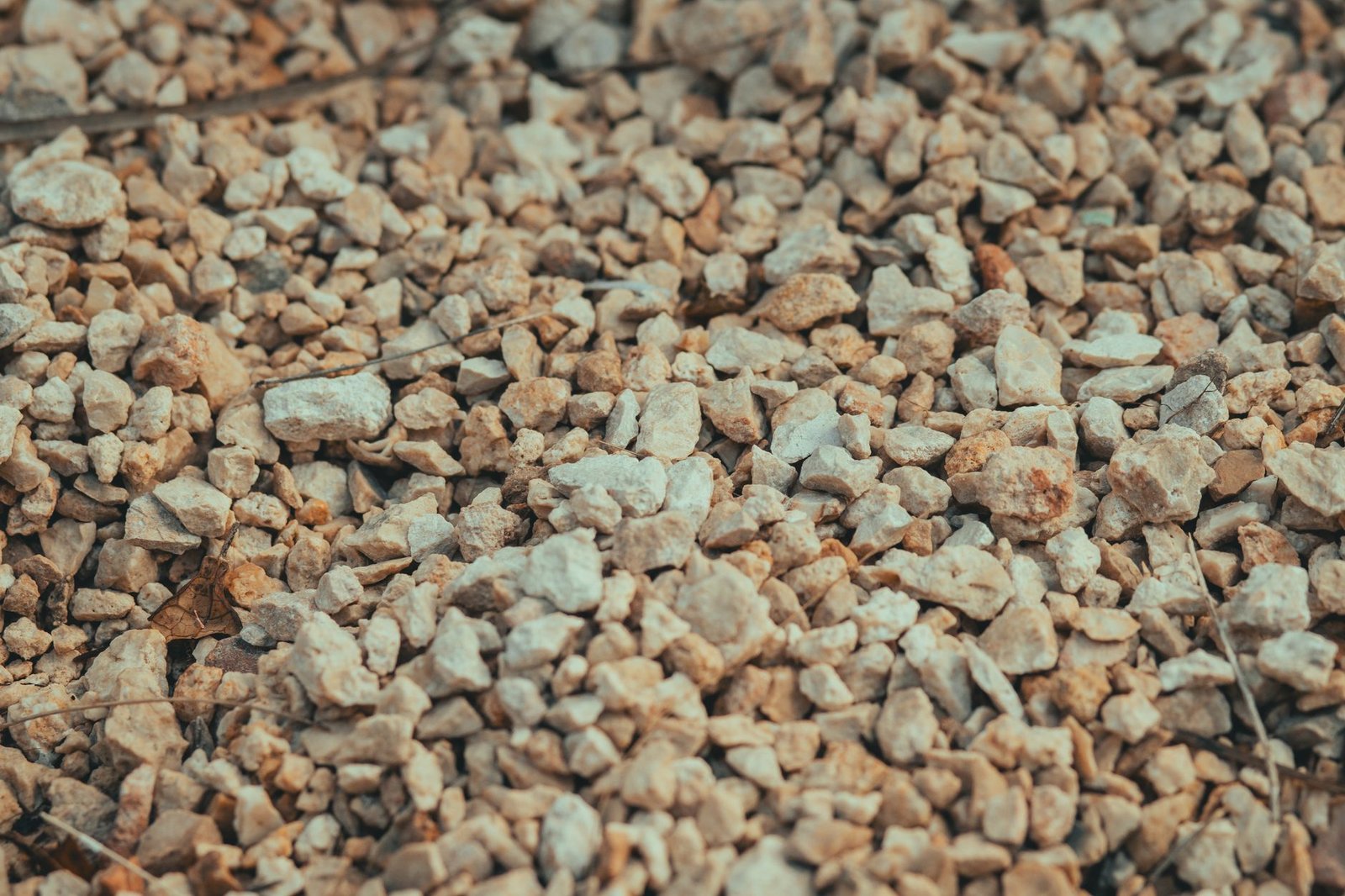
Clean stone, sold as No. 57 or "3/4 inch clean," has had the fines washed out. That leaves open spaces between the pieces, which is exactly what you want when water has to drain through the base.
CMHA's guide specification for permeable pavements builds the system from three open-graded layers: a 2 inch bedding course of No. 8 stone over a 4 inch base of No. 57 stone, over a subbase of No. 2 stone (CMHA guide specification PAV-GSP-016-21). The same document calls for washed stone with 90 percent fractured faces and less than 2 percent passing the No. 200 sieve. That is a different animal from a sand-set patio, and the layers have to be built together. If you are considering one, start with permeable concrete pavers.
Clean stone under a standard patio is a mistake for two reasons. It does not compact into a tight surface because there are no fines to lock it, and it lets bedding sand migrate down into the voids over time, which opens hollows under the pavers.
One exception worth knowing: in freezing climates, some installers prefer a clean-stone base for drainage. That is a design decision made with a drainage layout and a geotextile separator, not a casual swap. Check your local guidance before you do it.
Stone sizes by job, at a glance
| Layer or job | Typical material | Depth | Notes |
|---|---|---|---|
| Base, patio or walkway | 3/4 inch minus, dense-graded | 4 in minimum, more on weak or wet soil | ICPI Tech Spec 2 |
| Base, residential driveway | 3/4 inch minus, dense-graded | 6 in minimum | Add 2 to 4 in on wet, weak or cold ground |
| Bedding | Concrete sand (ASTM C33) | About 1 in, loose | Not stone dust, not screenings |
| Permeable pavement base | No. 57 clean stone | 4 in | Under 2 in of No. 8 bedding stone |
| Permeable subbase | No. 2 clean stone | Per design | No. 3 or 4 if No. 2 is unavailable |
| Drain trench | No. 57 clean stone | 3 in around the pipe | Wrapped in fabric |
Depths come from ICPI Tech Spec 2 and CMHA guide specification PAV-GSP-016-21. The bedding rules are covered in our guide to sand for pavers.
How much stone to order

Stone is sold by the ton or the cubic yard. A supplier calculator puts crushed stone at 2,700 to 3,400 pounds per cubic yard, depending on the type (Stone Center), so the tonnage swings by more than 20 percent depending on what you buy.
A quick example. A 12 by 12 foot patio is 144 square feet. At a 6 inch compacted base, that is 72 cubic feet, or about 2.7 cubic yards. At 1.35 to 1.7 tons per cubic yard, you are looking at roughly 3.6 to 4.5 tons. Order a little over, because compaction eats volume and a short pile on a Saturday is expensive to fix. Our paver base calculator guide does this for any size.
If you do not have a truck, ask the yard about delivery. A few cubic yards of stone is a bad candidate for a hatchback.
Buy 3/4 minus, then spend the savings on compaction
The best crushed stone size for pavers is the dull one: 3/4 inch minus under a 1 inch bed of concrete sand, compacted in lifts. Skip washed stone unless the design is permeable, skip pea gravel altogether, and put the money you save into a rental plate compactor. A cheap pile compacted properly beats an expensive pile compacted once.
FAQ
What size gravel should I use under pavers?
Use 3/4 inch minus crushed stone, graded from 3/4 inch down to fine dust, as the compacted base. It goes under a 1 inch layer of concrete sand, which is what the pavers actually sit on.
Can I use #57 stone for a paver base?
You can, but on a standard sand-set patio it compacts poorly and lets bedding sand leak into the voids. No. 57 is meant for permeable paver systems and drainage trenches, where open spaces are the point.
Is 3/4 minus the same as crusher run?
They are close cousins. Crusher run is the raw output of a crusher, usually with fines, while 3/4 minus is graded to a top size of 3/4 inch. Either can work if it is angular and contains fines, so ask the yard what is in the pile.
Can I use pea gravel instead of crushed stone?
Not as a structural base. Round pea gravel rolls past itself when compacted and never locks, so the patio settles. Pea gravel is fine as a decorative surface, not as a paver base.
How deep should the crushed stone base be?
At least 4 inches for patios and walkways, and at least 6 inches for residential driveways, adding 2 to 4 inches on wet, weak or cold ground (ICPI Tech Spec 2).
Do I need landscape fabric under the stone?
Not always. Geotextile is optional and is used where the soil stays saturated, freezes and thaws, or is clay or moist silt (ICPI Tech Spec 2).


