Last Updated on September 23, 2026 by Umar Farooq
A pea gravel paver patio combines solid pavers, where you walk, sit and set furniture, with loose pea gravel around or between them. It is the patio for people who want the crunch underfoot without the wobbly dinner chair. It works when both materials sit on the same compacted crushed-stone base, the gravel surface is kept about 1/2 inch below the paver tops, and an edge restraint separates any solid paver area from the gravel. Pea gravel is the surface layer only. It never goes under the pavers as a base.
That last point is where most DIY builds go wrong, so it gets its own section. First, the layout, because it decides how much edging, cutting and gravel you need.
Three pea gravel paver patio layouts that work
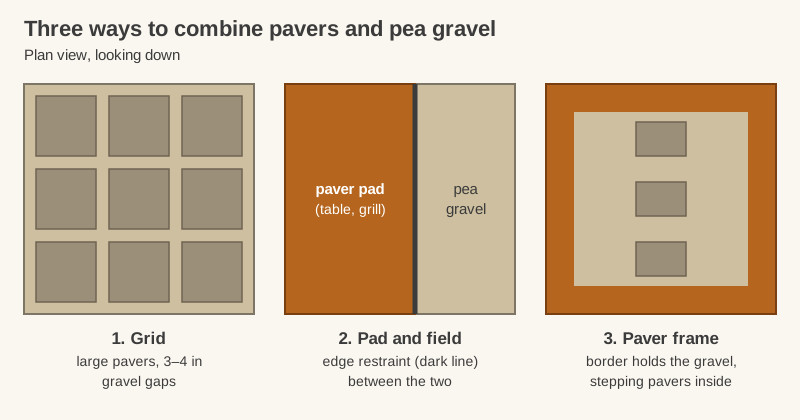
I scrolled through more pea gravel patio photos than I'd like to admit, and nearly every one is a version of these three:
1. Grid of large pavers with gravel gaps. Square slabs, typically 18 or 24 inches, are laid in rows with gaps of about 3 to 4 inches, and pea gravel fills the gaps. It looks light and informal, and wide gaps mean few cuts. The downside is that every paver is an island. Nothing locks it to its neighbors, so each one has to be bedded solidly on its own.
2. Solid paver pad plus a gravel field. A normal interlocking paver patio carries the table and grill, and a pea gravel area beside it holds lounge chairs, a fire bowl or planters. This is the most practical layout: the pad performs like any paver patio, and the gravel adds space cheaply.
3. Paver frame with a gravel center. A restrained paver border runs around the outside and holds a pea gravel field inside, sometimes with stepping pavers across it. The border doubles as gravel edging and a clean line against the lawn.
Pick the layout by use. Chairs that get pulled in and out every evening belong on pavers; gravel is for things that stay put. If the design runs out into a path, the approach for a paver walkway with gravel covers stepping pavers and path edging.
Pea gravel is a surface, never the base under pavers
One of the most common questions about this kind of patio is "can you use pea gravel for paver base?" The answer is no, and I say that having hoped, on your behalf, to find a manufacturer who says yes.
Pea gravel is small, rounded stone, usually about 3/8 inch. Round stones roll past each other instead of locking, so pea gravel never compacts into a firm platform. Pavers set on it rock, sink at the corners, and drift out of line the first time someone steps on an edge. A plate compactor makes it worse, because it shuffles the stones rather than packing them. Compacting pea gravel is like compacting a bag of marbles: a lot of noise, no progress.
The base under the pavers, and under the gravel zones too, should be angular crushed stone with fines, such as crusher run, road base or dense-graded aggregate. It locks up when compacted. Our comparison of paver base material covers the options, including open-graded stone for permeable builds.
One compacted base under both materials
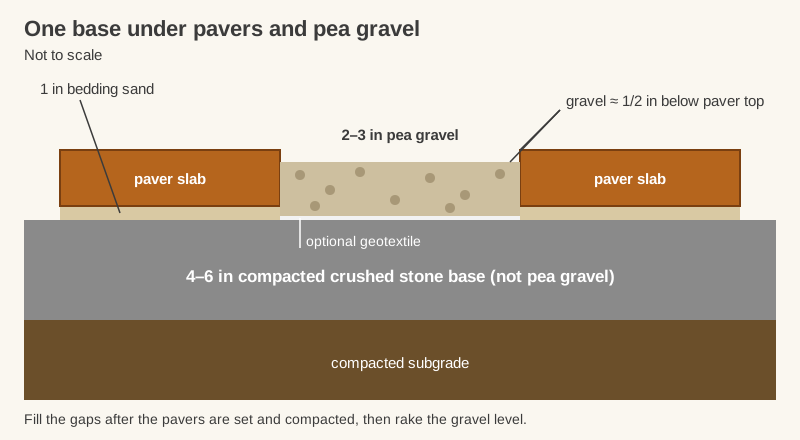
Excavate the whole patio footprint, not just the paver spots. A continuous base keeps pavers and gravel at stable heights relative to each other. If you dig only under the pavers, the gravel sits on soft soil, sinks, and gets pushed up between the pavers.
A typical build for a foot-traffic patio:
- Dig the full area to base depth plus sand plus paver thickness. Remove sod and topsoil down to firm mineral soil.
- Compact the subgrade. On clay, lay a geotextile before any stone goes in.
- Build 4 to 6 inches of crushed stone base (at least 4, plus 2 to 4 more on wet, weak or freezing ground), in lifts, compacting each one, and slope it about 1/4 inch per foot (2%) away from the house.
- Screed 1 inch of ASTM C33 concrete sand where pavers will go, leave it loose, and set the pavers.
- Compact the pavers into the sand before any gravel goes in.
- Fill the gravel areas with 2 to 3 inches of pea gravel and rake it level.
The lifts are the part I'd argue about. Across a whole patio footprint, six inches of stone run over once feels firm under your boots and is loose a few inches down, which is exactly where the slab corners will find it. The 4-to-6-inch lift in ICPI Tech Spec 2 is sized for a 7,000 lbf plate; lighter plates, which is what most rental counters stock, need thinner lifts. So on a rented plate, go thin: 2 to 3 inches, damp, overlapping passes. Rent it for a weekend and fit both uses inside it, base then pavers.
In the grid layout, the pea gravel depth is set by the paver thickness. With 2-inch slabs on a 1-inch sand bed, you have about 2 1/2 inches between the base and the finished gravel line. Thicker pavers mean deeper gravel, which feels softer underfoot. Keep it to 3 inches or less.
Some DIY builds skip the base and set slabs on sand over soil. In a warm, well-drained climate that can last a while. Where the ground freezes, or on clay, the slabs heave and tilt within a season or two.
Keeping pea gravel off the pavers and out of the joints
Loose gravel on a paver surface is a slip and scratch hazard, and it grinds into joints. Pea gravel has wanderlust. Four details keep it where it belongs:
- Set the gravel low. Finish the pea gravel surface about 1/2 inch below the top of the pavers. The stones settle into that small step instead of rolling onto the pavers.
- Fill solid-paver joints with polymeric sand. On a pad or frame of interlocking pavers, hardened joint sand stops pea gravel from working into the joints and prying them open.
- Don't let paths cross the gravel onto the pad. Every shoe through gravel carries stones onto the pavers, so keep the main route from the door on pavers.
- Consider a firmer gravel near the pavers. Angular 3/8-inch crushed chip stays put better than round pea gravel. Some use it in grid gaps and keep pea gravel for the open field.
Sweep strays back weekly in summer. It takes seconds, and it saves both the pavers and the mower blade.
The edge between pavers and gravel
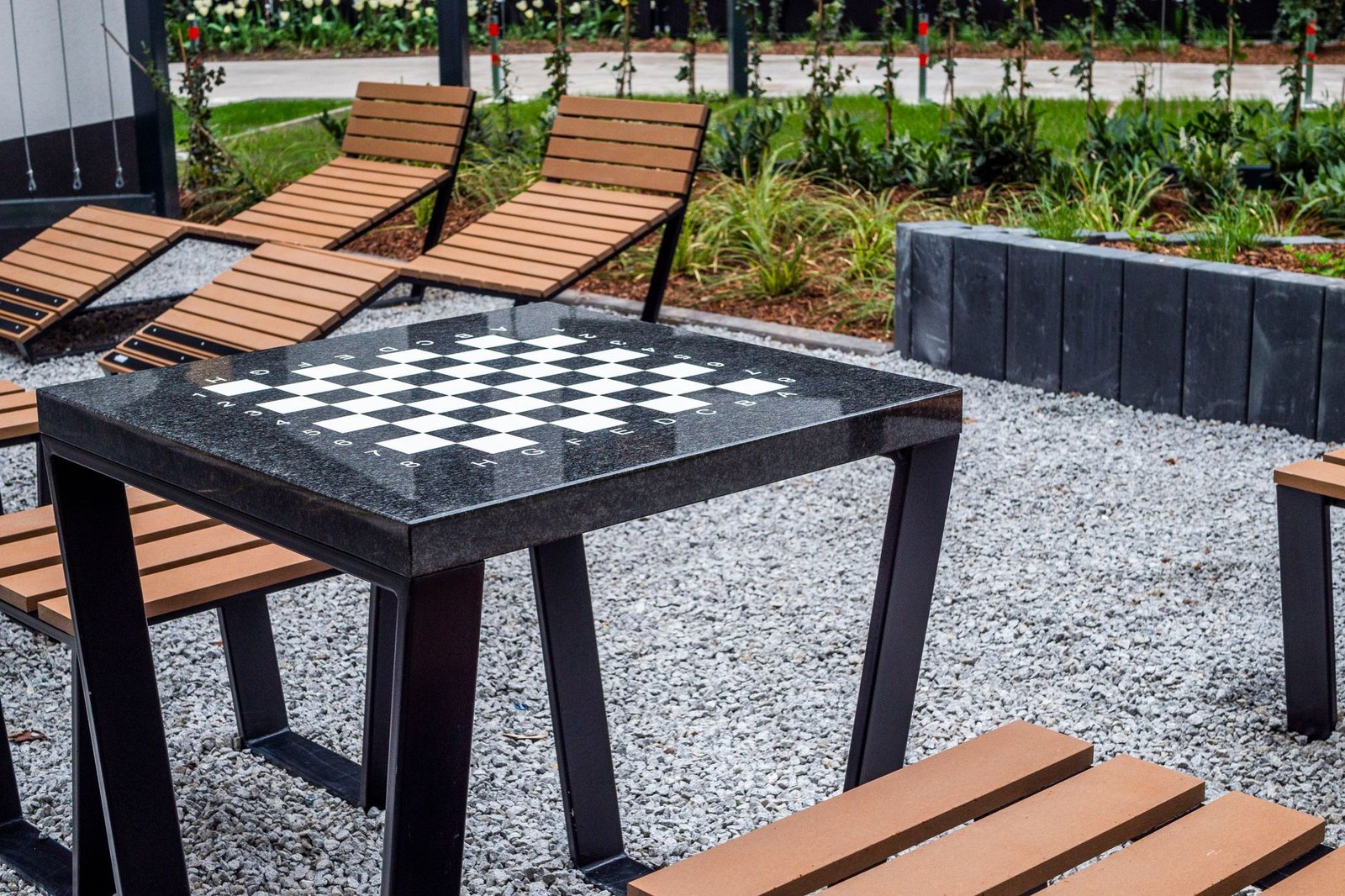
Gravel does not hold pavers in. A paver pad beside pea gravel needs the same edge restraint it would need beside a lawn, or the outside pavers creep into the gravel.
Options that work at the paver-to-gravel line:
| Edge | How it works | Notes |
|---|---|---|
| Aluminum or steel edging | Staked into the base against the paver edge | Low profile; the top can sit just below the paver surface so gravel covers it |
| Plastic paver restraint | Spiked into the base | Hidden under gravel; fine for foot traffic |
| Soldier course set in concrete | Border pavers bedded on a concrete haunch | The sturdiest option, and it doubles as a visible border |
On the outer edge, where gravel meets lawn or beds, you need a separate edging that stands about 1 inch above the gravel to hold it in. Steel, aluminum or a row of pavers or blocks all work. Choosing among them is covered in our guide to patio edging. Family Handyman's guide to stone, gravel and paver paths also sets metal edging about 1 inch above gravel for the same reason.
Where chairs and grills belong
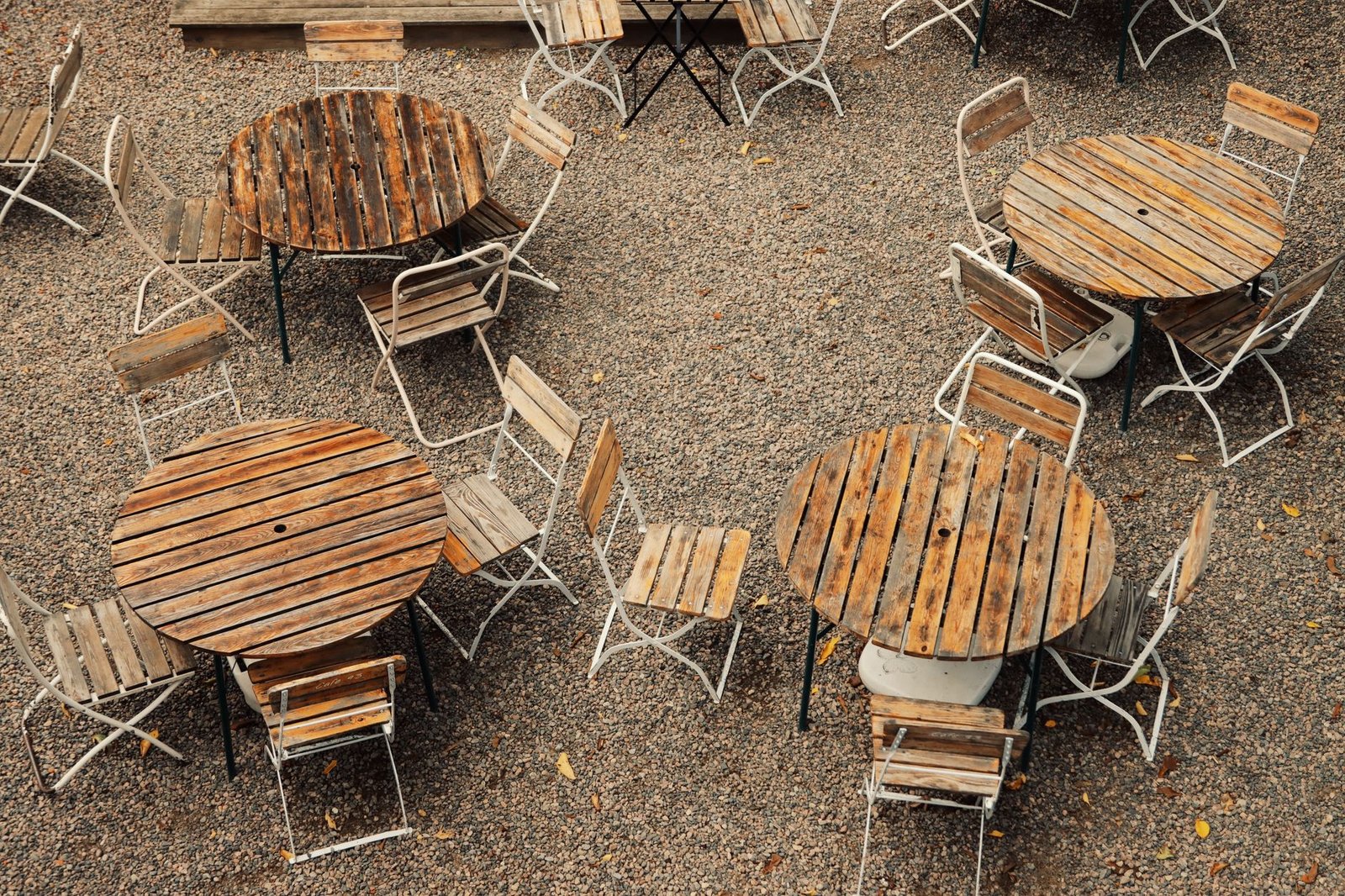
Pea gravel is comfortable to walk on and drains instantly, but it shifts under point loads. Chair legs sink, table legs rock, and a grill on thin legs settles unevenly. Rolling a cooler across it is an unplanned workout.
A few practical rules:
- Dining tables and chairs go on pavers. Chairs get pushed back and dragged every time someone stands up.
- Grills and fire pits sit on a paver pad, which is stable and doesn't scatter hot coals into loose stone.
- Lounge chairs, benches and planters are fine on gravel, because they are moved rarely and have wide feet.
- Keep pea gravel away from doors. Tracked stones scratch floors.
How much pea gravel to order
Pea gravel is sold by the cubic yard in bulk or in bags of about 0.5 cubic feet. One cubic yard covers about 162 square feet at 2 inches deep, or 108 square feet at 3 inches.
| Gravel area | At 2 in deep | At 3 in deep |
|---|---|---|
| 50 sq ft | 0.3 cu yd | 0.5 cu yd |
| 100 sq ft | 0.6 cu yd | 0.9 cu yd |
| 180 sq ft | 1.1 cu yd | 1.7 cu yd |
| 300 sq ft | 1.9 cu yd | 2.8 cu yd |
For a grid layout, subtract the paver area from the total patio area before you calculate. Gaps of 3 to 4 inches around 24-inch pavers make up only about a quarter of the surface. Add about 10% for the settling and raking that follow in the first few weeks. For comparison, the Love & Renovations pea gravel patio build used about one cubic yard to cover its 180-square-foot patio.
Living with the gravel: raking, leaves, weeds and snow
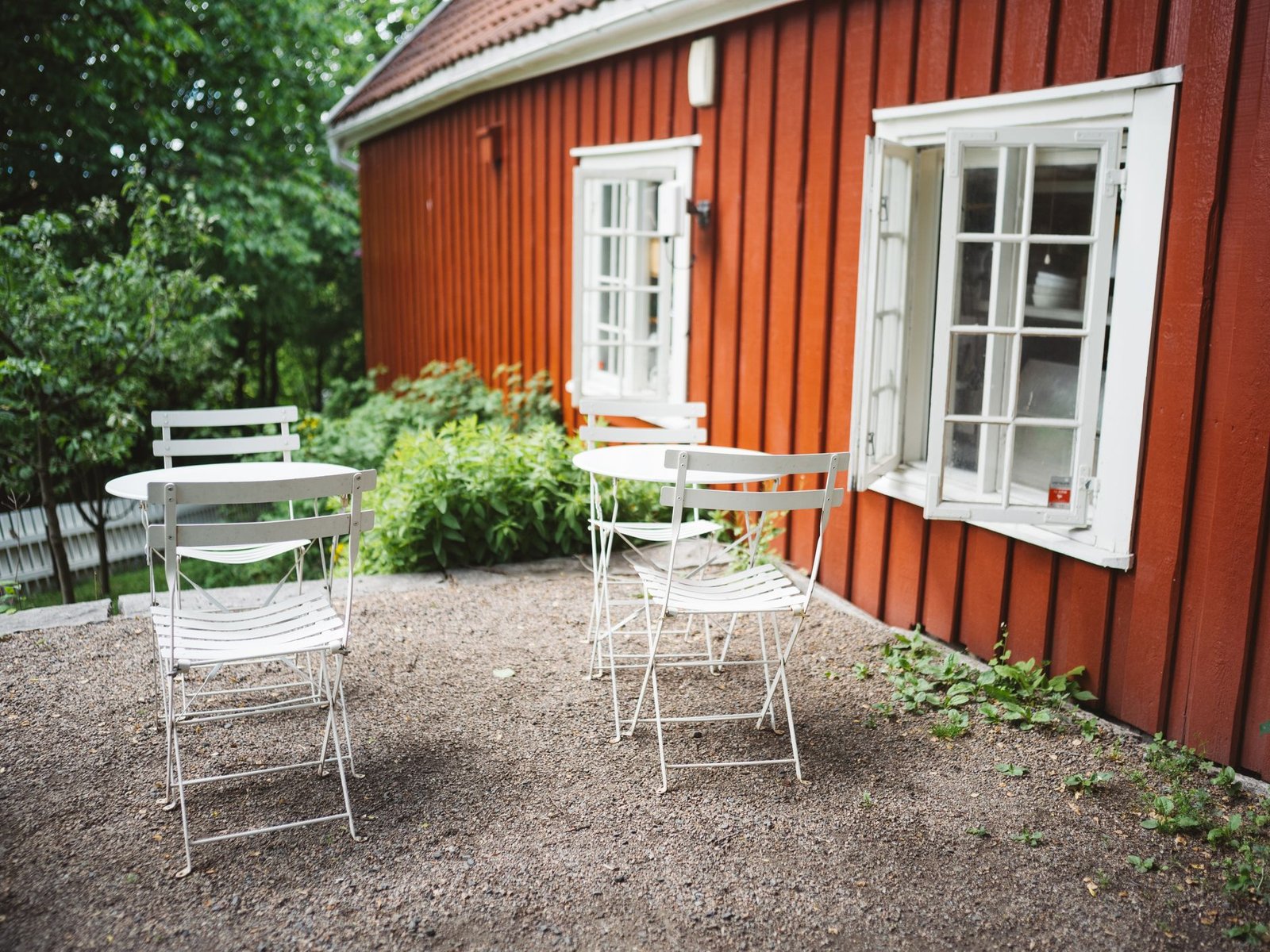
A pea gravel paver patio needs more attention than a solid one, but not much:
- Rake monthly to level ruts and pull scattered stones back from the edges.
- Top up every year or two. Pea gravel works down and leaves on shoes; a few bags restore the level.
- Remove leaves before they rot. Rotted leaves become soil among the stones, and that is what weeds grow in. A leaf blower on low clears them without moving the gravel.
- Pull weeds while they are small. Fabric under the gravel slows weeds from below, but seeds that land on top still sprout.
- Shovel, don't plow. Snow plows and snowblowers throw pea gravel. Shovel the pavers and leave the gravel areas alone.
Pave where you sit, gravel where you look
A pea gravel paver patio covers more ground for less money and gets a softer, garden-style look, if it is built properly. Put a crushed-stone base under everything and keep pea gravel off the base list. Set the gravel just below the pavers, and hold the paver edge with a real restraint. Put the table, chairs and grill on pavers, and leave the gravel for strolling. And if you hear a crunch from the kitchen floor, someone has walked the long way round again.
FAQ
Can you use pea gravel for a paver base?
No. Pea gravel is rounded and won't compact into a stable layer, so pavers set on it rock and sink. Use angular crushed stone with fines, such as crusher run or road base, compacted in lifts, and keep pea gravel for the surface.
How deep should pea gravel be between pavers?
Usually 2 to 3 inches over a compacted base, with the top about 1/2 inch below the paver surface. Deeper than about 3 inches feels soft and unstable underfoot.
Do you need landscape fabric under a pea gravel and paver patio?
It isn't essential. On clay soil, lay geotextile under the crushed-stone base to keep soil from mixing into it. A fabric between the base and the pea gravel slows weeds from below, but weeds still grow in debris that collects on top.
How do you keep pea gravel from moving onto pavers?
Keep the gravel surface about 1/2 inch below the paver tops, route foot traffic along the pavers, fill paver joints with polymeric sand, and sweep stray stones back regularly. Angular crushed stone moves less than pea gravel if migration is a real problem.
Is a pea gravel and paver patio cheaper than an all-paver patio?
Usually, yes. Gravel costs far less per square foot than pavers and needs no cutting or joint sand. The base preparation is the same, though, so the savings come from materials rather than labor.
Can you put patio furniture on pea gravel?
Lounge chairs, benches and planters work well. Dining chairs and tables don't, because the legs sink and wobble and the chairs are moved constantly. Put those on a paver pad.