Last Updated on September 23, 2026 by Umar Farooq
A paver walkway with gravel uses pavers for the walking surface and gravel around or beside them, either as stepping pavers set in a gravel bed or as a solid paver walk with gravel borders. It sounds like the easy version of a walkway, and in one sense it is: the gravel forgives. The lawn next to it does not. To last, it needs a compacted crushed-stone base under both materials, pavers set on sand about 1/2 inch above the gravel, and edging along both sides that stands about 1 inch above the gravel to keep it from spreading into the lawn. Most gravel walkway problems come from skipping one of those three things.
Below: layouts, gravel, the build and the edging. For a solid paver path without gravel, see our paver walkway installation guide.
Four paver and gravel walkway ideas
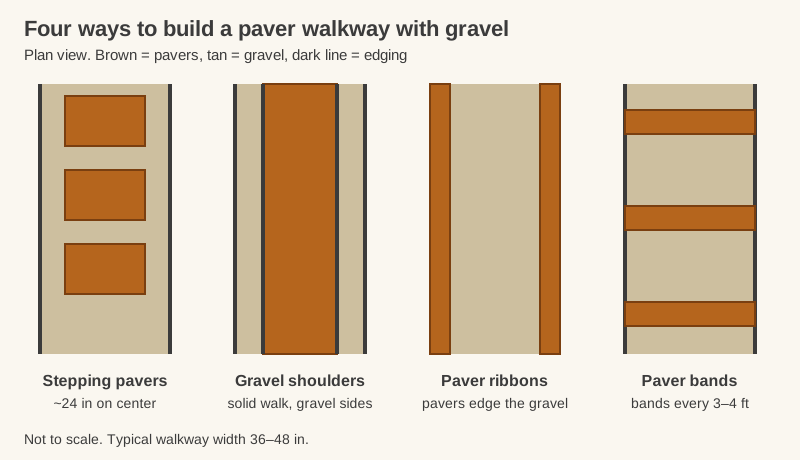
Most paver and gravel walkway ideas fall into one of four layouts. They differ in how much gravel you actually walk on, which matters more than looks.
Stepping pavers in gravel. Large pavers or slabs are set one stride apart in a gravel bed. It is the most informal look and the cheapest in pavers, but every other step lands in gravel unless the pavers are close.
Solid walk with gravel shoulders. A normal paver walkway runs down the middle, with 6 to 12 inches of gravel along one or both sides that nobody walks on. It softens the edge, catches roof drip and runoff, and gives the mower a clean line. This is the most practical layout for a front entry.
Gravel path with paver ribbons. A single row of pavers runs along each edge of a gravel path. The pavers act as the edging and frame the path. People walk on the gravel, so choose a firm gravel (see below).
Gravel path with paver bands. Bands of pavers cross the gravel every 3 to 4 feet, like a ladder. The bands break up long runs of gravel, give firm footing at intervals and slow gravel from washing downhill on a gentle slope.
Which to choose: if the path carries daily traffic, strollers, wheelbarrows or trash cans, choose the layout with the most paver surface underfoot. A gravel path with ribbons looks great, but rolling a wheeled bin through 2 inches of loose stone is how you learn new words. For patio-scale versions of these ideas, see the layouts in our pea gravel paver patio guide.
Width and paver spacing for comfortable walking
A walkway that feels cramped gets walked around, and the gravel ends up in the lawn.
- Width: 36 inches is a comfortable minimum for one person. Plan 48 inches or more for a front entry where two people walk side by side. A narrow 24- to 30-inch path is fine for a side-yard route.
- Paver size: for stepping pavers, use units at least 16 to 18 inches across, and 24-inch slabs if you can. Small pavers sitting alone in gravel tip when you step on an edge.
- Spacing: set stepping pavers about 24 inches center to center, which matches an average adult stride. Walk the line with a helper and adjust before you commit. Our guide on how to lay stepping stones explains stride spacing in more detail. The same numbers apply in gravel.
- Gaps in a solid layout: for pavers laid in a grid with gravel joints, keep the gaps to 2 to 4 inches, so your foot always lands mostly on paver.
Choosing gravel you can actually walk on
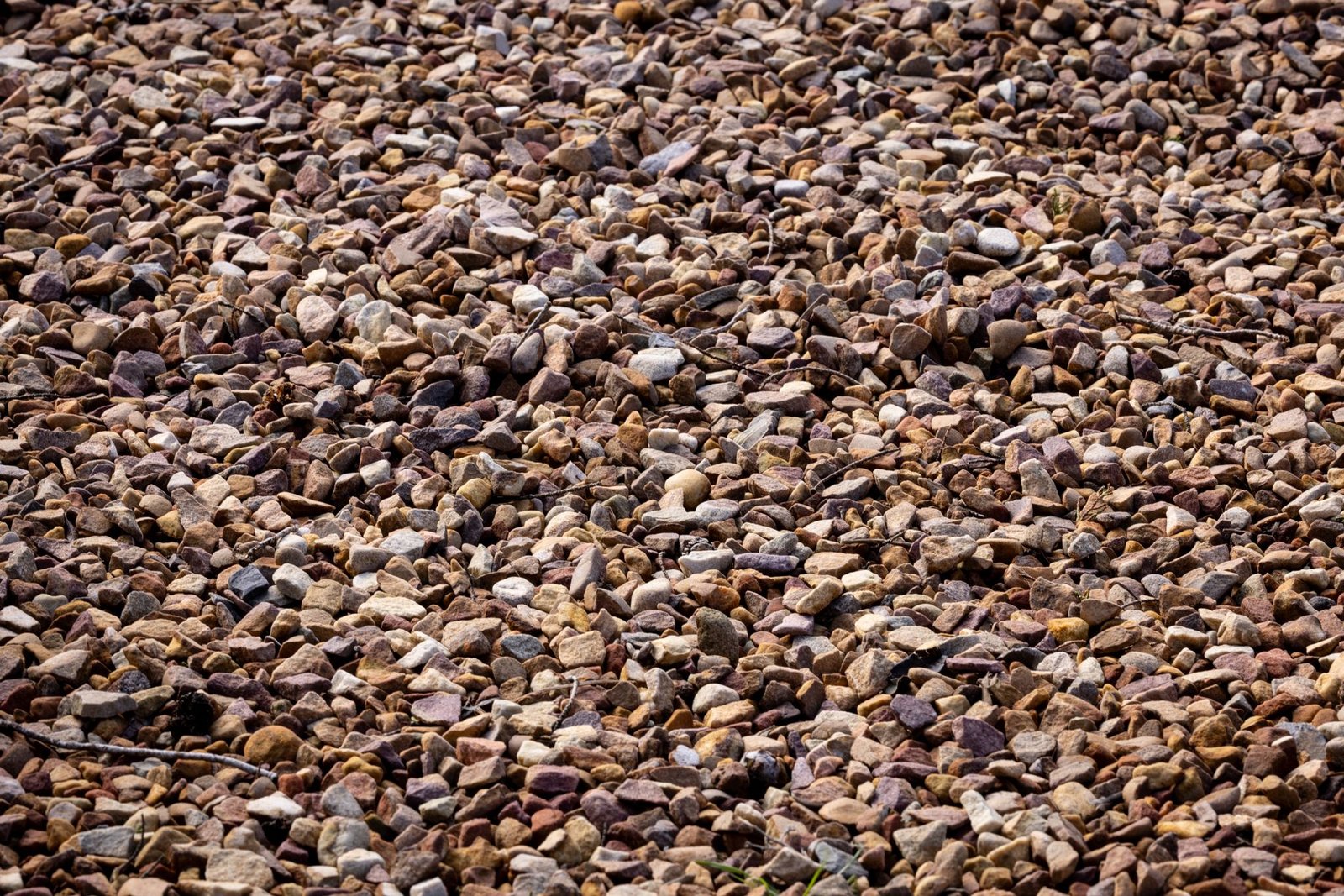
The gravel matters as much as the pavers. Round stones roll underfoot and travel. Angular stones lock together and stay put. (If a gravel is sold with the word "smooth" anywhere on the bag, it is not for walking on.)
| Gravel | Walking feel | Migration | Best use |
|---|---|---|---|
| Pea gravel (3/8 in, rounded) | Soft, shifts underfoot | High, rolls onto pavers and lawn | Shoulders and areas you don't walk on |
| Crushed stone chip (1/4–3/8 in, angular) | Firm once settled | Low | Stepping-paver beds and walked gravel |
| Decomposed granite (fines) | Firm, packs almost solid | Low, but can wash on slopes | Formal paths, ribbon layouts |
| River rock (1 in and up) | Unstable, ankle-rolling | Low | Drainage strips beside a solid walk |
A pea gravel and paver walkway is popular because pea gravel is cheap and looks soft, but it is the hardest to keep in place. My one firm rule for this path: no pea gravel where feet land. Round 3/8-inch stones have nothing to lock against, so every step pushes them sideways, and a stepping paver surrounded by rolling stone loses its side support and starts to rock. Love the look? Use it for shoulders. New Hampshire Home's article on paver and pebble walkways was the only piece I read that gives the problem a name, "gravel traveling," and lists ways to cut it down.
Buy the gravel washed. Unwashed stone carries fines that stain pavers and turn to mud in the first rain.
Building a paver walkway with gravel from the base up
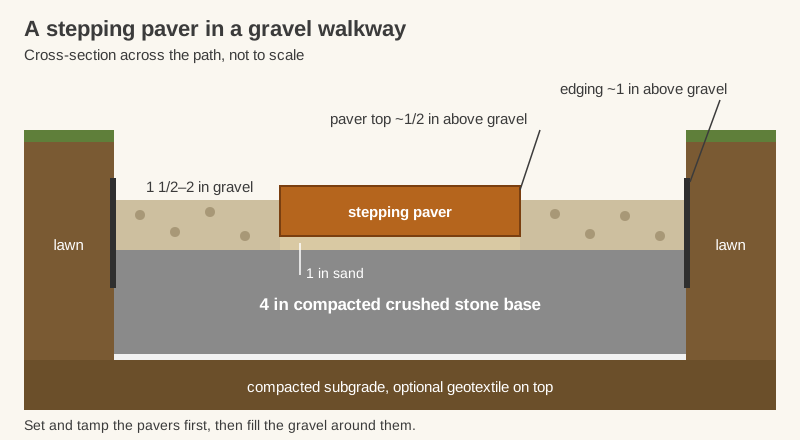
The pavers and the gravel share one base, which keeps them at the same relative heights for years instead of months.
- Lay out the path with stakes and string, or a garden hose for curves. Mark both edges.
- Excavate the full width. Dig to the base depth plus the gravel or paver depth. For a foot-traffic path, that is usually about 6 to 7 inches below the finished surface. Remove sod and topsoil.
- Compact the subgrade with a rented plate compactor or a hand tamper; for a narrow path you don't need to own either. On clay or soft soil, lay geotextile before adding stone.
- Install the edging now, staked into firm ground, so it can hold the base as you compact it.
- Build a 4-inch compacted crushed-stone base in two lifts (2 to 4 inches thicker if the ground is soggy, soft or freezes). Pitch it slightly across the path, 1/4 inch or so per foot, so water runs off to one side.
- Set the pavers. Screed or hand-place an inch of C33 concrete sand (not stone dust, not mason sand) under each stepping paver, set the paver, and tap it down with a rubber mallet until it is solid and level. It must not rock when you stand on any corner.
- Fill with gravel to about 1/2 inch below the paver tops, typically 1 1/2 to 2 inches deep, and rake it level. Wet it down and walk it in, then top up the low spots.
Can you lay pavers directly on gravel? On a compacted crushed-stone base, yes; that is what the steps above do. On loose decorative gravel, no. It won't hold them level. The NT Pavers stepping stone walkway tutorial promises seven super easy steps, and to its credit the crushed base still comes first, decorative gravel last.
Gravel walkway edging that keeps stones in the path
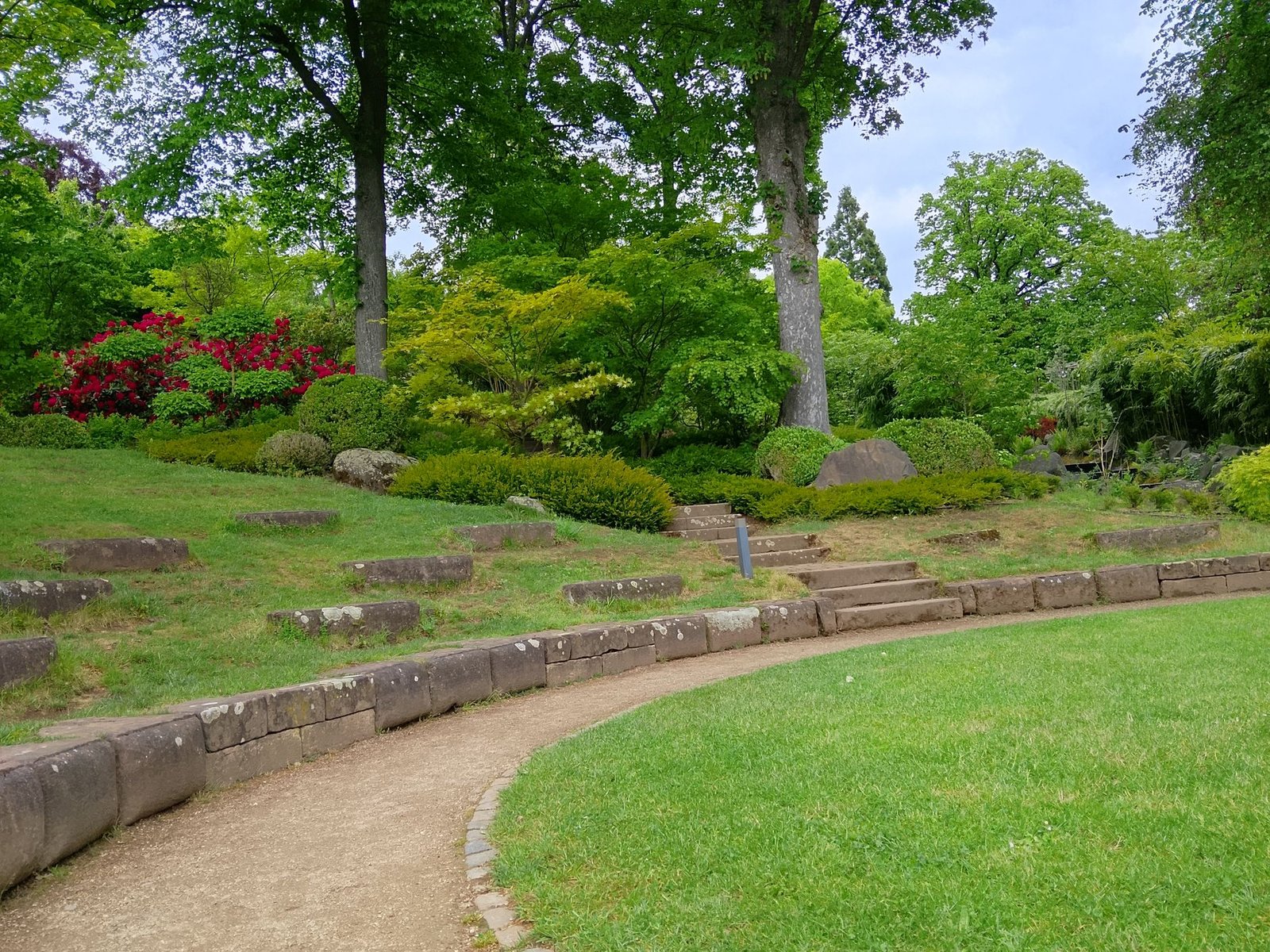
Gravel spreads sideways under every footstep. Without edging, a paver and gravel walkway widens, thins out, and seeds the lawn with stones for the mower to find. Edging on both sides is not optional.
What the edging must do: stand about 1 inch above the gravel surface, reach down into the base so it can't be kicked over, and stay straight or smoothly curved.
| Edging | Pros | Cons |
|---|---|---|
| Steel or aluminum strip | Thin, nearly invisible, bends to curves | Top edge can be sharp; buy a rolled-top profile |
| Row of pavers or brick (ribbon) | Doubles as a design feature | Needs a base and a concrete haunch on the lawn side |
| Stone or concrete curb | Heavy, permanent | More digging; harder on tight curves |
| Plastic landscape edging | Cheap, easy | Heaves out with frost; mower damage |
On the lawn side, keep the top of the edging just above the soil so the mower wheel can run along it. That gives a clean trim line with no string trimming. The structural side of paver edge restraint is covered in our paver edging guide.
A solid walk with gravel borders
When the walkway itself is solid pavers and the gravel is only a border, the details change:
- The walk still needs its own edge restraint. Gravel does not hold pavers in place. Stake metal or plastic paver restraint against the outside course, then fill the gravel over the restraint's flange.
- The gravel border needs a second edge on the lawn side, as above.
- Keep the gravel just below the paver surface, so it doesn't roll onto the walk.
- Use it for drainage. A gravel strip along the downhill side of the walk, over the same base, catches sheet runoff from the pavers and lets it soak in. It works especially well under a roof edge with no gutter, where drip would otherwise splash soil onto the walk.
River rock of 1 to 2 inches works well in a drip strip. It is too big to walk on comfortably, which is fine here, and it is too heavy to be scattered by splashing water.
Slopes, runoff and washouts
Gravel moves downhill. Gravity is patient and never takes a weekend off. On a gentle grade it happens slowly, but on anything steeper than about 1 inch per foot, rain carries it to the low end within a season.
- Add paver bands across the path every few feet on sloped sections. Each band acts as a small dam that holds the gravel above it.
- Switch to steps where the slope gets steep. A paver or timber riser with a gravel tread holds much better than a continuous gravel ramp.
- Keep roof and driveway runoff off the path. A downspout aimed at gravel carves a channel in the first storm. Redirect it or add a drain.
- Use decomposed granite with a stabilizer on grades where loose gravel will not stay put. It packs almost solid.
Ordering pavers, base and gravel for a 30-foot path
Quantities are simple arithmetic once the layout is fixed. Take a common example: a stepping-paver path 36 inches wide and 30 feet long, or 90 square feet.
| Material | How to figure it | For the example |
|---|---|---|
| Stepping pavers, 24 × 24 in | Path length in inches ÷ 24 in spacing | 15 pavers |
| Crushed-stone base, 4 in compacted | Area × 0.33 ft ÷ 27, plus about 20% for compaction | about 1.3 cu yd (roughly 2 tons) |
| Concrete sand, 1 in under pavers | Paver area × 0.083 ft (cubic feet) | about 5 cu ft, or roughly ten 50-lb bags |
| Gravel, 2 in deep | (Area − paver area) ÷ 162 sq ft per cu yd | about 0.2 cu yd |
| Edging | Path length × 2 | 60 ft plus stakes |
Two things surprise people. First, the base is by far the largest quantity (ICPI asks for at least 4 inches under a walk), so price it before you fall in love with a gravel. Second, stepping pavers cover most of a narrow path. In this example the pavers take up 60 of the 90 square feet, which is why the gravel order is so small. Bagged gravel is often easier than a bulk delivery for a path this size.
Upkeep through the seasons
A paver walkway with gravel needs a few minutes a month:
- Rake the gravel back to level and away from the pavers. Check that each stepping paver still sits solid. Re-bed any that rock.
- Clear leaves quickly. Rotting leaves become the soil that weeds grow in. A blower on a low setting clears the path without moving the stones.
- Weed early. A pre-emergent or pulling seedlings by hand keeps a clean path. Fabric under the base slows weeds rooted in soil, but seeds land on top.
- Top up the gravel every year or two. Order the same size and color so the patches don't show.
- In winter, shovel, don't plow. Shovel the pavers and let the gravel be. Rock salt is hard on concrete pavers, so use sand for traction where you can.
Let the pavers carry your feet and the edging carry the gravel
The best paver walkway with gravel puts a solid paver under every step people take daily and uses gravel for texture, drainage and cost savings. Build one crushed-stone base under both. Set the pavers on sand so they sit 1/2 inch proud of angular gravel. Edge both sides so the gravel can't escape. Then walk it once in socks, if you're brave, and you'll know which paver to re-bed.
FAQ
What gravel is best for a paver walkway?
Angular crushed stone chip around 1/4 to 3/8 inch, or decomposed granite, for any gravel people walk on. Both lock together and stay put. Pea gravel looks softer but rolls underfoot and travels, so keep it for borders and areas you don't walk on.
How deep should gravel be in a walkway?
About 1 1/2 to 2 inches of decorative gravel over a 4-inch compacted crushed-stone base. Deeper gravel is harder to walk through and moves more.
Do you need sand under pavers in a gravel walkway?
Yes. A 1-inch bed of concrete sand over the compacted base lets you seat each paver level and solid. Set directly on loose gravel, pavers rock and sink at the corners.
How far apart should stepping pavers be in gravel?
About 24 inches center to center suits most adults. Walk the route and adjust before you set them. For a grid of pavers with gravel joints, keep the gaps to 2 to 4 inches.
How do you keep gravel from spreading out of a walkway?
Use edging on both sides that stands about 1 inch above the gravel and is anchored into the base. Choose angular gravel instead of pea gravel, keep the gravel layer thin, and keep the finished gravel just below the pavers.
Does a gravel walkway need landscape fabric?
Not always. On clay or soft soil, lay geotextile under the crushed-stone base to keep soil out of it. On firm, well-drained soil, a good base does the job, and the weeds that grow in gravel mostly start from debris on top.