Last Updated on September 23, 2026 by Umar Farooq
Paver maintenance comes down to a short list of habits, most of which involve a broom and none of which involve a brochure: sweep every week or two, rinse off dust and pollen, pull weeds before they root, top up the joint sand when it drops, deal with spills the day they happen, and, if you seal at all, reseal when water stops beading rather than when a calendar says so. In winter, use a plastic shovel blade and go easy on de-icers. None of it takes long, and all of it is cheaper than repairs.
Interlocking pavers are a system. Each paver is held in place by the sand in the joints around it, by the edge restraint at the perimeter, and by the compacted base underneath. Most maintenance is about protecting the first two. Once joint sand goes missing or an edge starts to creep, pavers loosen, water gets in, and a cosmetic job turns into a structural one.
A paver maintenance program for the whole year
The routine below works for a patio, a walkway or a driveway. Driveways need the same steps a little more often.
| How often | Task | Why it matters |
|---|---|---|
| Weekly or every two weeks | Sweep or blow off leaves, dirt and grit | Debris in the joints feeds weeds and stains the surface |
| Monthly in the growing season | Pull or spot-treat weeds and moss; rinse with a garden hose | Roots pry pavers apart; shade and damp feed moss |
| As it happens | Blot oil, grease, wine and food spills | Fresh stains lift out; old ones soak in |
| Spring | Walk the surface, check joints and edges, top up sand, clean | Winter washes sand out and freeze-thaw lifts edges |
| Fall | Clear leaves, clear drains, check slope and downspouts | Wet leaves stain, and blocked drains send water under the pavers |
| Winter | Plastic shovel blades, minimal de-icer, sand for grip | Steel blades chip and rust-stain; heavy salt wears the surface |
| When water stops beading (if sealed) | Deep clean, re-sand and reseal | Sealer wears off in traffic lanes first |
The Concrete Masonry & Hardscapes Association lays out a similar season-by-season routine in its year-round patio care guide, which I read expecting a sales pitch and found mostly sensible. Follow it roughly and you will catch almost every problem while it is still a ten-minute fix.
Sweeping and rinsing: the habit that prevents most stains
A stiff push broom or a leaf blower is the most useful paver stone maintenance tool you own, and possibly the least glamorous. Leaves, pine needles, berries and wet grass clippings leave tannin stains when they sit, and fine grit in the joints gives weed seeds somewhere to germinate.
Sweep diagonally across the joints, not along them. Sweeping along a joint line drags sand out of it. A leaf blower on a low setting is faster, but hold it at a shallow angle so it moves debris without blasting joint sand into next week.
Every few weeks in dry weather, rinse with a garden hose. Plain water removes pollen, dust and bird droppings before they bake on. You don't need detergent for routine cleaning; when you do, use a pH-neutral cleaner sold for concrete pavers and rinse it off completely.
Weeds and moss take root in the joints, not the pavers
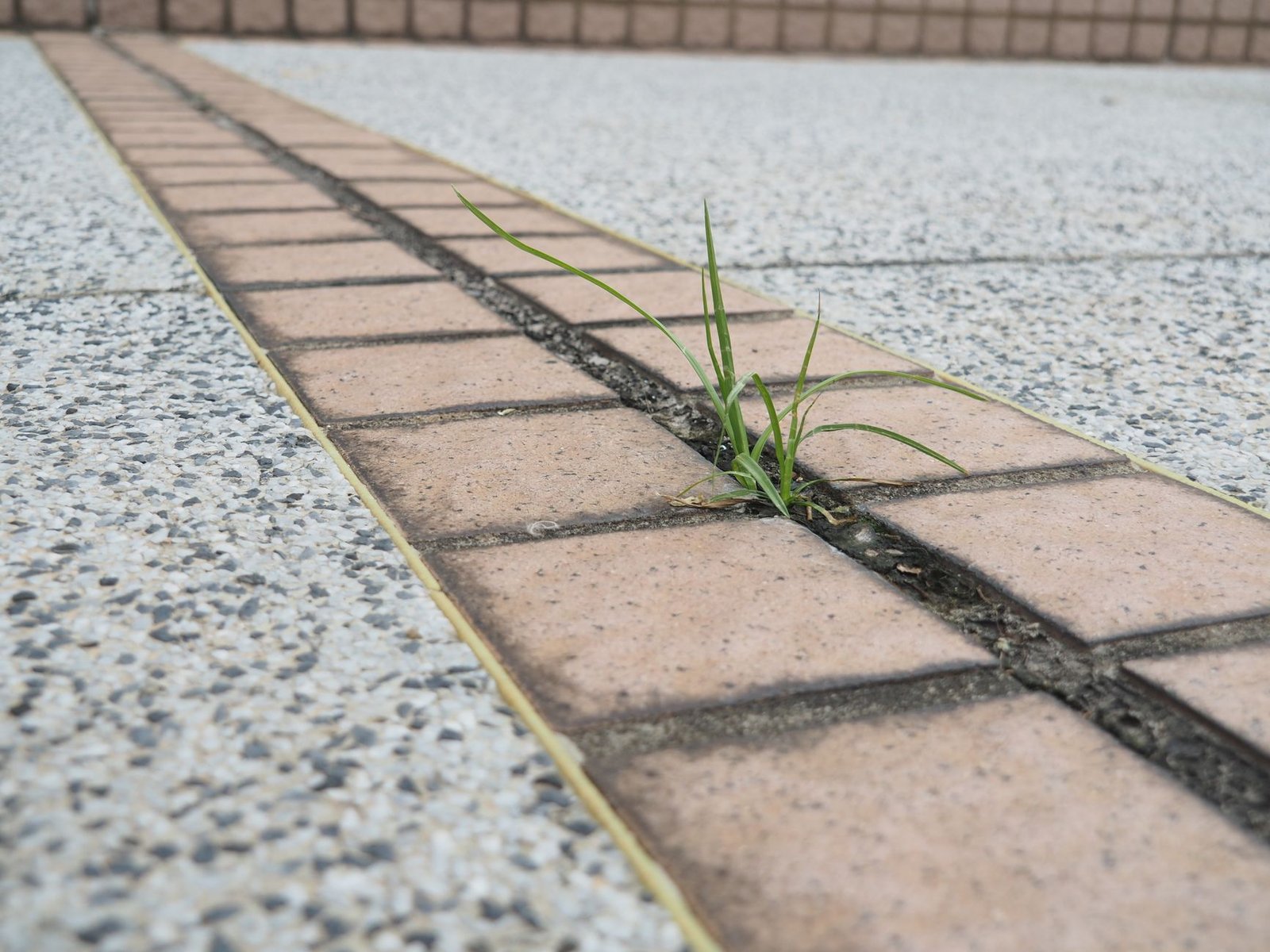
Weeds in a paver patio almost never come up through the base. Seeds blow in, land in the joint sand, and root in the dust that collects there. They are tenants, not natives, which is good news, because the fix is at the surface.
- Pull weeds when they are small and the ground is damp. Get the root, then brush fresh sand into the hole the root leaves behind.
- Use a joint weeding tool (a narrow hooked blade) for tight joints. A flat screwdriver works in a pinch, and everyone owns one they've been meaning to use.
- Spot-treat persistent weeds with a herbicide labeled for use on hard surfaces. Belgard's hardscape care guide warns that some weeds, left alone, can push pavers apart over time, and it recommends periodically applying a granular weed preventative to the joints.
- Skip rock salt as a weed killer. It can damage the paver surface and poison the soil beside the patio.
Moss and algae are a shade and moisture problem. They grow where the surface stays damp: north-facing corners, under trees, beside downspouts. Trim overhanging branches, make sure water drains off, and scrub the green film off with a stiff brush and a paver cleaner. If moss keeps returning to the same spot, that area stays wet too long, and the slope or a downspout is usually why.
Weeds that return every few weeks along the same joints mean the joint sand is too low or too loose. That brings us to the most important check on this list.
Top up the joint sand before pavers start to rock
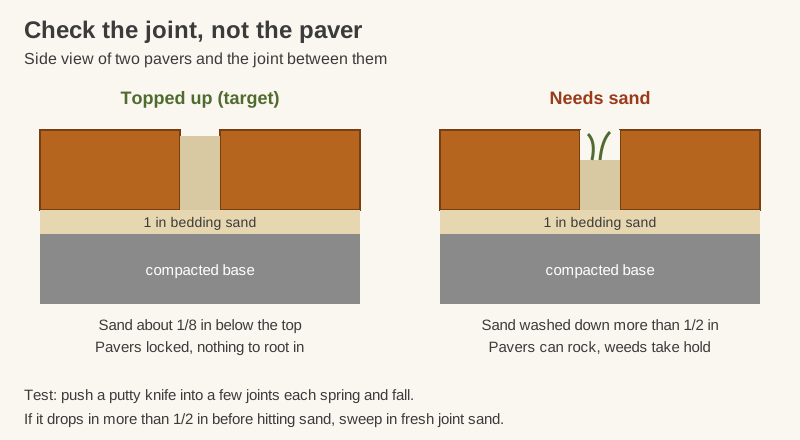
Joint sand is what makes interlocking pavers interlock. It transfers load from one paver to the next, so a car tire or heavy grill is spread across many pavers instead of one. When the joints empty, pavers rock, edges chip, and water runs straight into the bedding sand.
Rain, sweeping, pressure washing and freeze-thaw cycles all pull sand out over time. The CMHA guide recommends refilling when sand has dropped more than about half an inch below the paver edges. A putty knife pushed into a few joints each spring and fall gives you a quick reading. (It is the one maintenance task that makes you look like a surgeon.)
How to top up regular joint sand:
- Wait for a dry spell. The pavers and the joints must be completely dry, or the sand clumps at the surface.
- Spread fine, dry joint sand over the area.
- Sweep it diagonally across the joints until they are full.
- For larger areas, run a plate compactor with a protective pad over the surface to vibrate the sand down, then sweep in more.
- Sweep the excess off the surface.
Polymeric sand is a different job. It hardens once activated with water, and the data sheets I read want it at least 1 1/2 inches deep in the joint, so a thin top-up over old material rarely bonds. Where large sections have washed out, cracked or gone soft, the old material has to come out first. That is a restoration job, covered in our guide to paver patio repair.
Stain removal, from oil to efflorescence
The rule for every stain is the same. Start with the gentlest method, test anything stronger on a hidden paver, and rinse thoroughly. General-purpose acid cleaners and undiluted household chemicals can etch the surface or leave it blotchy.
| Stain | First move | If it stays |
|---|---|---|
| Motor oil, grease, cooking oil | Cover a fresh spill with an absorbent (cat litter or a granular oil absorbent) and let it soak up. Don't rub or wash it, which spreads it | Degreaser or oil-stain remover made for pavers |
| Leaves, berries, tannin marks | Scrub with water and a mild cleaner | Paver cleaner for organic stains; sunlight also fades them |
| Rust (furniture legs, fertilizer, steel tools) | Move the source, then scrub | Rust remover labeled safe for concrete pavers |
| Efflorescence (white, chalky haze) | Leave it; it often fades on its own within months | Efflorescence cleaner made for pavers, applied only once the haze stops returning |
| Tire marks | Scrub with a degreaser | Paver cleaner, then consider sealing traffic lanes |
| Moss and algae | Stiff brush and a paver-safe cleaner | Fix the shade or drainage that keeps the spot wet |
Belgard's care guide is specific about oil: soak it up, don't rub it. Rubbing drives the oil deeper into the pores and spreads the stain wider.
Efflorescence gets mistaken for a defect. It is a white, powdery film of natural salts that moisture carries to the surface of concrete pavers, most common in the first year. It is harmless and usually stops as the pavers age. Don't seal over it; a sealer locks the haze in.
Pressure washing in one paragraph
A pressure washer is the tool most likely to damage pavers during maintenance, which is why it comes last in the cleaning order, not first, however satisfying the first stripe looks. Too much pressure or a narrow tip etches the surface and blasts the sand out of every joint. Rochester Concrete Products' seasonal guide recommends a fan tip held at least 12 inches from the surface. After any pressure washing, the joints need re-sanding. PSI settings, surface cleaners and the full method are in our guide to power washing pavers.
Sealing: how often, and whether to bother
Here is my opinion, and it saves money and regret: most pavers don't need sealing, and none of them need it in the first month. Unsealed concrete pavers last for decades. Seal when there's a reason (stains you want to prevent, a color you want to deepen, joints you want to firm up), because sealing too early traps efflorescence under a film you then have to strip, and sealing on a schedule builds layers until they whiten and peel.
- When to seal first. Wait until any efflorescence has cleared, and at least the product's own minimum. Techniseal's natural-look sealer says 30 days after polymeric sand; Alliance Gator's wet-look sealer says 60 days after installation. Belgard and Nicolock give their own waits; the one on your bag is the one that counts.
- How often. Belgard's sealing guide puts it simply: "The basic rule of thumb is every 3-5 years." Treat that as the outer bound; Techniseal's data sheet adds its own rule, recoat only when worn, minimum 2 years. Traffic lanes, the grill area and driveway wheel paths wear first.
- Film-forming vs penetrating. Film-forming sealers (often acrylic) sit on the surface and can add a wet look or sheen. Penetrating sealers soak in and leave a natural finish. Film-forming sealers can get slippery when wet, so check whether an anti-slip additive is available for pool decks and steps.
- Is it still working? Sprinkle water on the surface. If it beads, the sealer is doing its job. If it soaks in and darkens the paver quickly, it is wearing thin, and that, not the calendar, is your reseal date.
Always clean, repair and re-sand before you seal. Sealer locks in whatever is on the surface, including stains and haze.
Winter care: shovels, plows and de-icers
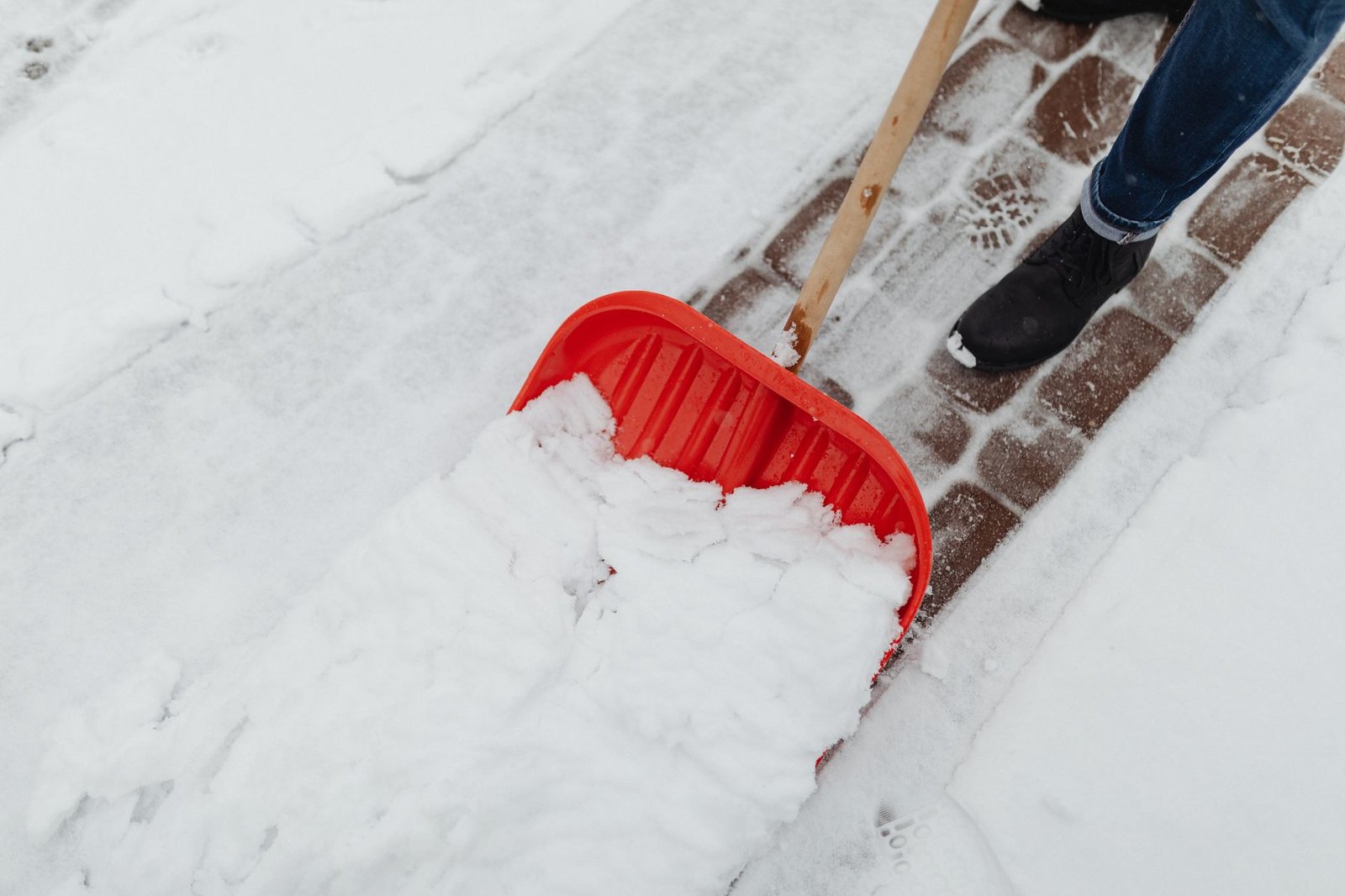
Pavers handle freeze-thaw cycles better than a poured slab, because the joints let each unit move slightly without cracking. Winter damage usually comes from the tools, not the cold.
Snow removal
- Use a plastic or rubber-edged shovel. Steel blades chip paver edges and can leave rust streaks.
- Set a snow blower's skid shoes slightly high so the auger and scraper bar ride just above the surface.
- If you hire a plow for a paver driveway, ask for a rubber or polyurethane cutting edge, or ask the operator to raise the blade slightly.
- Never chip ice off pavers with a steel spade or ice chopper.
De-icers
- Shovel early so you need less de-icer.
- Use sand for traction where you can. It also helps refill the joints.
- If you use salt, the CMHA guide recommends plain rock salt (sodium chloride) in moderate amounts, then sweeping up what is left once the ice melts.
- Check your paver maker's warranty before using anything else. Nicolock, for example, advises against magnesium chloride and other chloride-based de-icers, and says they void its warranty.
- Never use ammonium-based fertilizer products as ice melt. They attack concrete.
Belgard's view is balanced: in proper amounts de-icers shouldn't damage pavers, but may speed surface wear on some styles. Moderation is the whole rule.
Paver driveway maintenance needs a shorter interval
Paver driveway maintenance is the same routine as for a patio, with three differences:
- Oil drips are routine, not accidents. Keep absorbent in the garage and treat drips within a day. A drip pan under a leaky vehicle saves a lot of scrubbing.
- Joints empty faster. Tires and runoff pull sand out, especially where water flows off the street apron or down the driveway slope. Check the joints every spring and after heavy storms, not just once a year.
- Edges carry more load. The row of pavers along the lawn or the street takes tire pressure from the side. Watch for pavers creeping outward or dropping at the edge, and fix it early.
If the driveway is sealed, wheel paths lose their sealer first, so do the water-bead test there; they'll usually ask for a recoat before the rest of the drive does.
Twice a year, look for movement
Maintenance is also inspection. Every spring and fall, walk the whole surface slowly and look for:
- Pavers that rock or sound hollow when you step on them
- Low spots where water puddles for hours after rain
- Edges that have dropped or pushed outward
- Joints that keep opening up in the same place
- Downspouts, gutters or sprinklers that dump water onto or beside the pavers
A single rocking paver or a slightly open joint is still maintenance: tap it down and re-sand it. A dip that holds water, or an area that keeps settling, is a base problem, and more sand on top won't fix it. Our guide to fixing sunken pavers walks through diagnosing and rebuilding those spots.
Ten minutes a week beats a weekend of restoration
Good paver maintenance is mostly boring: sweep, rinse, pull the odd weed, blot spills, and keep the joints full of sand. Add a spring and fall walk-around, a plastic shovel in winter, and a reseal only when water stops beading, if you like the sealed look. The pavers are extremely durable. What fails is the sand around them and the water under them, and both are cheap to look after early. Keep the broom by the back door, where you'll trip over it at least once a week; that's roughly the right schedule.
FAQ
How often should pavers be sealed?
Reseal when water stops beading on the surface, not on a fixed schedule, and follow your product's recoat rule; Techniseal's, for example, is only when worn, and no sooner than 2 years. Heavy-traffic areas such as driveway wheel paths wear first. Sealing is optional; unsealed pavers stay structurally sound, they just stain more easily.
Do pavers need a lot of maintenance?
No. Regular sweeping, occasional rinsing, weed control and topping up joint sand cover most of it. The biggest time cost is an occasional clean, re-sand and reseal, and that step is optional if you don't seal.
How often should you re-sand pavers?
Check the joints every spring and fall. Top them up whenever the sand has dropped more than about half an inch below the paver edges, and always after pressure washing. Polymeric sand joints last longer but need replacing when they crack, crumble or wash out.
Can I use salt on pavers in winter?
Yes, in moderation. The CMHA recommends plain rock salt (sodium chloride) used sparingly, with the leftover swept up after the ice melts. Sand is a good alternative for traction. Check your paver maker's warranty, because some manufacturers prohibit magnesium chloride and other chloride de-icers.
What is the best way to clean pavers without damaging them?
Start with sweeping and a garden-hose rinse, then a pH-neutral paver cleaner and a stiff brush. Move up to stain-specific paver cleaners only for stains that won't shift. Use a pressure washer last, with a fan tip and moderate pressure, and re-sand the joints afterward.
How do I stop weeds growing between pavers?
Keep the joints full of sand and free of debris, because weeds grow from seeds that land in the joint, not from below. Pull weeds while they are small, use a granular weed preventer or a hard-surface herbicide where needed, and consider polymeric sand when you next re-sand.