

Last Updated on October 20, 2026 by Umar Farooq
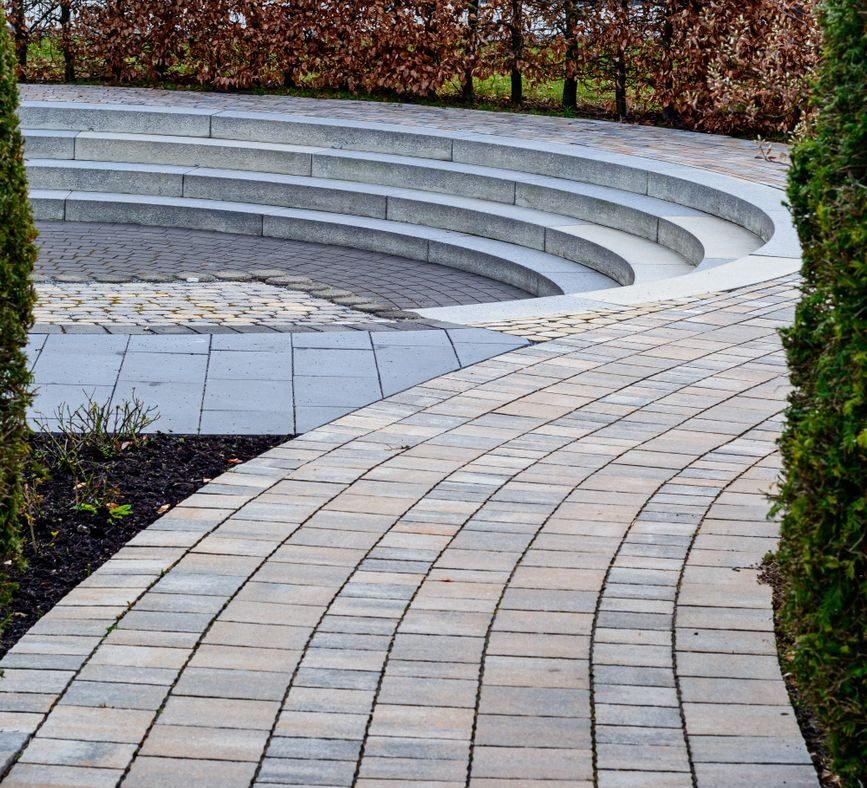
A sunken patio is a patio dug below the surrounding yard, usually reached by a few steps and held in by walls. It works only if the water that collects in it has somewhere lower to go, so find the exit before you pick the depth. Keep the drop to a few steps, set a drain at the foot of the walls, pipe it downhill, and build the floor like any other paver patio on a well-compacted base.
A sunken patio is a basin with furniture in it. Every guide I read agrees the design problem is the water, not the pavers. (Not to be confused with sunken pavers, which are a repair job.)
Cheaper first: do you need to dig down at all?
A sunken area costs more than it looks. You are paying for excavation, a retaining wall, steps and a drainage system before a single paver goes down. If you only want a cozy, enclosed seating area, the same effect usually comes from a ground-level patio with a low seat wall or a screen of planting. If the opposite is true, because the yard falls away from the door, look at a raised paver patio instead. Dig down only if you genuinely want the enclosed feeling or the lower level is where the ground is already heading.
Find the outlet before you pick the depth

EngineerFix's guide to sunken patio drainage puts gravity first: pipe the water to a storm drain or daylight it on lower ground. It gives a minimum pipe fall of 1/8 inch per foot. My arithmetic: over a 40 foot run that is 5 inches, and the exit has to be at least that far below the drain, or the patio becomes a pond that happens to have a pipe.
If there is no lower ground, the options get worse.
| Where the water goes | When it works | Catch |
|---|---|---|
| Daylight or storm drain, by gravity | Yard slopes away below the patio floor | Need a pipe route and fall, usually 1/8 in per ft |
| Dry well (gravel-filled pit) | Sandy, well-draining soil | EngineerFix says it only works in well-draining soil and takes hours to empty |
| Soakaway under the floor | Soil that tests as free-draining | The UK guides dig 300 mm (about 12 in) deeper than the base and fill it with gravel |
| Sump pump | Nowhere else to go | Needs power, and regular upkeep |
I would not build a sunken patio on clay with no downhill exit. EngineerFix notes compacted clay drains poorly, builds up water pressure against the walls and can seep under the base. See our paver patio on clay soil guide first.
Keep the drop to a few steps
Every inch you go down adds wall, steps and drainage work. Permagard's guide to sunken gardens says step heights of about 150 mm (roughly 6 inches) are typical, with access from at least two sides. In US terms, an IRC stair riser maxes out at 7 3/4 inches, and a handrail is required once a flight reaches 4 risers (IRC R311.7.5 and R311.7.8). Four 6 inch risers is a 24 inch drop. My view: aim for two to three risers (12 to 18 inches) and you have the sunken feeling without a railing, a big wall or an engineer. Check local code, because a deeper drop may mean guards and permits.
Walls: block, waterproofing and what sits behind
Permagard says blockwork is the usual choice for strength and can be waterproofed, with a land drain at the base for flood-prone sites or high water tables. In the US, that usually means segmental wall block or a poured wall. The height decides the permit line and whether you need geogrid, so read our paver retaining wall guide before you decide. A sunken patio is a retaining wall on all sides, and the soil you dig out has to stay out.
The Ovaeda guide to sunken seating areas, written for a UK garden, digs 400 mm (about 16 inches) wider than the floor to make a 200 mm (about 8 inches) cavity around the edge, and fills it with clean stone. Treat that as one supplier's design, not a standard, and match any stone behind a wall to the block maker's instructions.
Build the floor, then set the drain
The floor is an ordinary paver patio: compacted crushed stone base (4 inches minimum for a pedestrian area, ICPI), 1 inch of loose bedding sand and pavers, laid with at least 1.5% fall toward the drain (ICPI Tech Spec 2). EngineerFix says channel drains along the perimeter suit the foot of a retaining wall, set slightly lower than the paving, and catch basins go at the lowest point. Both need clearing, since grates clog with leaves and basins collect sediment. Our paver drain guide covers the height and install.
Free-draining pavers are the other route. Ovaeda recommends free-draining floors so water drains across the whole area, and clay soil may need a land drain. In a heavy-rain climate I would still add a surface drain.
Add the fire pit last, with the right floor
If a fire pit is part of the plan, Ovaeda suggests a porcelain floor beneath it for heat protection. A sunken pit also traps smoke and can pool cold air, so do not enclose it fully.
Dig only as deep as the water can leave
Walk the yard first and find the lowest point you can pipe to. Work back from it at 1/8 inch per foot and you know how deep the patio can go. Call 811 before you dig, hand-dig near the marks and, if it rains while the hole is open, you will find out early whether your plan works.
FAQ
What is a sunken patio?
A patio set below the surrounding grade, usually with steps down and walls around it. It feels enclosed, and it collects water, so the drainage is the most important part of the design.
How deep should a sunken patio be?
Two to three steps, roughly 12 to 18 inches, is my suggestion. IRC risers can be up to 7 3/4 inches, and 4 or more risers need a handrail. Deeper drops need bigger walls and drains.
How do you drain a sunken patio?
Put a channel drain along the foot of the walls, a catch basin at the lowest point, and pipe both downhill at a minimum fall of 1/8 inch per foot. A dry well works only in well-draining soil, and a sump pump is a fallback.
Can you build a sunken patio on clay soil?
Only with a reliable downhill outlet. Clay drains poorly and builds pressure behind the walls, so a free outlet and drainage stone behind the walls matter more.
Do sunken patios flood?
They can, because water runs downhill into them. A drain with a working outlet, correct grading and clear grates keep them dry in normal rain.


