Last Updated on September 23, 2026 by Umar Farooq
Turfstone pavers are concrete grid pavers with open cells that you fill with soil and grass, or with gravel. The concrete webs carry the weight of feet and tires, and the grass in the cells stays green and uncrushed. It's a lawn wearing a concrete exoskeleton. Laid on a compacted gravel base, they turn a lawn into overflow parking, a fire lane or a grass driveway that doesn't rut. I checked the search results for this term and found almost nothing but product listings, so this guide follows the installation guides instead.
What turfstone pavers are
"Turfstone" started as a product name and is now used for concrete grass pavers in general, the way every tissue is a Kleenex. Other names include turf block, grass block and lawn pavers. The common size is roughly 16 by 24 inches. Family Handyman's grass paver path project uses blocks 15 3/4 by 23 5/8 inches, each covering about 2.6 square feet. Mutual Materials lists its TurfStone at 65 pounds a block and about 40 percent open.
Turfstone pavers are a porous paving type. Water soaks through the soil-filled cells, while permeable concrete pavers drain through stone-filled joints between solid units.
Where grass pavers make sense
Drivable grass pavers are best where cars park now and then, not where they drive the same line twice a day:
- Overflow parking for guests, a second car or a work van
- Boat, trailer and RV pads beside the house
- Fire lanes and emergency access that must stay green
- Wheel strips on a long drive, or a grass driveway on a rural lot
- Paths across a lawn where foot traffic wears the grass out
- Swales and gentle slopes where you need both erosion control and access
Grass needs sun and rest between parked cars. If a car sits in the same spot every night, or the area is shaded, fill the cells with gravel. Grass under a parked car is just waiting in the dark.
Installing turfstone on a gravel base
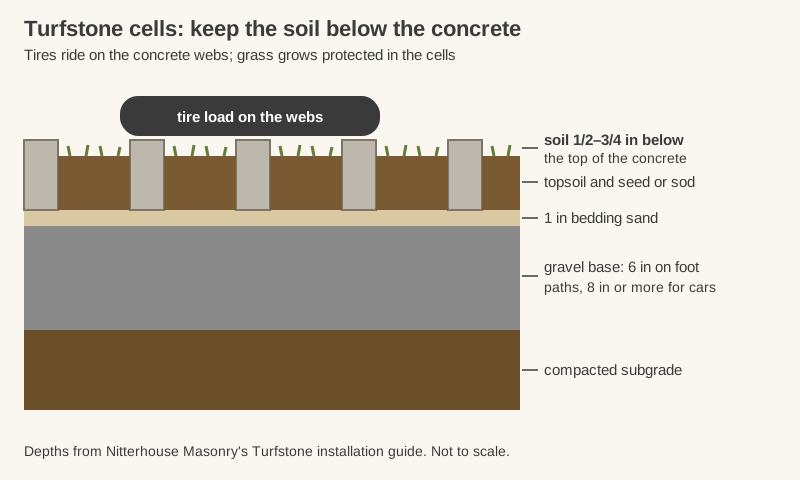
Nitterhouse Masonry's Turfstone installation guide lays out the same base work as any paver job:
- Excavate and compact the subgrade. Remove sod and topsoil, digging for paver thickness plus sand plus base.
- Build the gravel base. Nitterhouse calls for 6 inches of compacted base for residential foot traffic and at least 8 inches where vehicles drive. Compact it in lifts as you would any paver base: 4 to 6 inches per lift is fine under a 7,000 lbf plate, per ICPI, while smaller plates need thinner lifts.
- Screed 1 inch of bedding sand. Use concrete sand meeting ASTM C33, not masonry sand or stone dust.
- Lay the grids with joints at least 1/16 inch wide. Western Interlock's turfstone guide uses stack bond only for foot traffic and a running bond offset by one-third for vehicles, and adds a geogrid under cars.
- Vibrate them into the sand with a plate compactor fitted with a rubber mat, so the webs don't chip. See our guide to compacting pavers for the passes.
- Fill the cells with topsoil, or with gravel for a no-mow surface, and vibrate again.
- Top up and vibrate once more until the soil settles to 1/2 to 3/4 inch below the top of the concrete.
That last gap matters most, and every guide I read agreed on it. With the soil slightly low, tires ride on the concrete and never crush the grass crowns.
Growing grass in the cells
You can seed or plug the cells:
- Seed. Mix seed and starter fertilizer into the top of the fill. Cheaper, but it needs weeks of watering and no traffic.
- Sod plugs. Press a square of sod into each cell, as Family Handyman does. Finished on day one, but slow work.
Then treat it like a lawn under stress:
- Water deeply, and don't park on it until the grass is established.
- Pick a tough, full-sun turf that suits your region. Shade under cars is the main reason grass pavers fail.
- Mow high so the blades don't get scalped on the webs.
- Top up the cells as the fill settles.
Park on the concrete, grow the grass below it
My one strong opinion: turfstone is pavement first and lawn second. The grids spread the load; the gravel base carries it, so the base gets the attention, not the seed mix. For a car every night, fill the cells with gravel. The grass will forgive you, mostly because it won't be there.
FAQ
Can you drive on turfstone pavers?
Yes. Turfstone is made for occasional vehicle traffic, including fire access lanes. Build at least 8 inches of compacted gravel base under driving areas, lay the pavers in a running bond, and keep the fill just below the concrete so tires ride on the webs.
Can you fill turfstone with gravel instead of grass?
Yes. Clean crushed gravel in the cells gives a no-mow, permeable surface that suits shaded spots and areas where a car parks every day. Vibrate it in and top it up the same way as soil.
How long does grass take to grow in grass pavers?
From seed, expect several weeks of regular watering before the grass can take light traffic. Sod plugs root faster. Either way, keep cars off until the roots have knitted into the fill.
Do grass pavers need a gravel base?
Yes, for anything beyond a garden path. Without a compacted base, the grids sink unevenly and rock under tires. Nitterhouse Masonry recommends 6 inches for residential foot traffic and at least 8 inches for vehicles, with 1 inch of sand on top.