Last Updated on September 23, 2026 by Umar Farooq
The right sand for pavers depends on where it goes. Under the pavers, use coarse, washed concrete sand (ASTM C33) screeded to a 1-inch bed. Between the pavers, use fine joint sand or polymeric sand. Keep play sand, stone dust and mason sand out of the bedding layer, because they hold water, roll or pump out, and let pavers sink.
A lot of patio problems blamed on "bad pavers" are really sand problems: the wrong material under the pavers, or joints that washed out in the first summer. This guide covers what to buy for each job, what to leave on the shelf, and how much you need.
Two jobs, two different sands
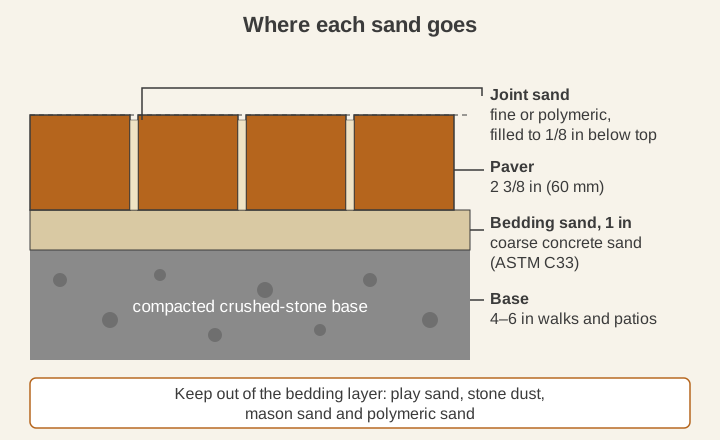
A paver patio uses sand in two places, and the two jobs need opposite properties.
| Bedding sand | Joint sand | |
|---|---|---|
| Where it goes | 1-inch layer between the base and pavers | The narrow gaps between pavers |
| Job | Gives a level bed the pavers seat into | Locks pavers together so they can't twist |
| Grain | Coarse, angular, washed | Fine enough to sweep into a 1/8-inch gap |
| Common spec | ASTM C33 (concrete sand) | ASTM C144 (fine joint sand) or polymeric |
| Typical product | "Concrete sand," "paver bedding sand" | "Paver joint sand," polymeric sand |
I read the Concrete Masonry & Hardscapes Association guide specification looking for any bedding option besides concrete sand, and it's refreshingly unbending: "Do not use mason sand or sand conforming to ASTM C144 for the bedding sand," and no stone dust or screenings either. The simple rule: coarse sand under, fine sand between.
Bags labeled just "paver sand" can be either, which is marketing's small gift to the confused. Read the back of the bag. If it says leveling or bedding, it goes under. If it says joint, polymeric or sweep-in, it goes between.
Coarse concrete sand for the bedding layer
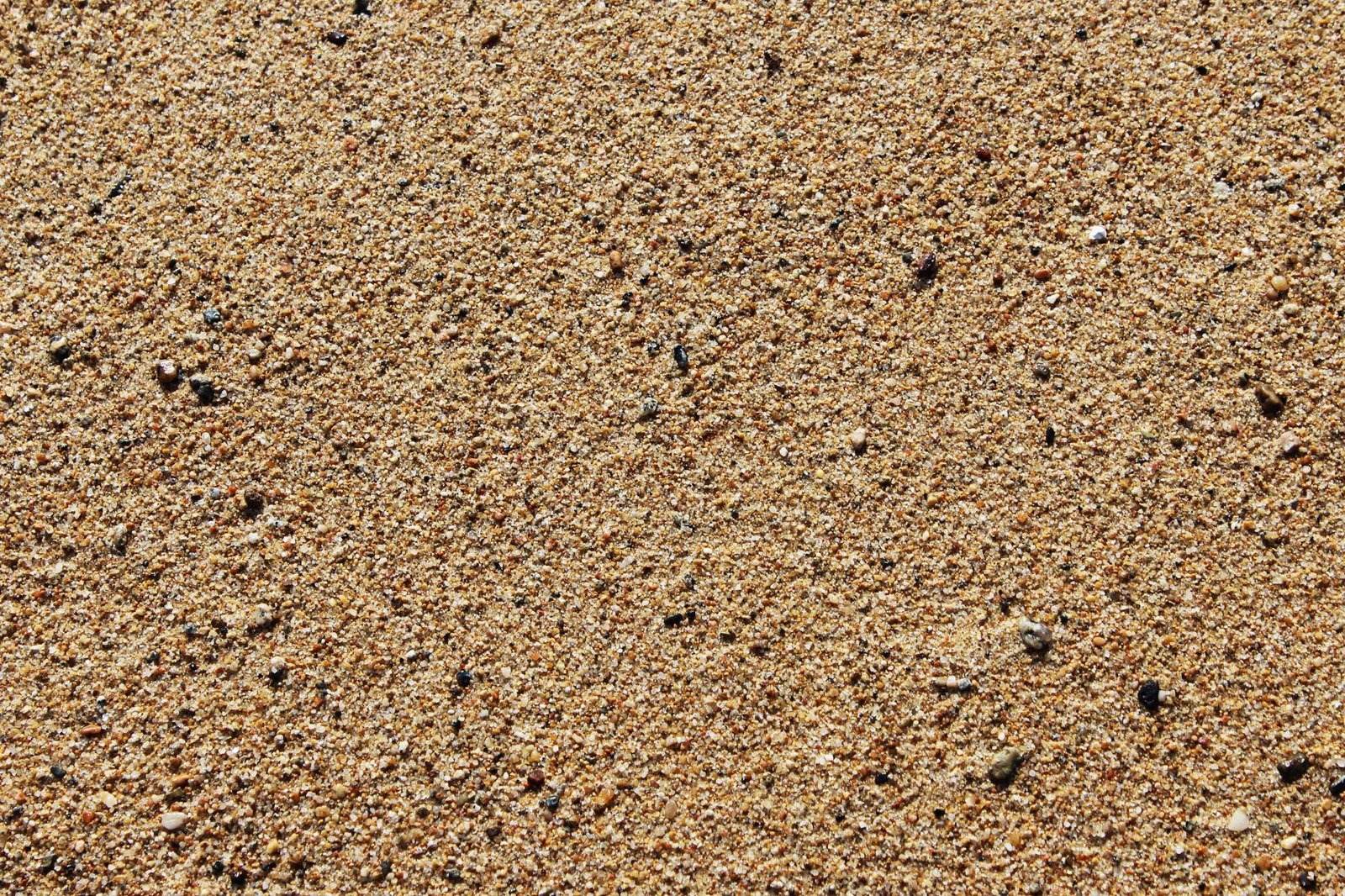
Bedding sand for pavers should be coarse, angular and washed. Rubbed between your fingers it feels gritty, not silky, and it doesn't leave a film of dust on your skin. (If it feels nice, it's probably the wrong sand.) Yards sell it as concrete sand; big-box stores bag it as paver leveling or paver base sand.
Why these properties matter:
- Angular grains lock together. When the plate compactor vibrates the pavers, sharp grains key into each other and into the bottom of each paver. The bed stays put.
- Mixed grain sizes pack tightly. Small grains fill the gaps between larger ones, so the bed doesn't keep settling.
- Washed sand drains. Fine silt and clay trap water. Wet fines turn to paste under traffic and pump up through the joints.
Keep the layer at 1 inch. A thicker bed just gives the sand more room to move, and deep bedding sand is a common cause of ruts and dips. Fix low spots in the gravel paver base, not by adding extra sand. The mechanics of pulling that inch flat with rails and a board are covered in our guide to screeding sand for pavers.
Screed the sand loose and don't walk on it or compact it before the pavers go down. The pavers get compacted into it, which pushes sand up into the bottom of the joints and starts the interlock.
Joint sand for pavers: regular or polymeric?
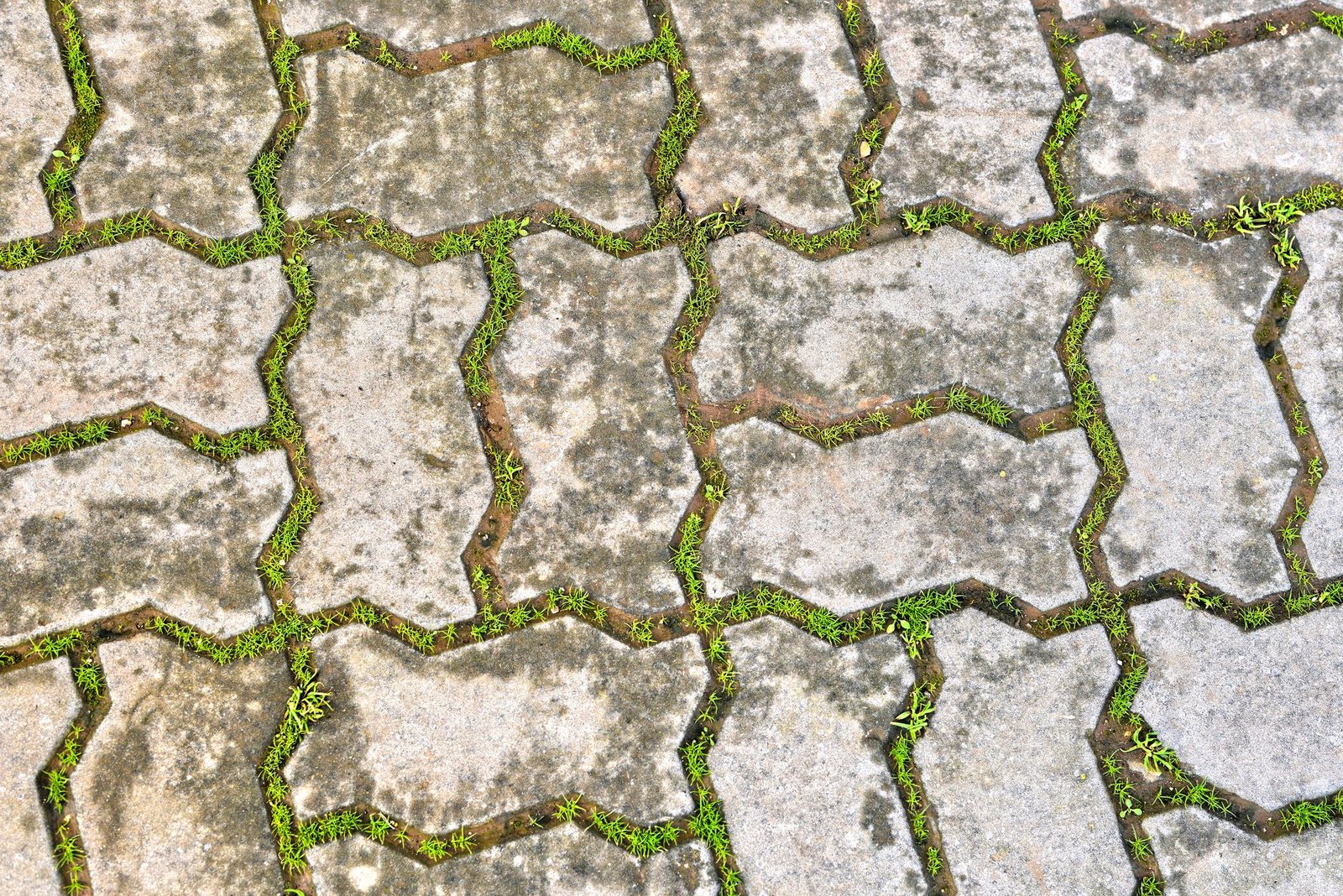
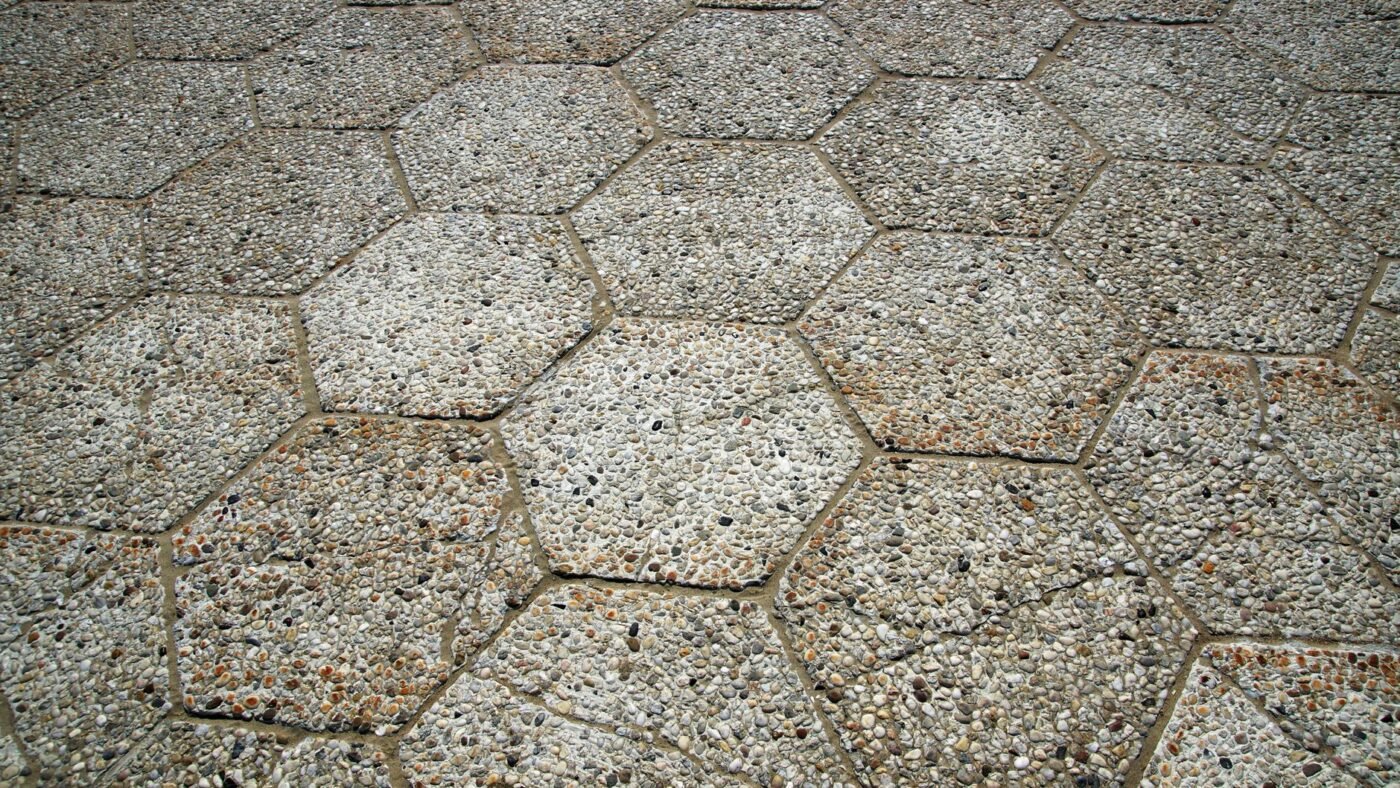
Joint sand does more than fill gaps. Joints full to the top let loads spread from paver to paver. Empty joints let pavers rotate, chip at the edges and drift apart, and the gaps fill with seeds and soil. That's how you end up with the patio in the photo above, which is technically also a lawn.
You have two practical options.
| Regular joint sand | Polymeric sand | |
|---|---|---|
| What it is | Fine, angular sand | Fine sand plus a binder that hardens when wetted |
| Cost | Low | At least double the price |
| Washout | Washes out over time; needs topping up | Resists washout and wind |
| Weeds and ants | Some resistance when kept full | Much better resistance |
| Installation | Forgiving; sweep in any dry day | Must be dry, precise watering, can haze |
| Repairs | Lift a paver anytime | Break out and replace the hardened sand |
Here's where I'll push back on the default. Polymeric sand isn't the automatic upgrade the shelf display suggests. It costs at least double, punishes a damp day, can haze dark pavers, and has to be chiseled out when you lift one. On a garden path, or anywhere you may lift later, regular joint sand topped up each season does the actual job: keeping joints full so loads spread. Save polymeric sand for patios, pool decks and walkways where weeds, ants and washout are the main complaints. How to Hardscape makes the same point: polymeric sand is better, but only when installed correctly.
Both go in the same way at first: sweep dry sand over the surface, run the plate compactor over the pavers with a pad, and sweep again until the joints stay full.
Sweeping in polymeric sand without a haze
Polymeric sand is where most DIY sand jobs go wrong, and nearly every failure comes from moisture or leftover dust. I compared Sakrete's application guide with the Alliance Gator and Techniseal data sheets, and the one thing they all agree on is dry.
- Check the joint width. Standard polymeric sand is made for joints about 1/4 inch to 1.5 inches wide. Very wide flagstone joints need a product rated for them.
- Start bone dry. Pavers and joints must be completely dry. Water trapped in the paver wicks up and leaves stains.
- Fill the full depth. On an old patio, remove all the old sand down to the bottom of the paver before adding polymeric sand. Topping off old sand with a thin layer of polymeric sand gives you a crust that cracks.
- Sweep, compact, sweep again. Vibrate the pavers so the sand settles, then refill.
- Stop 1/8 inch below the top. Leave the sand 1/8 inch below the surface, or at the bottom of the paver's chamfered edge.
- Blow off every grain. Use a leaf blower on low. Any dust left on the surface hardens into a haze.
- Water gently in sections. Use a shower setting and work areas of about 10 by 10 feet. Soak until no more water goes in, without flooding the sand out of the joints.
- Stay off it. Give it about 24 hours for foot traffic, longer for vehicles and before sealing; follow the bag.
Don't install polymeric sand when rain is forecast before it sets. The forecast is part of the instructions, just printed somewhere else.
Play sand, mason sand and stone dust: what to keep out
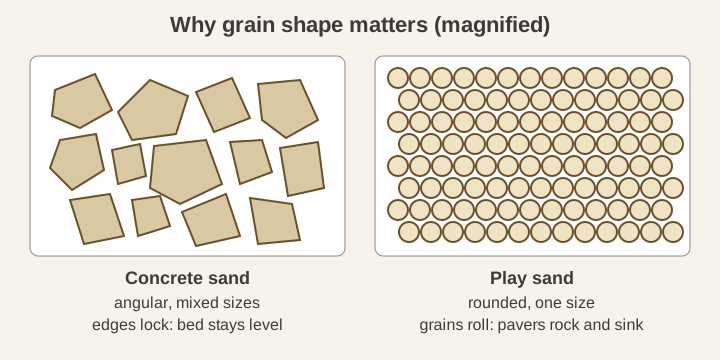
Three materials often end up under patios because they're cheap or already on site. Each fails in its own way.
Play sand and beach sand
Play sand is fine, rounded and screened to a single size so it feels soft for kids. That makes it a bad paver bed: the grains roll like ball bearings instead of locking. Pavers set on play sand rock, shift and sink unevenly. Beach sand has the same round grains plus salt.
Mason sand
Mason sand is finer and more uniform than concrete sand. It works as ordinary joint sand, but CMHA keeps it out of the bedding layer, where it compacts unevenly and holds moisture.
Stone dust and screenings
Stone dust divides installers. It screeds nicely and feels firm when dry, which is exactly how it wins the argument on day one. The problem is its high share of fine particles. Fines hold water, don't drain, and can pump up through the joints under load or heave in freezing weather. Industry guide specifications exclude stone dust and screenings from the bedding layer. On a patio you want to last, use concrete sand.
How much sand for pavers to order
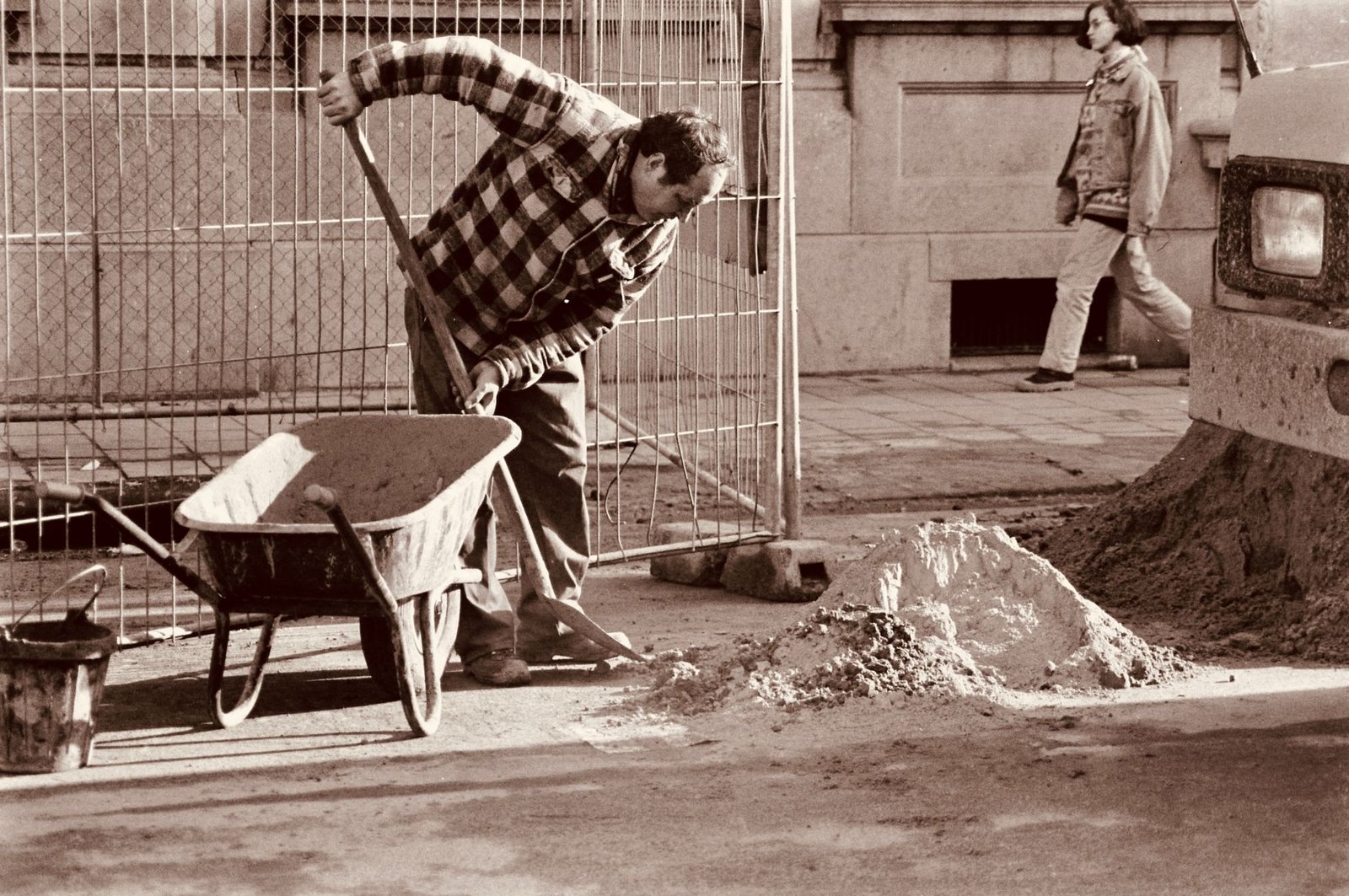
Bedding sand: at 1 inch thick, one cubic yard covers 324 square feet. Divide the patio area by 324 to get cubic yards. Concrete sand weighs about 1.35 tons per cubic yard, depending on moisture, so multiply by 1.35 for tons. Add about 10% for screeding waste and uneven spots.
| Patio area | Cubic yards (1 in) | Approx. tons | With 10% extra |
|---|---|---|---|
| 100 sq ft | 0.31 | 0.42 | 0.46 tons |
| 200 sq ft | 0.62 | 0.83 | 0.92 tons |
| 300 sq ft | 0.93 | 1.25 | 1.4 tons |
| 500 sq ft | 1.54 | 2.1 | 2.3 tons |
For small jobs, bags are easier: each 100 square feet needs about 8.3 cubic feet of sand, so divide by the bag's cubic-foot size. Above roughly half a ton, bulk delivery is usually cheaper.
Joint sand: you need far less. Coverage depends on paver size, joint width and paver thickness, so use the coverage chart on the bag. Small pavers with lots of joints use more than large slabs, and wide-joint flagstone uses much more. Buy one extra bag of polymeric sand. Running out halfway and mixing lots is how you get color changes across a patio.
Permeable pavers and wide-joint stone skip sand entirely
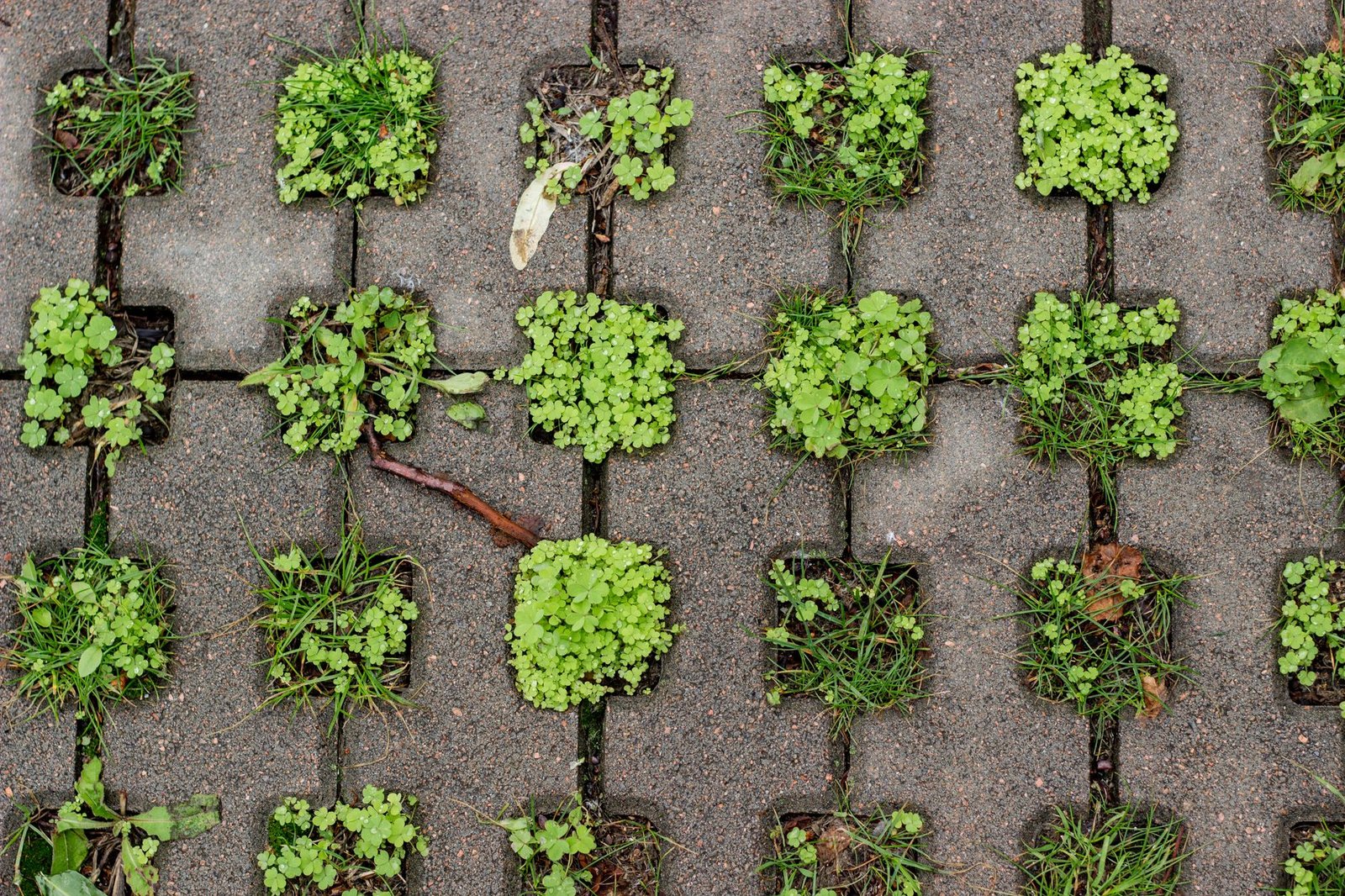
Permeable paver systems let rainwater run through the joints into a stone reservoir. Sand would clog them. They use small, clean crushed stone instead: typically ASTM No. 8 aggregate as the bedding layer and No. 8 or No. 9 chips in the joints. If your pavers have wide spacers or open cells, check the manufacturer's install guide before you buy any sand.
Flagstone with joints wider than about 1.5 inches is different. Standard polymeric sand is too weak across wide gaps, so use a wide-joint product, or fill with fine gravel or soil and plant groundcover. For how sand fits into the rest of the build, from excavation to edge restraint, see our full paver installation guide.
Coarse sand under, fine sand between, nothing round anywhere
Buy washed concrete sand for a 1-inch bed, polymeric or fine joint sand for the gaps, and leave play sand and stone dust out of the job. The play sand has a better career waiting in a sandbox anyway, where rolling around is the whole point.
FAQ
What kind of sand do you put under pavers?
Coarse, washed concrete sand that meets ASTM C33, screeded to a 1-inch layer over the compacted base. Its angular grains lock together and drain, so the pavers stay level.
Is polymeric sand better than regular sand for pavers?
For joints, usually yes. Polymeric sand hardens after wetting, so it resists washout, weeds and ants far better than regular joint sand. It costs more and must be installed on dry pavers and watered carefully. It never goes under the pavers.
Can I use play sand for pavers?
No, not as the bed. Play sand is fine and rounded, so the grains roll instead of locking together and the pavers shift and sink. It is also a poor joint sand because it washes out quickly.
How much sand do I need under pavers?
One cubic yard of sand covers 324 square feet at 1 inch thick, which is about 1.35 tons. A 200-square-foot patio needs about 0.62 cubic yards, or a little under a ton with waste.
Should I use stone dust or sand under pavers?
Use concrete sand. Stone dust holds water because of its fines, can pump up through the joints and is excluded from the bedding layer by industry guide specifications.
Can you put polymeric sand over old sand?
Not over a thin top layer. Remove the old sand down to the bottom of the pavers, or at least as deep as the bag specifies, so the polymeric sand fills the full depth and bonds as one piece.