

Last Updated on September 27, 2026 by Umar Farooq
Here is how to compact gravel without a compactor: use angular crushed stone with fines, spread it no more than about 2 inches deep, dampen it until it darkens without puddling, then strike it with a hand tamper or a homemade one in overlapping rows, twice, the second pass at 90 degrees. Repeat layer by layer. A water-filled lawn roller can firm the top of a gravel path, and car tires can pack a driveway, but neither replaces tamping for anything that pavers will sit on. Manual methods suit landings, stepping-stone paths and small pads; a full patio or walkway base should get a rented plate.
Four ways to pack gravel by hand, ranked
The methods other guides list are not equal. Here they are in order of how much density they actually deliver:
- Steel hand tamper. The best manual option: a heavy steel head dropped flat. Sizes are in what a tamper is.
- DIY tamper. A post and a plywood head does the same job with less weight, so you strike more times per spot. Build instructions below.
- Vehicle tires. Driving a car or truck back and forth compacts under the tires. Useful on a gravel driveway, with a catch covered below.
- Lawn roller. A drum filled with water or sand. It smooths the top of a path, but with no impact or vibration it does little below the surface.
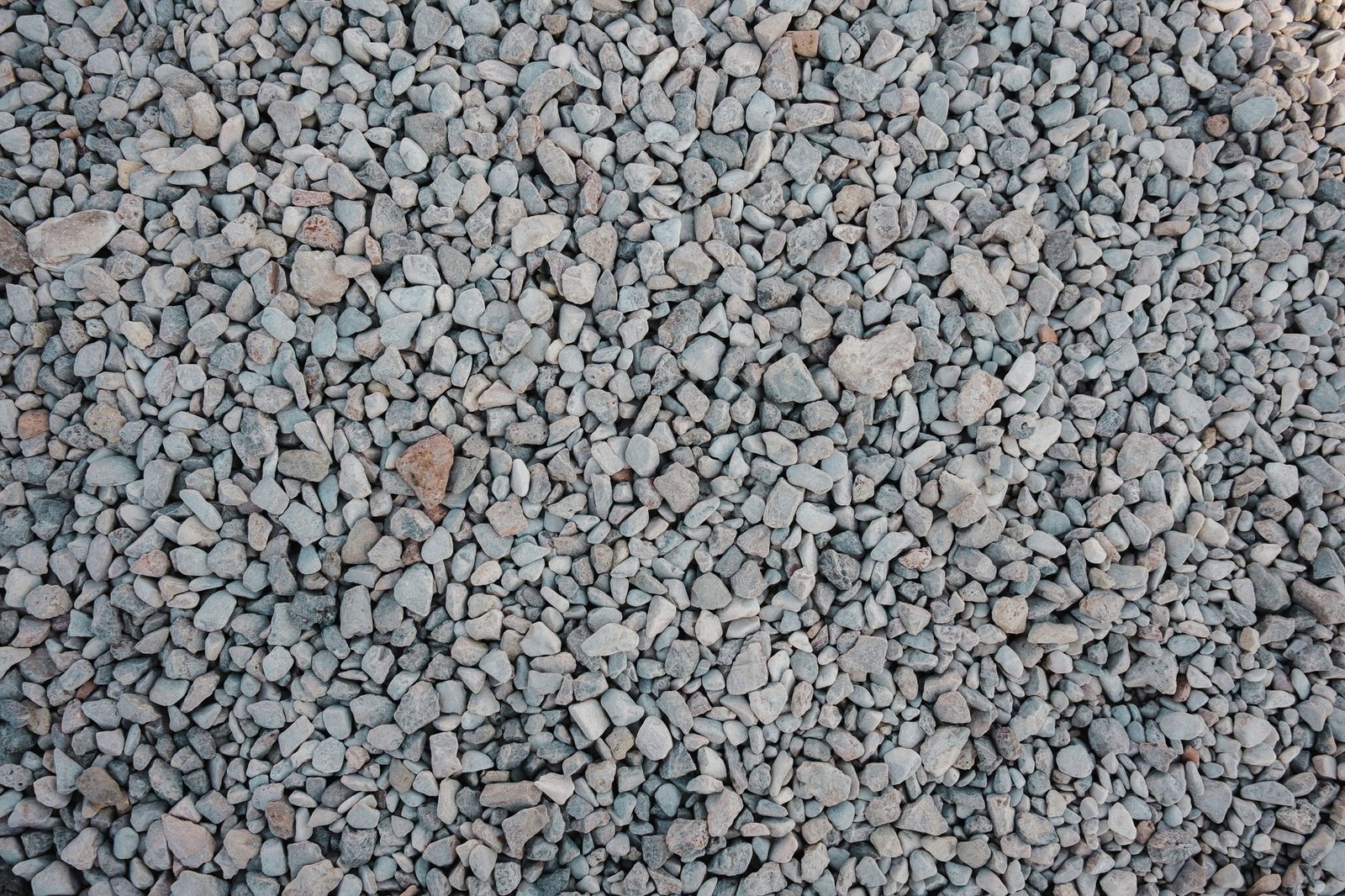
Check the stone first. Engineer Fix's guide to manual gravel compaction recommends angular crushed stone such as road base or crusher run over river rock. Rounded stone rolls instead of locking, so if the ticket says "pea gravel," the problem is the material, not your arms.
Build a DIY tamper from a post and plywood
If you need a tamper for one afternoon, a homemade one works:
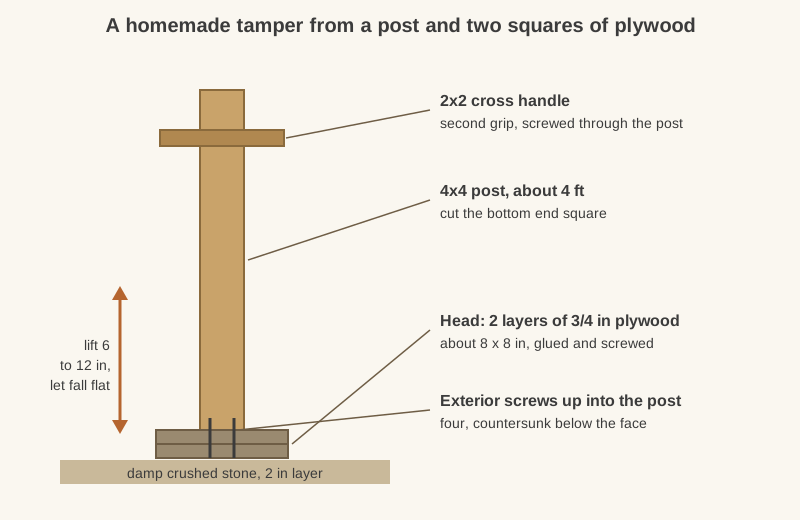
- Cut a 4×4 post to about 4 feet, with the bottom end cut square.
- Cut two squares of 3/4-inch exterior plywood, about 8 x 8 inches. Glue and screw them together.
- Center the post on the plywood and drive four exterior screws up through the plywood into the end of the post. Countersink the heads so they sit below the face.
- Screw a short 2×2 across the post near the top as a second handle.
It is lighter than a steel tamper, so expect more strikes per spot. (Nobody has ever passed a homemade tamper down through the generations. It will last the job, which is all it needs to do.)
How to compact gravel without a compactor, layer by layer
The technique is the same whichever hand tool you use:
- Firm the soil first. Tamp the bottom of the dig before any stone goes in. Loose soil under good gravel is still loose soil.
- Spread a thin layer. About 2 inches of loose stone. Engineer Fix says lifts of no more than 2 to 4 inches for manual work; I'd stay at the low end, because a hand tool mostly compacts the top of a thick layer.
- Dampen it. Engineer Fix puts it well: damp, but not saturated. The stone should darken evenly.
- Overlap every strike. Advance about half the head width each time, so each spot gets hit twice. Engineer Fix calls for a 50% overlap and then a second pass perpendicular to the first.
- Test and repeat. When the tamper stops leaving a visible dent and the surface sounds solid rather than crunchy, add the next layer.
Water helps, but it isn't a compactor
Some guides treat soaking or "puddling" as a method on its own. Water lets the fines slide between the larger stones and stops dry stone bouncing away from the tamper. It doesn't supply force.
Flooding does the opposite: it washes the fines down and out, and the fines are what let the base lock. Mist the layer evenly and let standing water drain before you tamp. If a footprint fills with water, wait.
The car-tire trick: fine for driveways, wrong for pavers
This is the one opinion I'd defend at length. Driving over a gravel driveway is a legitimate way to settle it, because that is the load it will carry, and offset passes firm it up over time.
Under pavers, the same trick fails on a number: CMHA's guide specification for interlocking pavements asks for a base surface within 3/8 inch over a 10-foot straightedge. Tires compact two strips and leave the middle and the edges loose, so the base ends up with ridges and softer bands between them. Pavers follow whatever is underneath, and they would show those bands for years.
How to tamp dirt without a tamper
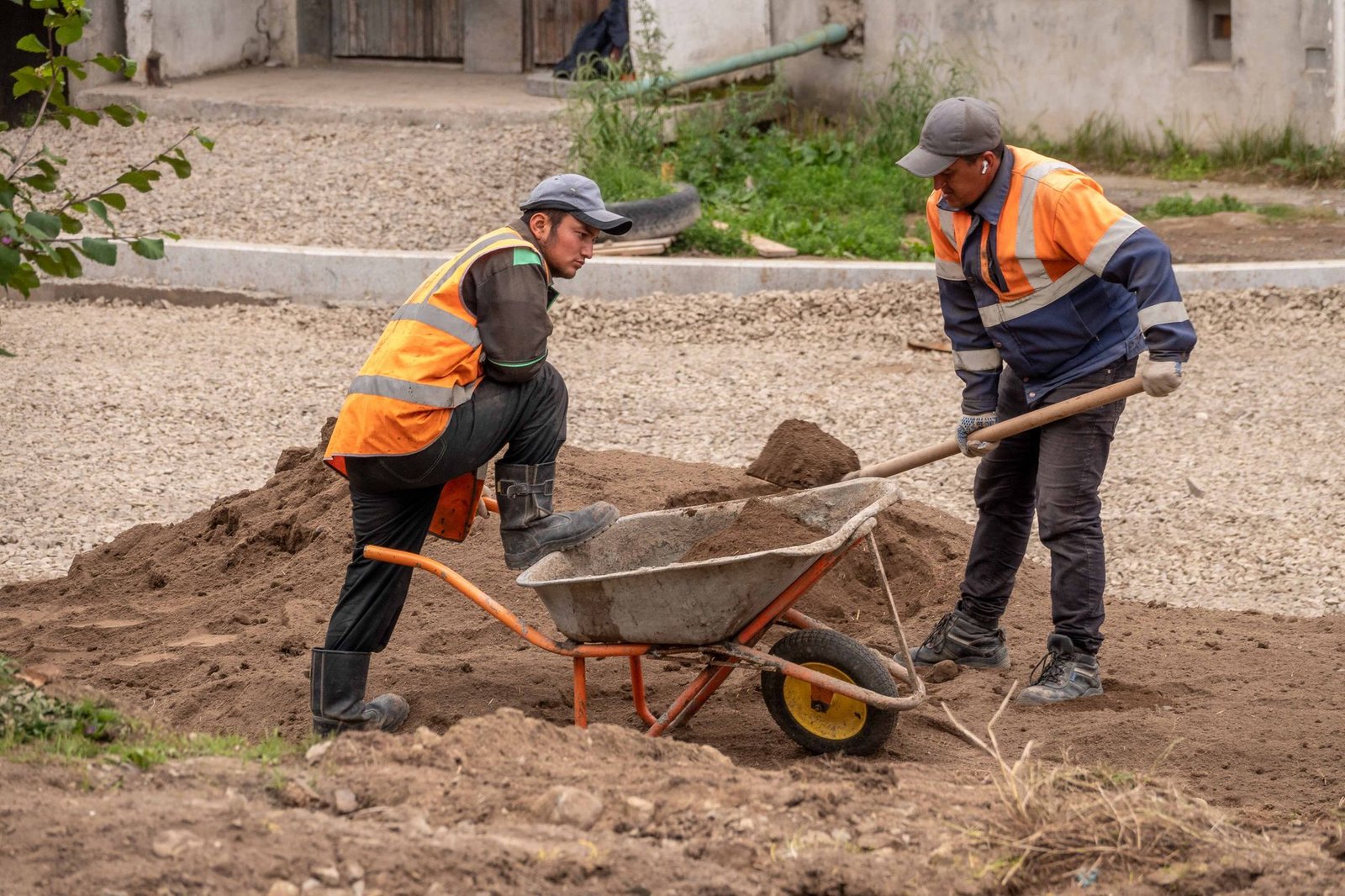
The same tools work on the soil under the gravel, with two differences:
- Moisture test. Squeeze a handful. It should hold together as a ball and crack when pressed, not smear like dough or crumble like sugar.
- No tamper at all? Walk the area heel to toe in tight rows, then across, or drop the end of a 4×4 or 6×6 post flat. Both suit small areas only.
Clay compacts poorly by hand and is better dug out and replaced with stone in soft spots. More on soils in compacting soil.
Jobs a manual method can and can't carry
| Project | Manual compaction enough? | Notes |
|---|---|---|
| Stepping-stone path | Yes | Tamp the soil and a thin stone or sand bed under each stone |
| Small landing or pad, a few dozen sq ft | Yes | Thin layers, tamper, two passes |
| Gravel garden path | Yes | Tamper for the base, lawn roller to finish |
| Shed pad | Borderline | Fine for a small shed on crushed stone; rent for a large one |
| Gravel driveway | Partly | Tamp edges and soft spots; traffic finishes it |
| Paver patio or walkway | No | Rent a plate for the base and the surface pass |
For the patio row, the issue is even density. Over hundreds of square feet your strikes get lighter as you tire, and pavers show every soft patch. The machine method is in how to compact gravel.
Tamp the small jobs, rent for the patio
Compacting gravel without a compactor works when the layers are thin, the stone is angular and damp, every strike overlaps, and the area is small enough that your last blow hits as hard as your first. Keep manual methods for landings, paths and small pads, and let a machine do anything you are going to pave. Your shoulders will be sore either way; only one of those options also leaves the patio flat.
FAQ
Can you compact gravel by hand?
Yes, for small areas. Spread angular crushed stone about 2 inches deep, dampen it, and strike it with a hand tamper in overlapping rows, then again at 90 degrees. Repeat for each layer.
Can I use water to compact gravel?
Water helps but does not compact on its own. Dampen the stone so the fines can move between the larger stones, then tamp. Flooding it washes the fines out and leaves the layer looser.
Does driving on gravel compact it?
It does, gradually, on a gravel driveway. Under pavers it is not enough, because tires compact two strips and leave uneven density between them.
What can I use instead of a tamper?
A homemade tamper from a 4×4 post and a plywood head, the end of a 6×6 post, or for soil, walking heel to toe in tight rows. All of them suit small areas only.
How thick should gravel layers be when tamping by hand?
About 2 inches loose per layer. Thicker layers get a firm top and stay loose underneath when compacted by hand.


