Last Updated on September 23, 2026 by Umar Farooq
Compacting soil means pressing the particles of the native ground closer together so it stops settling under load. It is the least photographed step of any patio build, and the one the patio remembers longest. Under a patio, walkway or driveway, you compact the subgrade after you dig out the sod and topsoil and before any gravel goes down. Get the soil damp but not wet, use a plate compactor on sandy or gravelly soil and a rammer (jumping jack) on clay, and dig out anything organic, soft or soaked rather than trying to compact it.
Which soil you have decides almost everything else: the tool, the moisture, how thin you work, and whether compacting it is worth doing at all.
A note on the other meaning. Gardeners also talk about compacted soil, meaning ground squeezed so hard roots and water can't get through. In lawns and beds that's a problem, and the fix is aeration. Same words, opposite goal. This article is about the construction side: making the ground under hardscape surfaces as firm as possible.
Why the subgrade matters even under 6 inches of gravel
It's tempting to think the gravel base does all the work. It doesn't. The base spreads each load over a wider area of soil, but the soil still carries that load in the end. If the soil squeezes down, the base goes with it, and so do the pavers, which never get a vote.
Loose soil at the bottom of an excavation is disturbed soil. Digging breaks up its natural structure, and every footstep during the dig leaves soft spots. Compacting it restores a firm, even floor for the base to sit on.
For engineered paver work, the Concrete Masonry & Hardscapes Association's guide specification recommends compacting the soil subgrade to at least 98% of standard Proctor density for pedestrian areas and residential driveways. That number comes from a lab test that finds the density a particular soil can reach at its ideal moisture. You won't run that test on a backyard patio, but it tells you the target: close to as dense as that soil can get.
How deep the base above it needs to be depends on the same soil. On well-drained soil, ICPI wants a compacted base of 4 inches under a patio or walk and 6 under a driveway, with 2 to 4 inches more on wet or weak soil or where it freezes (ICPI Tech Spec 2).
Clay, silt or sand: identify your soil first
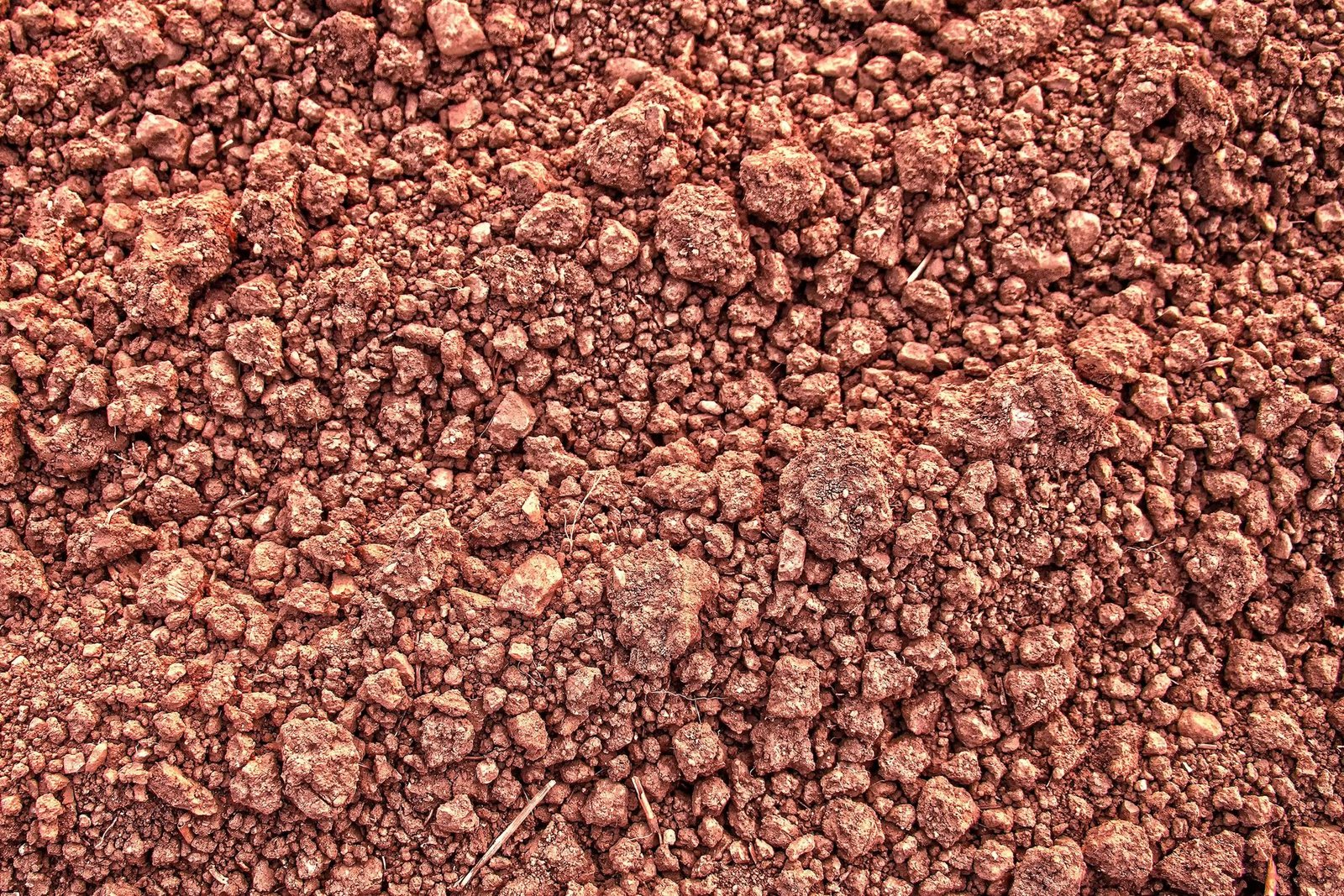
Soil engineers split soils into two broad groups, and each compacts differently:
- Granular soils (sand, gravel, sandy loam). The particles are big enough to see and feel. They don't stick together. Vibration shakes them into a denser arrangement.
- Cohesive soils (clay, silty clay, silt). The particles are tiny and stick together when damp. Vibration alone does little; they need impact or kneading to push the air out.
A third group, organic soil, is dark topsoil, peat or anything full of roots and decaying plant matter. It isn't compacted at all. It gets removed. More on that below.
Three quick tests you can do with a handful from the bottom of the dig:
- Feel. Rub a pinch of damp soil between your fingers. Gritty means sand. Smooth and floury means silt. Sticky and slick means clay.
- Ribbon. Squeeze a damp ball of soil out between your thumb and forefinger. Sand won't form a ribbon at all. Clay forms a long, flexible ribbon before it breaks.
- Jar. Fill a jar about a third full of soil, top it up with water and a drop of dish soap, and shake it hard. Sand settles in a minute or so, silt over a few hours, and clay can stay cloudy for a day or more. The layer thicknesses tell you the mix. (It is the only step in patio building that looks like a school science project, so enjoy it.)
You can also look up your property on the USDA's Web Soil Survey, which maps soil types across the US. It is the most absorbing government map I know of, but it won't know about fill the builder dumped around your foundation, so trust what you dig up over what the map says.
Moisture decides how dense the soil can get
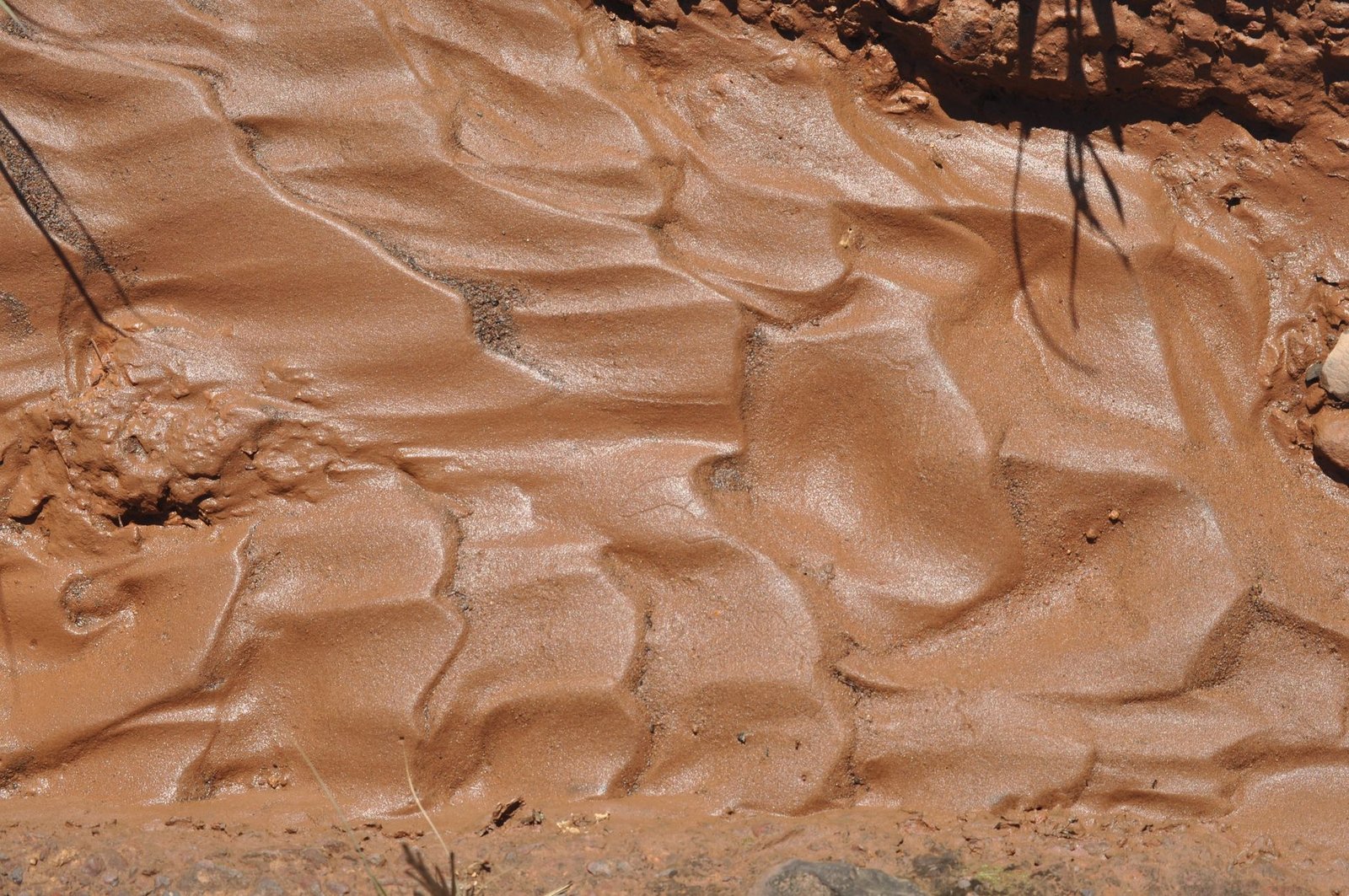
Every soil has an optimum moisture content, the water level at which it compacts to its highest density. Wikipedia's overview of soil compaction explains why the lab tests are built around it: the maximum dry density and the optimum moisture are the two numbers everything in the field is measured against.
In the field, you judge it by hand. Grab a handful from a few inches down and squeeze it into a ball, then drop it from about waist height:
- It won't hold a ball, or it falls apart into dust. Too dry. Mist it and wait for the water to soak in.
- It holds, then breaks into a few pieces when it lands. About right. Compact it now.
- It stays in one squashed lump and leaves your hand wet. Too wet. Let it dry.
G&S Equipment's soil compaction tips describe the same hand test. Every source I read uses some version of it, which is rare enough in this industry to be worth mentioning.
Moisture matters far more with clay than with sand. Sand has a wide window and drains quickly, so you can often compact it the day after rain. Clay has a narrow window. A little dry and it's hard and cloddy; a little wet and it turns to putty that squeezes out from under the machine and rebounds behind it. Compacting wet clay can make it worse, because you're kneading water into it.
If the excavation is soaked, the answer is time, not more passes. Tarp it if more rain is coming, and let it dry until it passes the squeeze test.
Which tool for compacting soil fits your ground
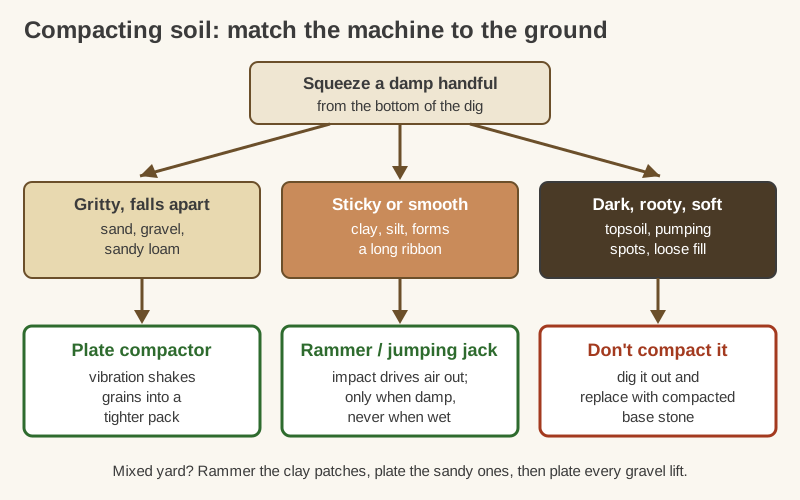
This is where the wrong machine usually gets rented. The plate compactor is what everyone rents for paver work, and it's the right tool for the gravel base. It's not always the right tool for the soil under it.
| Tool | How it works | Best soil | Where it fits a DIY job |
|---|---|---|---|
| Vibratory plate compactor | Fast, low-amplitude vibration through a flat plate | Sand, gravel, sandy loam | Subgrade on sandy sites; every gravel base |
| Rammer (jumping jack) | Hard vertical blows through a small foot | Clay, silt, mixed soils | Clay subgrade, trenches, narrow areas |
| Padfoot or sheepsfoot roller | Knobbed drum kneads the soil | Clay | Large sites and driveways, usually run by a contractor |
| Smooth-drum vibratory roller | Heavy drum plus vibration | Sand, gravel, crushed stone | Long driveways and big areas |
| Hand tamper | Your arms and a steel plate | Any, in thin layers | Corners, post holes, a few square feet |
| Water-filled lawn roller | Static weight only | None, for construction | Firming a seedbed; not a subgrade tool |
Wikipedia sums up the physics: equipment for sands and gravels usually vibrates to reorient the particles, while clay is often compacted with a sheepsfoot roller that creates small zones of intense shearing to drive the air out. A rammer does something similar on a small scale, which is why it beats a plate compactor on clay. Our comparison of the jumping jack vs plate compactor goes deeper on the two machines homeowners actually rent.
What about a "roller for compacting soil"? The water-filled lawn rollers press sod or seed into contact with the soil. They weigh a few hundred pounds at most and don't vibrate, so they won't compact a subgrade to anything like patio density. Ride-on vibratory rollers are a different machine, worth renting only for long driveways.
On a mixed site, which is most yards, rammer the clay spots and plate the sandy ones. On a clay site, a rammer on the subgrade followed by a plate on the gravel is a common two-day rental plan.
How to compact soil before the base goes in
Once the sod and topsoil are out and the excavation is roughly graded to slope, compacting soil takes less time than the digging did:
- Clean up the floor. Rake out loose clods, roots and rocks bigger than a fist. Everything left in the excavation should be firm mineral soil.
- Check the moisture with the squeeze test. Mist if dry, wait if wet.
- Make a pass around the perimeter, then work across the area in straight, overlapping lanes. With a rammer, move it steadily so it doesn't dig itself into a hole.
- Cross the first passes at 90 degrees. Two directions catch the strips the first set missed.
- Watch for pumping. If the ground ripples or squeezes up beside the machine, stop. That spot is too wet or too soft, and more passes will make it worse.
- Check the grade. Compaction lowers the surface a little and unevenly. Recheck against your string lines and shave or fill as needed. The finished subgrade should follow the same slope the pavers will.
Filling low spots. This is the one rule I'd defend to anyone: fill and compact in thin lifts, never one thick layer. Raise low spots with base stone where you can; if you must use soil, compact each thin layer separately. A thick layer compacted once from the top gets a firm skin over loose fill, the most reliable way to build a sunken spot into a new patio. The base above follows the same logic: lifts of 4 to 6 inches only make sense under a 7,000 lbf plate, and a smaller rental machine needs thinner ones (ICPI Tech Spec 2).
Leveling and grading the site before compaction is its own step; see our guide on how to level ground for pavers.
When to dig soil out instead of compacting it
Some ground can't be made firm by compacting, and time spent trying is wasted. Remove it and replace it with compacted base stone when you find:
- Topsoil or organic matter. Dark, crumbly soil with roots in it keeps decomposing and settling for years. G&S Equipment's guidance is blunt: organic soils cannot be effectively compacted. Dig until the color changes to the lighter subsoil below. Topsoil is wonderful stuff. Just not under a patio.
- Soft spots that pump. An area that squishes and rebounds after the soil has dried out has a deeper problem: a buried stump, an old trench, a pocket of saturated clay. Dig it out until you hit firm ground.
- Loose fill from construction. Soil backfilled around a new foundation is often dumped in thick layers and never compacted, and it can settle for years. Dig out the soft part, or go deeper with the base and add geotextile.
- Debris. Broken concrete, lumber and roots leave voids as they shift or rot.
- Standing water. Ground that stays wet because water collects there needs a drainage fix, not a compactor.
For clay subgrades that are firm but stay damp, the usual answer is to compact what's there, lay geotextile on top so the clay can't push up into the stone, and build a deeper base.
Keep compaction out of the planting beds
Compaction is good exactly where hardscape goes and nowhere else. Heavy machines, piles of base stone and wheelbarrow routes all compact the soil around the patio too, and that's the soil your new planting beds and lawn need loose.
A few habits help: stage stone and pavers on the future patio area or on plywood, keep a single wheelbarrow route, and don't drive the compactor across the lawn to reach the work. Afterward, loosen trampled beds with a garden fork and aerate compacted lawn strips.
Firm, damp mineral soil is the only subgrade worth building on
Compacting soil comes down to three decisions. Identify the soil: sand and gravel vibrate well, clay needs impact. Get the moisture right: damp enough to hold a ball, dry enough to break when dropped. And know when to stop compacting and start digging: organic soil, pumping soft spots and loose fill come out and get replaced with stone. Do that, and the base above has something solid to stand on. It's the only part of the job that ends with you standing in a hole feeling pleased with yourself, and you've earned it.
FAQ
What is a soil compactor?
A soil compactor is any machine that makes soil denser by pressing, vibrating or pounding it. The common types are plate compactors (vibrating plate, best on sand and gravel), rammers or jumping jacks (hard vertical blows, best on clay), and rollers (smooth-drum for granular soil, padfoot or sheepsfoot for clay). For a backyard paver job, the choice is usually between a plate compactor and a rammer.
What is the best tool for compacting soil?
It depends on the soil. A vibratory plate compactor is the best tool on sandy or gravelly soil. A rammer is better on clay because impact drives out air that vibration can't. For a few square feet, a hand tamper works on any soil if you work in thin layers.
Can you compact soil with water?
Water helps, but it doesn't compact soil by itself. Soaking loose fill and letting it drain does settle it somewhat, but it's slow and uneven, and it can leave clay too wet to work for days. Add just enough water to reach the damp, ball-holding stage, then compact mechanically.
Can you compact wet soil?
You shouldn't. Wet clay turns to putty under a compactor, pumps and rebounds, and ends up weaker than before. Let it dry until a squeezed handful breaks into pieces when dropped. Sandy soil tolerates more moisture and drains faster, so it's usually workable sooner after rain.
How do you know if soil is compacted enough?
Walk on it. Well-compacted subgrade barely takes a heel print, the compactor travels smoothly instead of bogging down, and a steel rod pushed by hand goes in only a little. Any spot that ruts, ripples or squeezes up beside the machine needs attention before the base goes down.
Do I need to compact soil before laying gravel?
Yes. Compacting the subgrade before the first lift of gravel is standard practice. A well-compacted gravel base sitting on loose soil will still settle, because the soil underneath keeps compressing.