Last Updated on September 23, 2026 by Umar Farooq
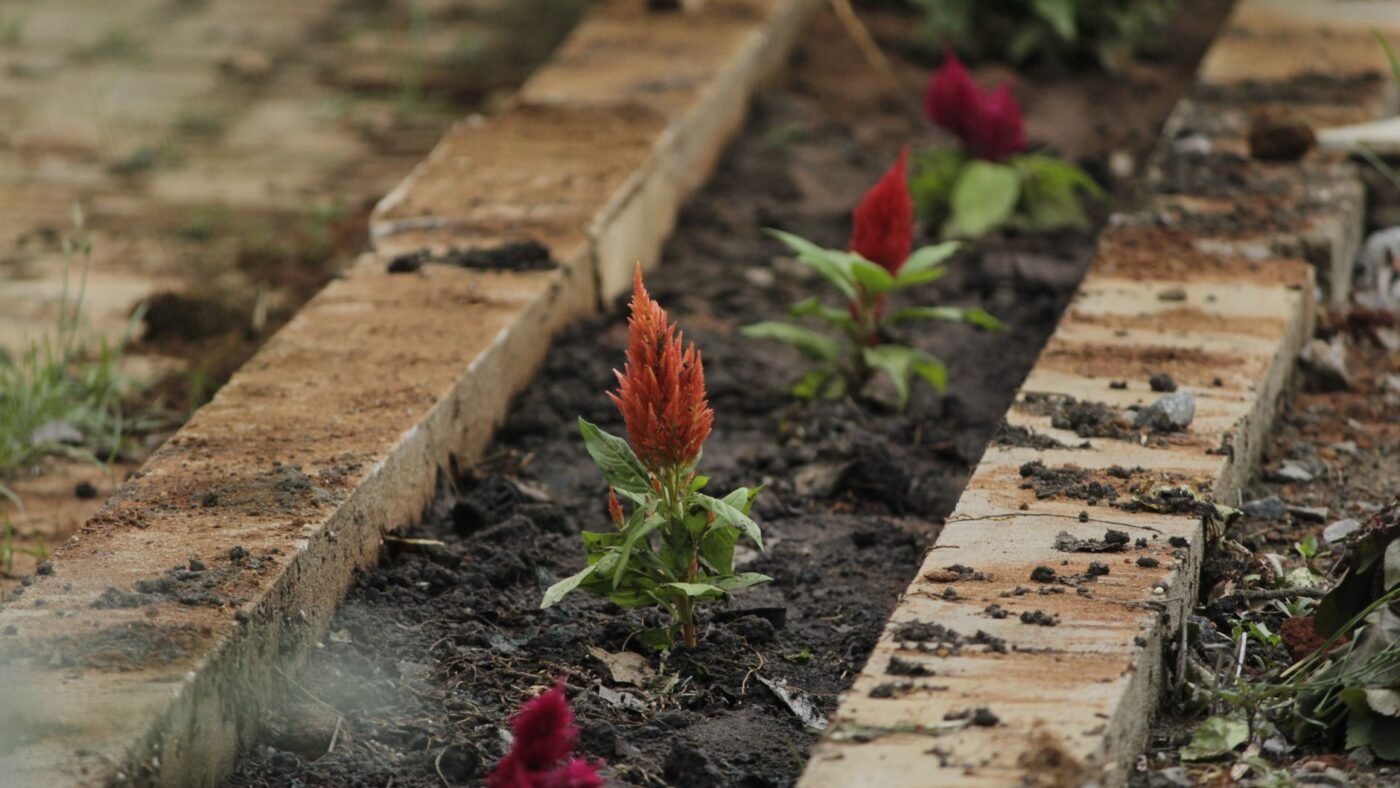
Paver edging stones are pavers or purpose-made concrete and stone units set in a shallow trench along a lawn or flower bed to make a permanent, clean edge. They are the rare garden job that pays you back every single Saturday, in trimming you no longer do. Set them flush with the soil as a mowing strip and a mower wheel rides along them, so there is no edge left to trim. Set them upright with about a third of their height buried and they hold mulch and soil in a raised bed. Either way, put them on 2 inches or so of compacted gravel and a thin layer of sand, not on bare soil, or they tilt and sink within a season.
This guide is about edging lawns and beds with pavers, not the restraint that holds a patio together; that is in our guide to paver edging.
Why edge a lawn or bed with paver stones
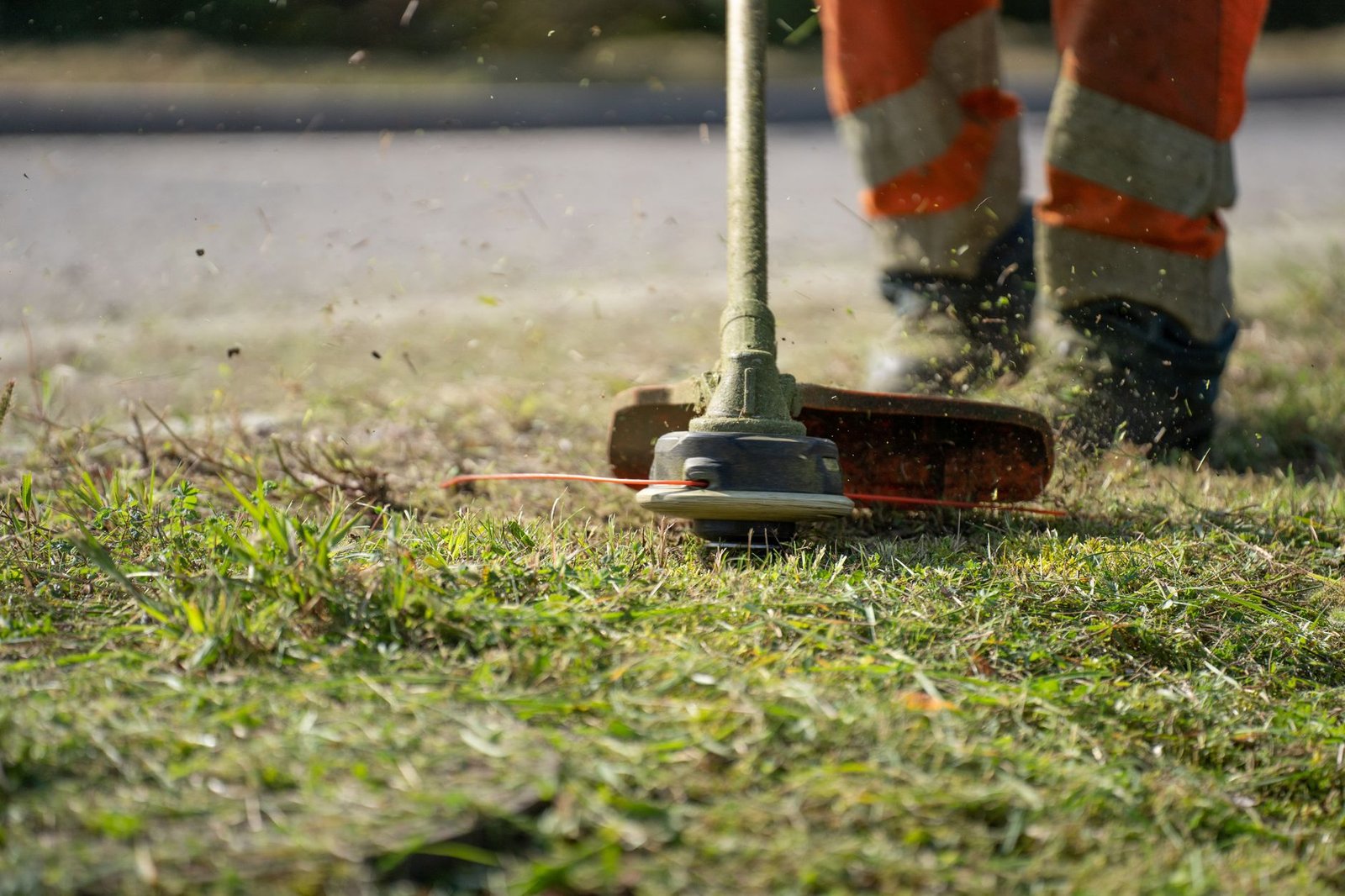
A lawn that runs straight into a flower bed looks ragged within weeks. Grass creeps into the bed, mulch spills onto the grass, and the edge needs a half-moon edger or string trimmer every time you mow. The lawn and the bed are not enemies, exactly, but they do not respect each other's borders.
Paver edging stones fix that in three ways:
- They end the trimming. A flush strip gives the mower wheel a hard surface to run on, so the blade cuts right to the edge.
- They stop grass creeping. A continuous row of pavers on a gravel base makes a physical barrier to spreading grass. It won't stop every runner, but it slows them down and makes them easy to pull.
- They hold materials in place. Raised stones keep mulch, soil and decorative gravel in the bed during rain.
Unlike plastic lawn edging, stone on a proper base does not pop out after frost, crack in sunlight, or need replacing every few years.
Flush mowing strip or raised edge?
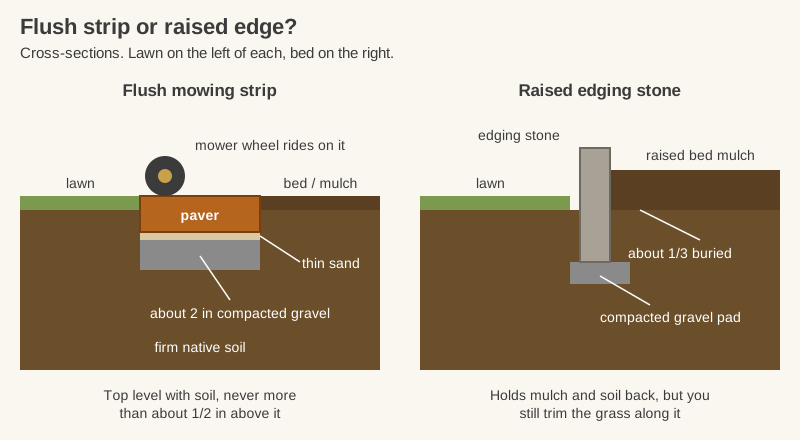
Decide this first, because it changes the stones you buy and how deep you dig.
| Flush mowing strip | Raised edge | |
|---|---|---|
| Height | Level with soil, at most about 1/2 in above | Several inches above the lawn |
| Main job | Mower rides on it, no trimming | Holds mulch and soil, defines the bed |
| Best stones | Flat pavers, brick pavers, rectangular edgers | Upright edgers, scalloped stones, palisades |
| Trimming | None along the strip | Still needed along the lawn side |
| Trip risk | Very low | Moderate |
Most gardens use a mowing strip along lawn edges and raised stones only where a bed sits higher or mulch keeps washing out. You can combine them: a flush strip lawn-side, a raised stone behind it.
Which paver edging stones to buy
Almost any durable paver works as edging. The choice comes down to the look and whether it lies flat or stands up. Before buying anything, check the side of the garage: leftover pavers from a patio job make a perfectly good mowing strip, and they already match.
- Standard 4 x 8 inch concrete or brick pavers. The most versatile paving stone edging. Laid flat with their long side across the strip, they make an 8-inch mowing strip, wide enough for a mower wheel.
- Rectangular edgers. Longer, thicker units sold specifically as edging, often with a textured or tumbled face. Good for straight runs and as a raised edge.
- Curved and scalloped edging stones. Pre-shaped units, such as bullet stone edging, for tree rings and bed curves. They suit raised edges; their scalloped tops make them hard to mow over.
- Palisades. Upright round or square concrete posts set side by side. They make a strong raised edge and handle changes in level.
- Natural stone setts or cobbles. Granite or sandstone blocks: heavier and pricier, but they last indefinitely.
Avoid ordinary wall brick. It is not made to sit in wet soil and can crumble after a few freeze-thaw cycles (it was built for a wall, and it would like to go back to one). Paramount Stone's guide to using pavers as garden edging also points to thicker stones for crack resistance and to concrete pavers in wet climates, because clay brick absorbs more water.
To tie the edging into a patio, use the same paver family or its border color. For borders built into the patio itself, see our guide to paver borders.
How to use pavers as a mowing strip
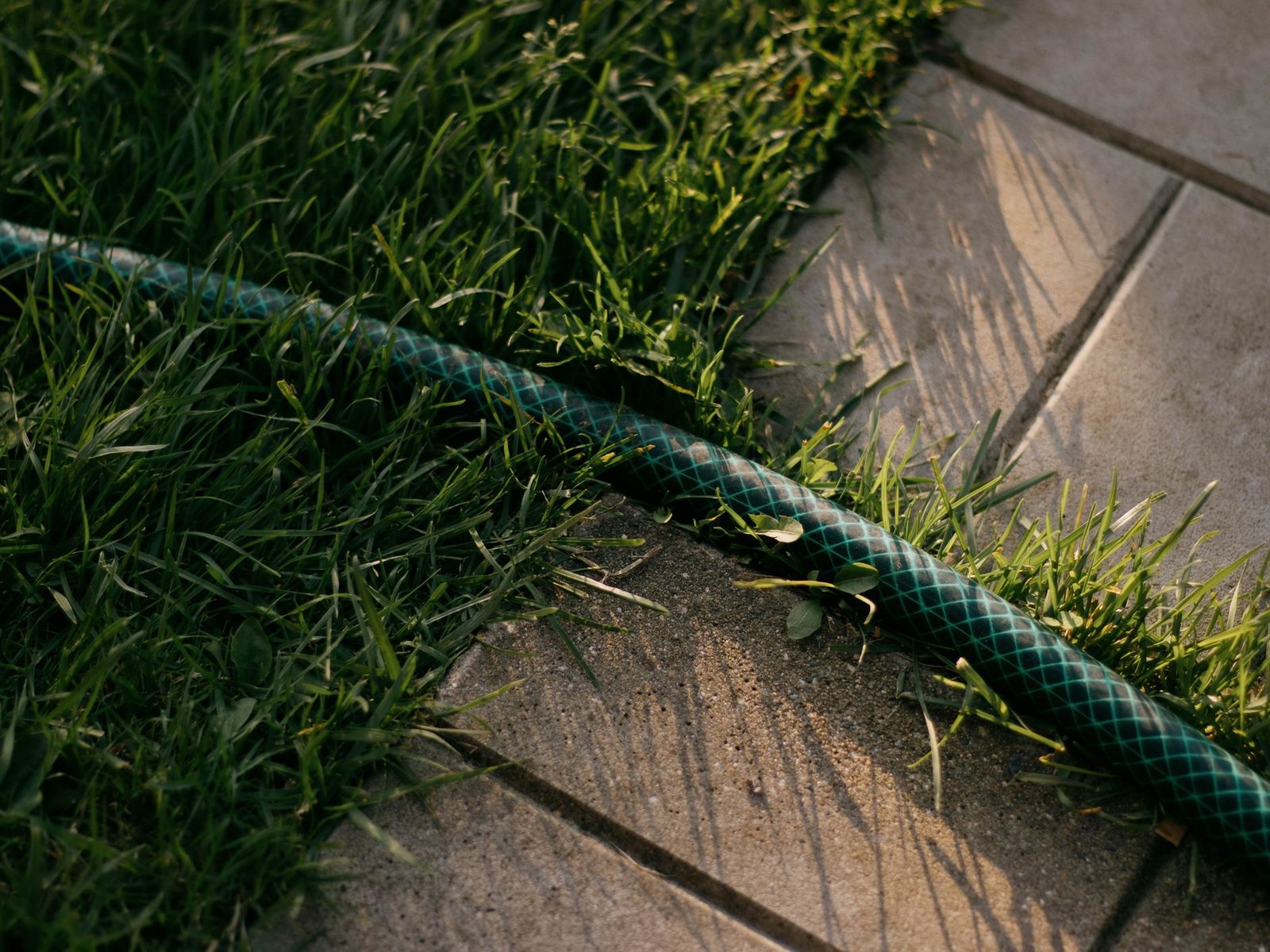
A mowing strip is simple to build, and the method matters more than the paver.
One thing you don't need: a plate compactor. For a trench a stone wide and 2 inches of gravel deep, a hand tamper does the job, because the lift is thin and you can put your whole weight on a few square inches at a time. A plate in a trench this narrow mostly compacts your patience.
- Mark the line. Use string for straight runs and a garden hose for curves. Lay a few pavers along it to check the width you want.
- Cut the trench. Slice the turf with a flat spade on both sides of the pavers and remove it. Dig deep enough for about 2 inches of gravel, a thin layer of sand and the paver. With a 2 3/8-inch paver, that is roughly 5 inches below the soil surface.
- Add and compact gravel. Spread about 2 inches of crushed gravel with fines (the same material used for paver base), dampen it and tamp it firm with a hand tamper.
- Add a thin sand bed. Screed about 1/2 inch of coarse concrete sand over the gravel. This is lighter than a patio's 1-inch bed because a single row of stones carries no traffic. Pyramid Contracting's guide to making a mowing strip with pavers uses about 1/2 inch of sand under the pavers and sets them about 1/2 inch or less above the grass to allow for settling.
- Set and level the pavers. Lay each paver tight to the last, tap it down with a rubber mallet, and check it against the string and with a level across the strip. The top should end up level with the soil at the lawn edge.
- Backfill both sides. Pack soil against the lawn side and bed side, water it in, and top up any gaps. Sweep sand into the joints.
A few details make it work better:
- Keep the strip wide enough. The UK's Pavingexpert site puts domestic mowing strips at roughly 4 to 8 inches wide. I couldn't find a published minimum beyond that, so I'd treat 8 inches as the safer floor for a mower wheel to ride fully on stone.
- Stay flush. A strip that sits 1 inch above the lawn becomes a lip the mower scalps and people trip on.
- Leave room for roots. Keep the gravel under the strip and don't let it spread under the lawn, or the grass along the edge will brown in dry spells.
Setting raised edging stones around a flower bed
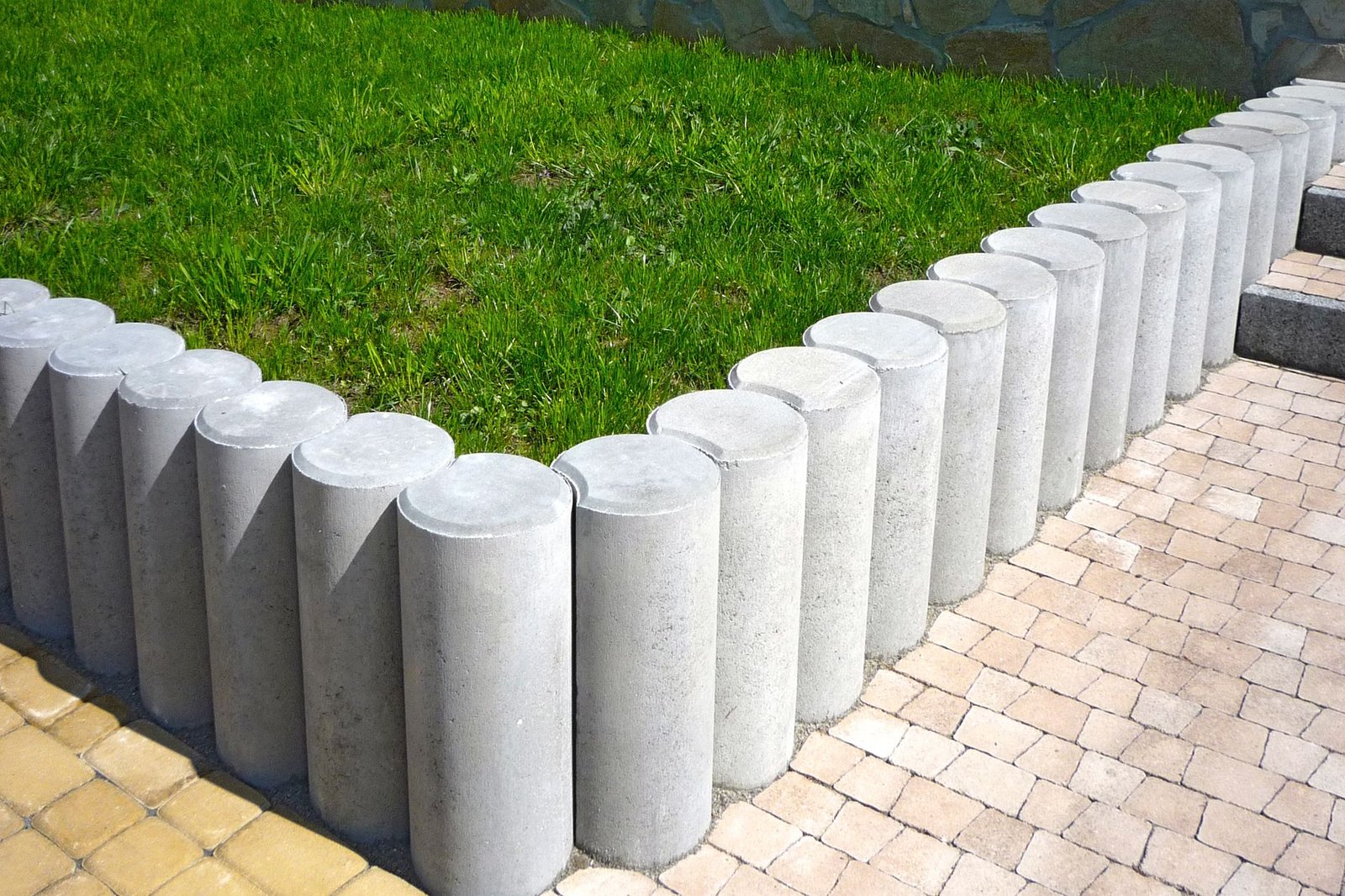
Raised paver flower bed edging is set deeper, because the stones stand up and take sideways pressure from the soil behind them.
- Dig a trench a little wider than the stones. Depth is the gravel layer plus about a third of the stone's height. Nitterhouse's edging stone installation tips use exactly that rule: roughly one-third of the stone below grade, over a thin layer of gravel for drainage.
- Compact a gravel pad in the bottom of the trench.
- Set the stones upright, tight together, checking the line with a string and the tops with a level or a straightedge.
- Backfill and tamp soil firmly on both sides. The lawn side matters most, because it is what stops the stones leaning outward.
- Fill the bed side with soil and mulch up to just below the top of the stones.
Taller palisades and anything retaining more than a few inches of soil go in concrete, not gravel. If the bed is really a small retaining wall, use wall block.
Curves, corners and tree rings
Curves need a little planning:
- Gentle curves: straight pavers follow a gentle curve with slightly wedge-shaped gaps on the outside. Fill the gaps with sand or fine gravel.
- Tight curves: use curved edging units, or cut each paver into a slight taper so the joints stay even. Small units such as setts turn tighter curves than 8-inch pavers.
- Tree rings: keep the ring outside the root flare, dig by hand, and work around large roots, not through them. Most edging stone lines sell curved units in sets that form a full circle.
- Corners: at a right angle, let one row run through and butt the other row against it, so the corner does not open up.
Keeping the stones level year after year
Stones on a proper gravel base stay put for years. What moves them is water, frost and roots, which between them have all the time in the world.
- Frost heave. Stones set directly in clay soil lift in winter and do not all come back down. The gravel layer lets water drain away from under them.
- Settling. A soft spot in the trench shows up as a dipped stone. Lift it, add and tamp gravel, and reset it.
- Weeds in joints. Tight joints and swept-in sand limit weeds; a weed barrier under the gravel helps in beds prone to them.
- Mulch creep. If mulch keeps spilling over, top up less, or add a raised stone behind the strip.
Check the edge each spring and reset any stone that has moved.
Set them on gravel, keep them flush, and let the mower do the edging
Choose a flush mowing strip wherever lawn meets a bed, and raised paver edging stones only where soil or mulch needs holding back. Dig a proper trench, tamp a couple of inches of gravel, bed the stones on a thin layer of sand and set them level with the soil. For how a patio should meet the lawn, including metal, timber and planted edges, see our guide to patio edging. Then put the half-moon edger somewhere high in the shed, and enjoy not needing it.
FAQ
How deep should paver edging stones be set?
For a flush mowing strip, dig deep enough for about 2 inches of compacted gravel, 1/2 inch of sand and the paver, roughly 5 inches for a standard 2 3/8-inch paver. For raised edging stones, bury about a third of the stone's height, on a thin gravel layer.
Can you lay edging pavers directly on soil?
You can, but they will tilt, sink and heave within a season or two, especially on clay. A couple of inches of compacted gravel with a thin sand bed on top keeps them level and draining.
How do you use pavers as lawn edging so you can mow over them?
Set flat pavers flush with the soil, or no more than about 1/2 inch above it, in a strip at least 8 inches wide. Run one mower wheel along the pavers so the blade cuts right to the edge of the lawn.
Do edging stones need mortar or concrete?
Not usually. Mowing strips and low edging stones hold well on compacted gravel and sand. Tall palisades, or stones holding back more than a few inches of soil, benefit from being set in concrete.
What pavers are best for flower bed edging?
Concrete or brick pavers rated for ground contact work well, as do purpose-made edgers and scalloped edging stones. Avoid wall brick, which is not made for wet soil. Thicker units resist cracking better than thin ones.
Do edging stones stop grass from spreading into beds?
They slow it down a lot. A continuous row of stones on a gravel base is a barrier most grass roots don't cross easily, and runners that do cross are easy to spot and pull. They are not a complete root barrier.