Last Updated on September 23, 2026 by Umar Farooq
The right paver stain remover depends on what made the stain, and I have now read enough cleaner labels to confirm that the bottle claiming to remove everything removes mostly your money. An oil stain needs a degreaser or a poultice that draws oil out of the pores. Rust needs a rust remover made for concrete, not muriatic acid. Tire marks, paint and tar need a solvent-based rubber, paint and tar remover. Leaves, berries and mildew need oxygen bleach or an organic stain remover. Identify the stain first, test on one paver, and treat only the stained area. General washing is covered in our paver cleaning guide.
Match the paver stain remover to the stain
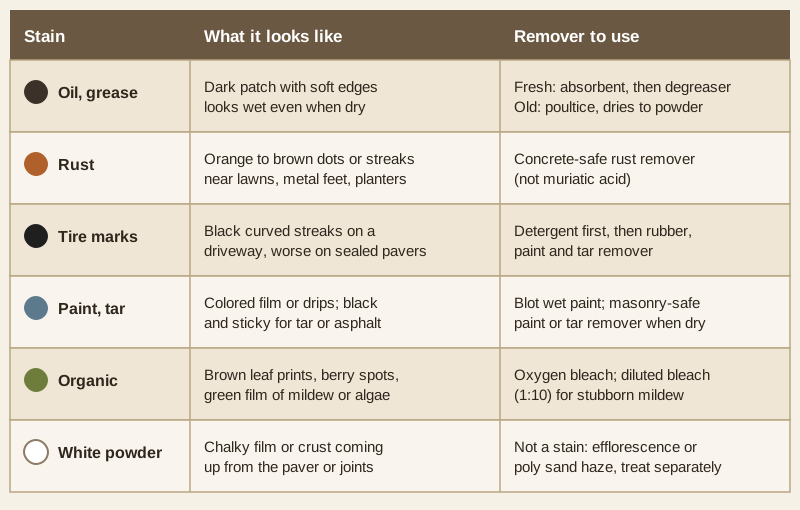
Check the cupboard before the store. My opinion here is simple: most stains need something you already own. Cat litter, dish soap and a tub of oxygen bleach handle fresh oil, light grime and most organic stains; only old oil, rust and paint justify a dedicated product. The wrong chemistry does more than fail: acid on an oil stain leaves the oil and etches the paver around it, and a solvent on rust just spreads it. The chart's last row, white powder, isn't a stain at all.
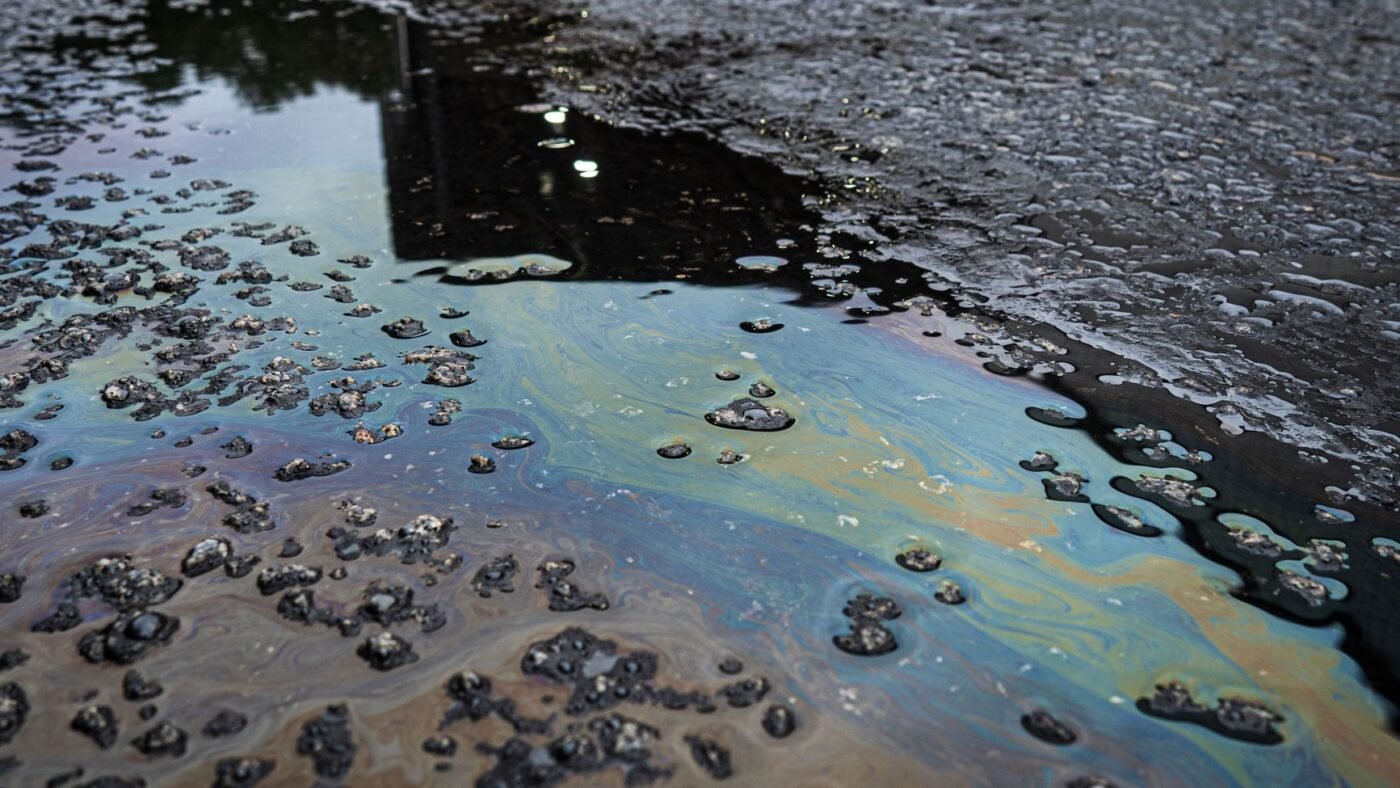
Oil and grease: catch it fresh or draw it out
Fresh oil is far easier than old oil, because it hasn't had time to move in and unpack.
Fresh spill (same day):
- Blot, don't wipe; wiping spreads it.
- Cover it with an absorbent: cat litter, baking soda or sawdust. Leave it several hours, then sweep it up. (The cat will not be consulted.)
- Scrub what's left with hot water and liquid dish soap or a masonry degreaser, then rinse.
Old or deep stain: use a poultice-type oil and grease remover. It dries to a powder, pulling oil up out of the pores. Prosoco's guide to removing oil stains from pavers gives 5 to 8 hours of drying for its poultice, says overnight is fine, and says not below 50°F. Brush off the powder and repeat if a shadow remains. Old stains often need two rounds.
Rust spots from fertilizer, furniture and steel
Rust is iron oxide bound into the surface, and soap won't move it. Use a rust remover made for concrete and masonry, usually based on oxalic acid or a similar mild acid, which dissolves iron staining without eating the cement.
- Wet the area first, then apply the remover only to the spots and scrub with a stiff nylon brush.
- Rinse thoroughly. Keep it off lawns and beds.
- Cambridge's stain removal chart notes that rust remover can damage a sealer and may take several applications, so expect to spot-reseal afterwards if the patio is sealed.
Fertilizer rust shows up as a scatter of small orange dots near the lawn edge, like the lawn is trying to sign its work. Sweep granules off the pavers before you water them in.
Tire marks and rubber on driveway pavers
Tire marks are rubber mixed with road grime, most common on sealed driveways where hot tires soften the sealer. Start mild: hot water, detergent and a stiff brush lift light marks. For darker marks, use a rubber, paint and tar remover: apply, give it the label's dwell time, agitate with a nylon brush and rinse. On a sealed driveway, a mark fused into softened sealer may only come out when the sealer does, which is one more reason I'm not in a hurry to tell anyone to seal.
Paint, tar and chewing gum
- Wet paint: blot it up with rags. Wiping or hosing drives it into the joints and pores.
- Dried paint: scrape off what you can with a plastic scraper, then apply a paint remover labeled safe for concrete or masonry. Let it dwell, scrub gently and rinse. Dried latex can take more than one round.
- Tar and asphalt: chill thick blobs with ice so they go brittle, scrape them off, then treat the residue with a tar remover.
- Gum: freeze it with ice, pop it off with a scraper, then clean the residue.
Wear the gloves and eye protection listed.
Leaves, berries, mulch and mildew
Organic stains are plant tannins and pigments, plus mildew and algae. They're usually the easiest to shift, and sunlight helps for free.
- Oxygen bleach (sodium percarbonate) dissolved in warm water handles most leaf, berry and mulch stains. Let it soak for about 15 minutes, scrub with a nylon brush and rinse.
- Diluted chlorine bleach works on stubborn mildew. Unilock's stain removal guide suggests 1 part bleach to 10 parts water. Keep the area wet while you work, protect nearby plants, and never mix bleach with vinegar or ammonia.
- Commercial organic removers suit heavy tannin staining under trees.
Before any remover goes on the patio
Reading through manufacturers' stain charts side by side, the pattern is obvious: the warnings are about method far more than product. So:
- Test on one paver first. Use a corner one or a spare, and let it dry fully before judging.
- Treat only the stain. Covering a whole patio with a rust or paint remover lightens the color unevenly.
- Pre-wet around the spot so the product doesn't wick into clean pavers.
- Rinse downhill and away from the joints. A pressure washer on a narrow tip will pull out joint sand and can etch the paver face. The power washing pavers guide covers safe settings.
- Don't reach for muriatic acid. It etches concrete pavers and exposes the aggregate, and that change is permanent.
White haze isn't a stain. If the white film appeared right after new joint sand went in, it's polymeric sand haze; if white powder came up from inside the paver, it's efflorescence. Neither responds to the products above.
Identify first, then treat the smallest area possible
The best paver stain remover is the one made for the stain in front of you. Test on one paver, keep the product on the stain, and rinse gently. Most stains come out in one or two rounds. And if a faint shadow is still there after round two, put a planter on it; I won't tell anyone.
FAQ
What is the best stain remover for pavers?
There isn't one best product for every stain. Use a poultice-type oil and grease remover for oil, a concrete-safe rust remover for rust, a rubber, paint and tar remover for tire marks and paint, and oxygen bleach or an organic stain remover for leaves and mildew.
How do you get old oil stains out of pavers?
Use a poultice-type oil remover. Apply it over the stain, let it dry to a powder, typically over several hours or overnight, then brush it off. The drying poultice draws oil up out of the pores. Deep or old stains may need a second application.
Does vinegar remove rust from pavers?
Vinegar can lighten very light rust spots, but it's slow, and it's an acid that can dull concrete pavers. A rust remover made for concrete and masonry works better and is more predictable. Test it on one paver first either way.
Will bleach damage pavers?
Diluted bleach, about 1 part bleach to 10 parts water, is generally safe on concrete pavers for mildew and algae if you rinse well. It can lighten some pigments, so test first. Protect plants, and never mix bleach with vinegar or ammonia.
Can a pressure washer remove stains from pavers?
It removes surface grime and loosened residue, but on its own it rarely lifts oil or rust that has soaked in. High pressure can also etch the paver face and blow out joint sand. Treat the stain chemically first, then rinse at low pressure.