

Last Updated on October 20, 2026 by Umar Farooq
Is polymeric sand toxic? Not once it has cured in the joints, but the dry product needs respect. The bag is mostly quartz sand, and its fine dust can contain respirable crystalline silica, which scars the lungs with repeated exposure. Some brands also contain a little portland cement, which is caustic on wet skin and in eyes. Safety data sheets classify these products as harmful if swallowed and as eye irritants. So wear a respirator, goggles and gloves while you pour and sweep, keep kids and pets away until the joints cure, and don't wash the leftovers into a storm drain. A cured joint on a finished patio is about as hazardous as the pavers around it.
I read the safety data sheets for several brands, because that's where manufacturers have to write what the marketing leaves out. They're less reassuring than the front of the bag and less alarming than some of the internet. The truth sits in the middle, and it depends almost entirely on whether the sand is dry and airborne or wet and in the joint.
What's actually in the bag
A polymeric sand SDS lists three kinds of ingredients:
- Quartz sand, which is crystalline silica. The Sakrete SDS covering Paver Set and PermaSand puts quartz at 60 to 100 percent of the mix.
- A polymer binder. Alliance Gator's FAQ describes its binder as synthetic, "oil-based polymers", and says its sands contain no cement.
- Sometimes portland cement. The same Sakrete safety data sheet lists portland cement at 0.5 to 2 percent, and the Paver Set data sheet warns about "alkali in Portland cement." Dominator markets itself as cement-free.
The Sakrete SDS classifies the product as harmful if swallowed, a serious eye irritant, a possible skin sensitizer and, because of the quartz, a carcinogen by inhalation. A Unilock-branded polymeric sand SDS I read gives a similar picture, listing crystalline silica as a known carcinogen under NTP, IARC and California's Proposition 65. None of that means the patio will hurt you. It means the dust will if you breathe enough of it.
Silica dust is the real hazard
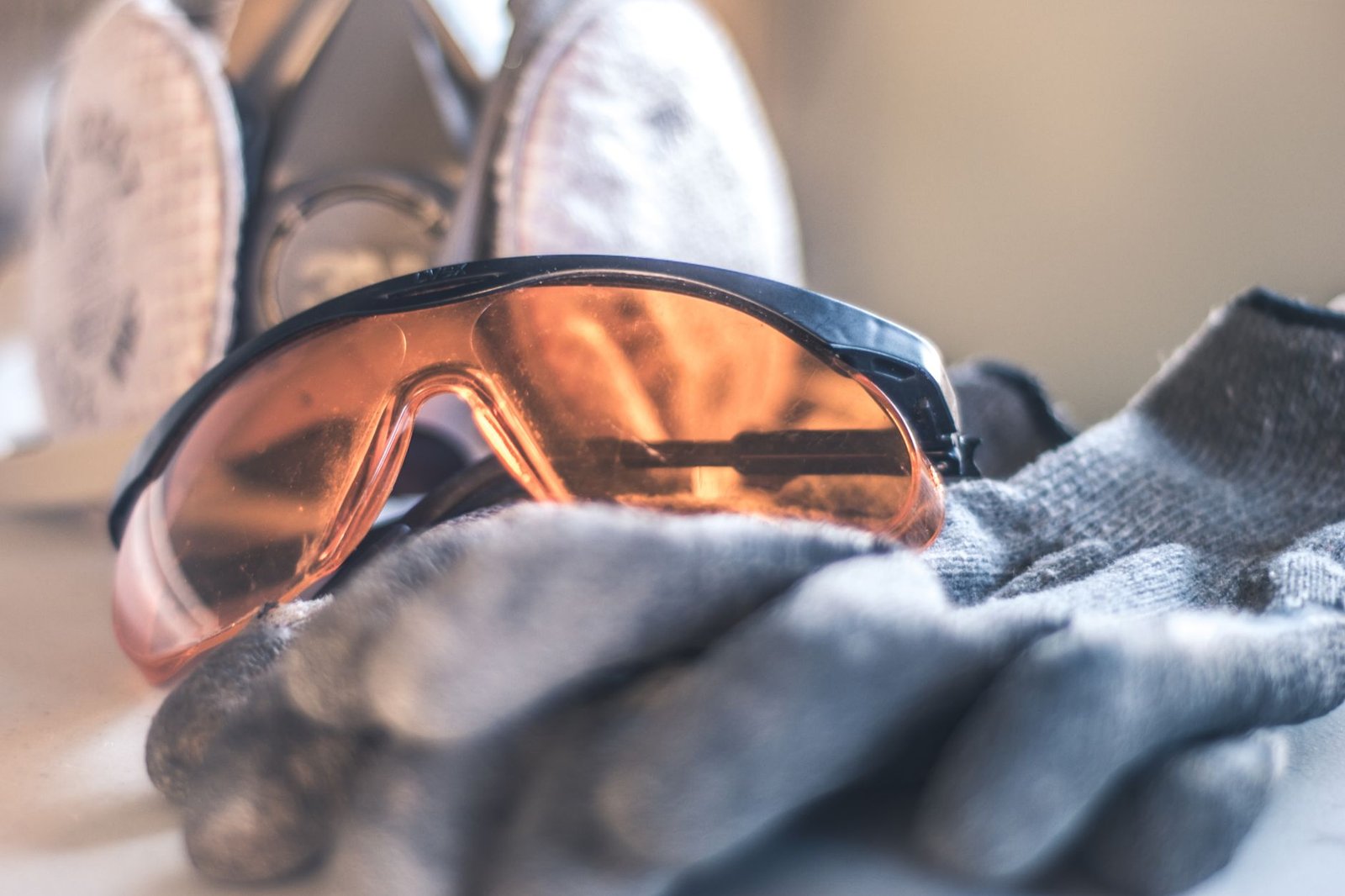
Crystalline silica is only dangerous as respirable dust: particles fine enough to reach deep into the lungs. Whole grains of sand sitting in a joint don't qualify. The dust raised when you pour a bag, sweep it across a dry patio, or scrape out old joints can.
The numbers come from construction, not DIY patios. OSHA's silica rule for construction sets a permissible exposure limit of 50 µg/m³ over an eight-hour shift (29 CFR 1926.1153). NIOSH describes silicosis as not reversible, but preventable. CDC's MMWR recorded 1,437 US deaths with silicosis as an underlying or contributing cause from 2001 to 2010, 28 of them in people aged 15 to 44. That's occupational data from people exposed for years, not a weekend of sweeping. I'm quoting it for the mechanism, not the odds: the harm is cumulative and permanent, so it makes sense to keep your own exposure near zero while it's cheap to do.
Some makers now test for this. SEK says PolySweep's respirable silica level is below reportable limits under normal use, and Alliance Gator and Techniseal describe their sands as compliant with OSHA's silica limits. That's reassuring, but it's measured under their conditions, not your windy Saturday. Every one of those data sheets still tells you to wear eye and breathing protection.
Five safe-handling habits for a polymeric sand job
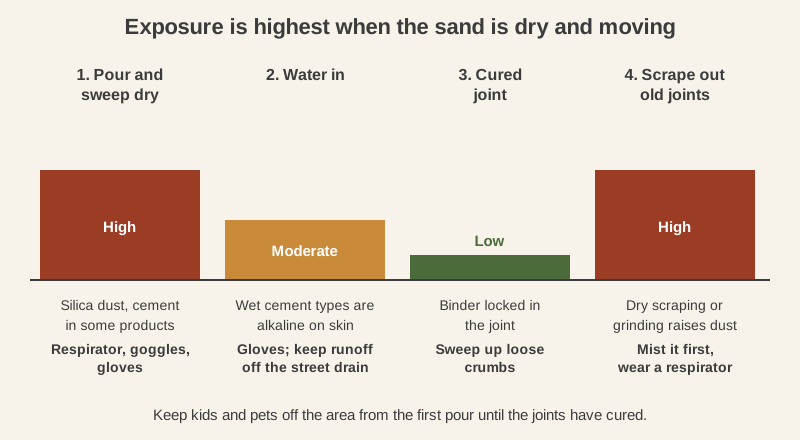
My view, for what it is worth: treat the pour as the hazard, not the patio. Nearly all of your exposure happens in the hour when the sand is dry and moving, so that's where the precautions go.
- Wear a real respirator for the dry work. A paper nuisance mask isn't enough. Use an N95 or better, fitted properly, while you pour, sweep and blow off the surface. SEK's data sheet names eyewear and a respirator as standard equipment.
- Goggles, not just glasses. Cement-bearing sand in the eye can cause burns once it gets wet. The Sakrete SDS calls for dust-proof or splash-proof goggles.
- Gloves and long sleeves. Wet cement is alkaline. Wash any skin that gets sand on it before it sits damp for long.
- Pour low and stay upwind. Tip the bag close to the ground, work with the wind at your back, and sweep with steady strokes rather than flicking. Use a leaf blower on low and angled across the surface. It's fine for clearing the faces, but it's the step that puts the most dust in the air.
- Wet it down before you scrape out old joints. Removing cured polymeric sand with a scraper, wire wheel or grinder makes dust again. Mist the joints first and keep them damp while you work.
The same care keeps the job looking good. Dust left on the pavers is what turns into haze, so the step that protects your lungs also protects your patio.
Is polymeric sand safe for dogs and kids?

Once cured, the joints are hard, sit 1/8 inch below the paver surface, and aren't something a pet can easily eat. The risk is during and just after installation:
- Keep pets and children off the area from the moment the bag is opened until the joints have set. Depending on the brand, that's roughly 24 to 72 hours. Dry sand on the surface gets tracked indoors, licked off paws and rubbed into eyes.
- Store open bags out of reach. The SDS classes the product as harmful if swallowed.
- Sweep up and bag the leftovers. Don't leave piles along the edge for a dog to dig in.
If a pet or child swallows dry sand from the bag, or gets it in their eyes, rinse the eyes with plenty of water and call your doctor, your vet or a poison line. Have the SDS or bag to hand so they can see exactly what's in it. I went looking for documented cases of pets harmed by cured polymeric joints and found forum threads and worried questions, not case reports. So I can't give you a risk figure, only the SDS's classification and some common sense.
Is polymeric sand bad for the environment?
There are three separate questions here, and they have different answers.
Runoff during installation. Sakrete's older Paver Set sheet says uncured cement "is an environmental hazard, which may adversely affect fish and wildlife." That's the cement component, and it's why you sweep excess back into the bag instead of hosing it into the street. Rinse water should soak into the lawn, not run into a storm drain.
Stormwater after installation. A University of Florida IFAS extension article points out that polymeric sand isn't porous, so rain runs off rather than soaking in. On a small patio that's minor. Across many hard surfaces it adds to runoff, which is why some regions encourage permeable alternatives. We cover those in is polymeric sand permeable.
The polymer itself. This is the honest gap. The Sakrete SDS says "no ecological consideration when used according to directions," but lists persistence, bioaccumulation and mobility in soil as "no data available." I couldn't find a study on what happens to polymeric sand binders as the joints slowly break down over the years. Some landscapers dislike putting synthetic polymers into gardens for that reason. It's a fair preference, but the data to settle it one way or the other doesn't exist yet. If you'd rather avoid synthetic binders altogether, we compare the main alternative in stone dust vs polymeric sand.
Vegetable gardens, play areas and wells
For paths between raised beds, the practical risks are dust drifting onto leafy crops during installation and sand being swept into the soil. Cover nearby beds with a tarp while you work, and sweep the surplus away from them, not into them. I found no data showing cured joints leaching anything into adjacent soil, and no data proving they don't.
Around sandboxes and play areas, keep children off the area until the joints cure and clean the surface thoroughly. Near a private well, the main thing to avoid is rinsing uncured, cement-bearing material toward the wellhead, which is good practice with any masonry product.
If you're still weighing whether polymeric sand suits your project at all, our overview of what polymeric sand is covers where it earns its place and where plain sand is the better call.
Dry sand needs a mask, cured joints need nothing
So, is polymeric sand toxic? The finished joint isn't something to worry about. The dry product is a dusty, silica-bearing and sometimes cement-bearing material that deserves a respirator, goggles, gloves and a few days of keeping the dog inside. Put the precautions in the hour of the pour, sweep the surplus back into the bag rather than down the drain, and the patio becomes one of the least hazardous things in your yard. The lawnmower parked beside it deserves far more respect. We have a separate page on dog friendly paver patio if you need the specifics.
FAQ
Is polymeric sand safe once it dries?
Yes, for normal use. Once cured, the sand and binder are locked into the joint below the paver surface. The hazards on the safety data sheet apply mainly to dry dust during installation and to material scraped or ground out later.
Do I need a mask for polymeric sand?
Yes. Wear an N95 or better, fitted properly, while pouring, sweeping and blowing off the surface. The dust can contain respirable crystalline silica, and some products contain portland cement. Add goggles and gloves.
Is polymeric sand toxic to dogs?
Dry sand from the bag is classified as harmful if swallowed, so keep dogs off the area and away from open bags until the joints have cured. If a dog eats dry product, call your vet and have the bag or SDS to hand. Cured joints pose little practical risk.
Is polymeric sand bad for the environment?
It adds a little to stormwater runoff because it isn't porous. Uncured cement-bearing products can harm aquatic life if washed into drains, so sweep the excess up. Long-term data on how the polymer binders break down is not available.
Can polymeric sand go around a vegetable garden?
It can be used on paths between beds. Cover the beds during installation, keep the sweepings out of the soil, and don't rinse surplus sand into them.


