Last Updated on September 23, 2026 by Umar Farooq
Yes, staining concrete pavers works, as long as you know what a stain can and can't do, and most of the disappointed before-and-after photos I found online come down to the "can't." A paver stain is semi-transparent: it soaks into the porous concrete surface and tints the color that is already there. That makes it good for reviving faded pavers, warming up a cold gray, or pulling red pavers toward brown or charcoal. It can't make pavers lighter, and it won't hide texture, cracks or efflorescence. The job is simple: clean, let the pavers dry, test a patch, spray thin coats, then seal.
My opinion comes first, because it's the cheapest one here: buy the stain last. A lot of "faded" pavers are really dirty pavers wearing a film of grime and white bloom. Clean them and see what color you have. If it's merely dull, an enhancing sealer is next. Stain is for when the hue itself is wrong, since it's the only step that adds pigment.
Can you stain pavers a different color?
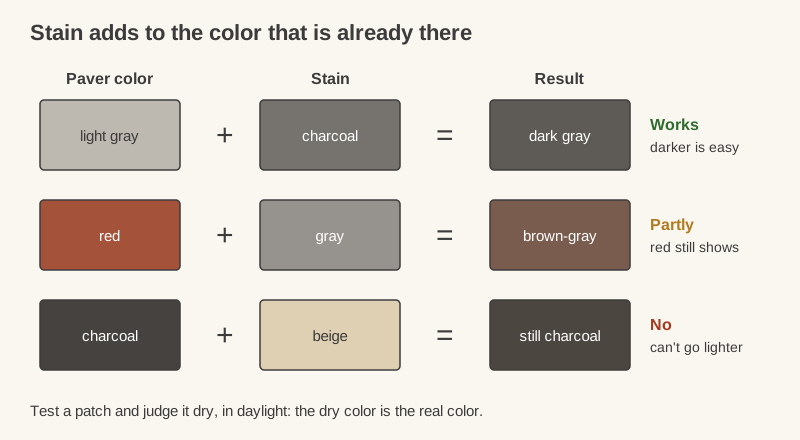
You can shift the color, but the original shows through. Treat stain like tinted glass over the paver, not paint. Stain has opinions, but the paver always gets the final word.
- Darker works. Tan to brown, light gray to charcoal, or faded anything back to near its original color.
- Sideways works partly. Red concrete pavers stained with a gray product end up as a muted brown-gray, not a true cool gray. Direct Colors' guide to staining concrete pavers suggests building gray shades up gradually over red rather than trying to cover it in one pass.
- Lighter does not work. No penetrating stain turns charcoal pavers into beige. If you need that, you're shopping for new pavers or an opaque coating, with all the peeling that comes free with one.
The same stain reads differently on different pavers: Direct Colors notes one charcoal stain goes warm on clay brick, with its brown undertones, and cool on gray concrete. Blended pavers take stain unevenly because each color has a different porosity. Hence the test patch first.
Three kinds of paver stain, and which one fits
Stain labels can be confusing; I compared a shelf's worth of data sheets and still had to draw a table. Most paver products fall into one of these groups:
| Stain type | How it colors | Good for | Watch out for |
|---|---|---|---|
| Penetrating paver stain (solvent- or water-based) | Highly pigmented; soaks into pores | Changing or reviving color on concrete pavers | Needs a porous, unsealed surface |
| Semi-transparent acrylic concrete stain | Thin tinted acrylic that bonds to the surface | Refreshing patios and walkways | Wears in traffic lanes; can lift under hot tires |
| Acid (reactive) stain | Reacts chemically with lime in the cement | Smooth, fairly new cement surfaces | Unpredictable on weathered pavers with exposed aggregate |
Paver stains carry more pigment because they're fighting an existing color. Acid stain is the least forgiving on old pavers: once the surface cement has worn away and the sand grains show, there is little lime left to react with, and the result looks blotchy.
Skip solid-color concrete stain and porch paint. They're opaque films that hide texture, turn slippery when wet and peel in the joints and traffic lanes.
Stain or color-enhancing sealer?
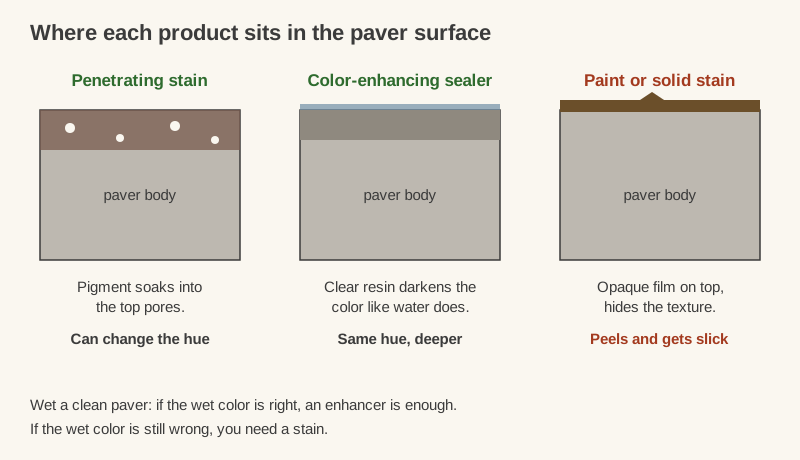
Many people searching for staining patio pavers really want their old color back, and an enhancing sealer may be all they need.
- A color-enhancing ("wet look") sealer darkens and deepens the color you already have, much like pavers look when they're wet. It can't change the hue.
- A stain adds pigment, so it can change the hue and bring back color that has worn off.
A quick test: splash water on a clean paver. If the wet color is the color you want, an enhancing sealer will get you close. If the wet color is still wrong, you need stain. Our sibling guide on paver sealing covers sealer types if an enhancer turns out to be enough.
Test whether the pavers will take stain
A stain only soaks into a surface that absorbs. Check three things first.
Is there old sealer on it? Direct Colors describes a water test: pour a little on the surface. If it soaks in quickly, the pavers are probably unsealed. If it beads or sits there, they have been sealed, and stain will sit on top and wear off. The old sealer has to be stripped first, or you need a stain labeled for use over sealed surfaces.
Is it old enough? New concrete needs time to cure. Behr's technical data for its semi-transparent concrete stain asks for at least 30 days of cure on new concrete, and lists pavers among the surfaces it can be used on.
Is there white bloom? Efflorescence (a white, powdery salt deposit) has to go before staining. Stain won't fix it.
Staining concrete pavers in 7 steps
Pick a stretch of dry weather. Behr's label calls for air and surface temperatures between 50 and 90°F, no direct sun on the surface, and no rain or heavy dew for 24 hours. Early morning on an overcast day is ideal.
- Clean thoroughly. Remove dirt, oil, moss and efflorescence; a pressure washer with a fan tip does most of it. Our guide to power washing pavers explains how to do that without blasting out the joint sand. Grease spots need a degreaser, or the stain will skip them.
- Let everything dry. Give the pavers 24 to 48 hours of dry weather after washing. Stain on damp concrete dries blotchy.
- Protect what shouldn't change color. Tape and cover siding, door thresholds, plant beds and any border you want to keep. Overspray from a pump sprayer travels farther than you'd think. (The neighbour's white car is always parked closer than you'd think, too.)
- Test a patch. Stain a few pavers in a corner, let them dry fully, and look in daylight. The dry color is the real color; the wet one is a sales pitch.
- Spray the first coat thin. Use a pump sprayer on a fine setting, moving in overlapping circles. Behr suggests working in sections about 4 by 4 feet and back-rolling right away with a roller if you want a more even look. Feather the edges of each section so you don't get lap marks.
- Build color with a second coat. Let the first coat dry (Behr lists 4 hours before recoating), then decide whether it needs another. Stop at three coats. Direct Colors warns that more than three layers sit on the surface instead of bonding, and they start to flake.
- Seal it. Once the stain has dried, apply a sealer over it. More on that below.
Stain darkens the joint sand too; for light joints, add new sand after sealing.
For traffic, Behr's label allows light foot traffic after 24 hours, furniture and heavy foot traffic after 72 hours, and asks you to park tires on cardboard for 7 days on driveways.
Staining a border or single pavers
Two targeted uses work well:
- Stain the border only. A soldier course stained two shades darker than the field frames a patio without replacing any pavers. Mask the field with tape and plastic, then brush or roll the border.
- Break up a flat color. On a single-color patio, brushing stain onto random pavers creates a blend that looks more like a multi-color product. Use two tones and avoid obvious patterns.
Brushing uses more product than spraying but gives edge control.
Sealing locks the new color in
Stain on a horizontal surface wears. Shoes, grit, tires and UV all work on it, and I noticed Behr's own data sheet admits horizontal surfaces may wear early and need touch-ups. A sealer takes that wear instead of the stain.
- Use a sealer the stain maker approves. Some solvent-based stains call for a specific topcoat.
- Allow the stain to dry first. Behr asks for at least 4 hours before topcoating.
- Pick the finish deliberately. A wet-look sealer deepens the new color further. A matte or natural sealer keeps it close to what you saw on the test patch.
- Choose a solid sealer. Direct Colors treats 25% solids or more as the benchmark for an acrylic sealer over stained pavers and suggests resealing roughly every 2 to 3 years.
Around pools and in shade where surfaces stay damp, check that the sealer is rated for constant moisture. Behr's glossy topcoats are not.
How long paver stain lasts
A sealed stain on a patio or walkway usually holds its color for years, but not evenly. Expect it to fade first in the places that take the most wear:
- Paths from the door to the grill or the lawn
- Driveway wheel tracks, especially where tires turn in place
- Steps and pavers under drip lines
Touch-ups are easy: clean the worn area, let it dry, spray a light coat, and reseal. Keep a labeled container of the exact color. A new batch later rarely matches, and "close enough" is visible from the kitchen window.
Grit acts like sandpaper on the sealer. Sweeping and gentle washing (see our paver cleaning guide) keep the sealer, and the color under it, going longer.
Stain darker, test first, seal every time
Staining concrete pavers is a good fix for faded or dated color. Go darker or warmer, never lighter. Confirm the surface is clean, dry, unsealed and free of efflorescence. Test a patch before you commit. Spray thin coats and stop at three. Then seal the result, because the sealer is what keeps the new color on the ground. And if the pavers came up looking fine after that first proper wash, put the stain money toward something with a cushion on it.
FAQ
Can you stain pavers that are already sealed?
Usually not directly. Most stains need to soak into bare concrete, so they can't get through an intact sealer. Do the water test: if water beads, strip the old sealer first, or use a stain the maker specifically labels for sealed surfaces.
Can you stain red pavers gray?
You can move red pavers toward gray, but you won't get a true cool gray. The red undertone shows through a semi-transparent stain, so the result is a muted brown-gray or charcoal-brown. Build it up in thin coats and test first.
Is it better to stain or paint concrete pavers?
Stain, for most outdoor pavers. Paint forms a film that hides the texture, gets slippery when wet, and peels in traffic lanes and joints. Stain soaks in, keeps the texture, and wears gradually instead of flaking.
Do you have to seal pavers after staining?
You don't have to, but you should. Unsealed stain on a walking surface wears noticeably faster. A sealer applied after the stain has dried protects the color and makes touch-ups less frequent.
How long does it take to stain a paver patio?
The staining itself is quick, since a pump sprayer covers a small patio in an hour or two per coat. The waiting takes longer: a day or two of drying after washing, about 4 hours between coats, and at least 24 hours before light foot traffic.
Can you stain brick pavers the same way?
Yes, but clay brick is denser and absorbs less than concrete, and its brown undertone warms up dark stains. Test a patch, expect to need a stain made for pavers, and apply lighter coats.