

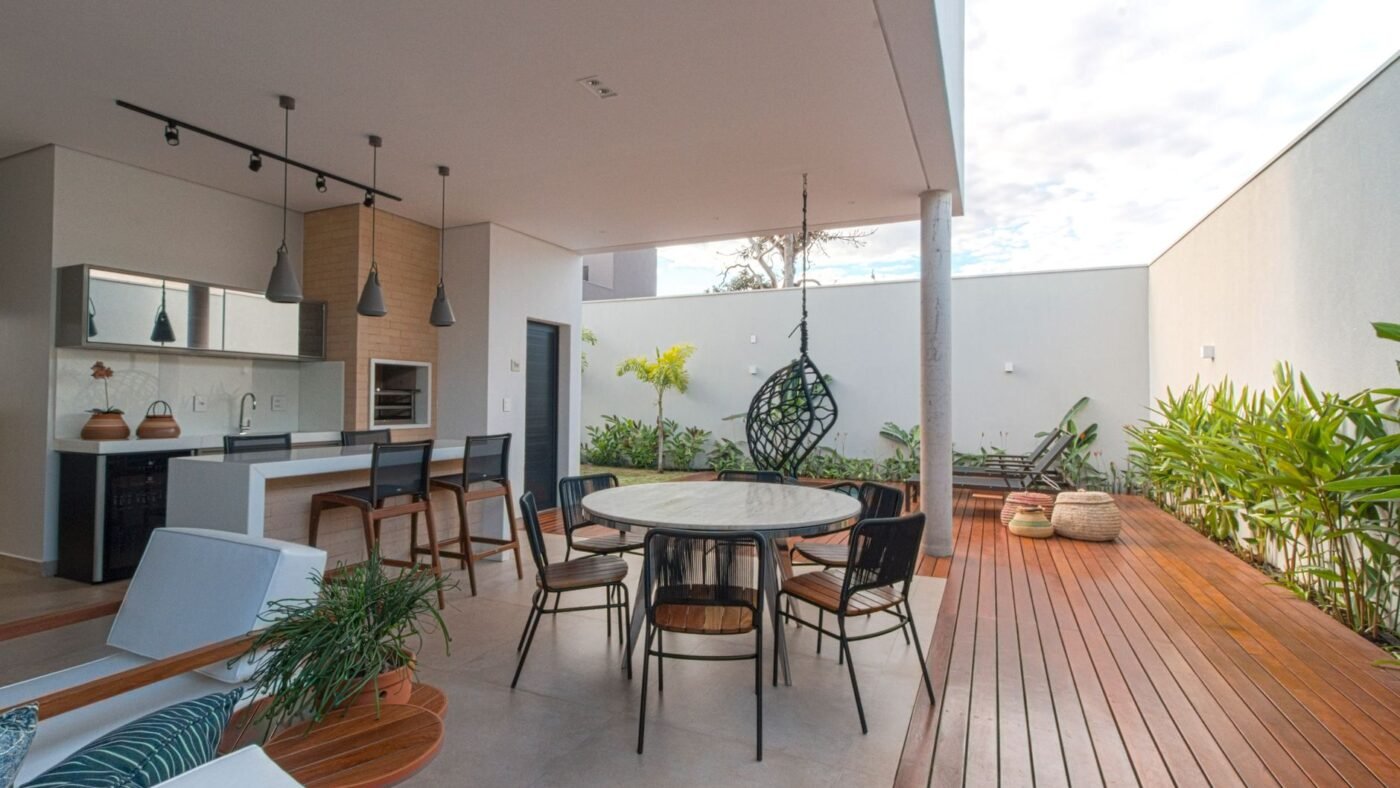
Last Updated on October 20, 2026 by Umar Farooq
An outdoor kitchen on pavers works if the paver base under it was built to carry a concentrated load. A grill cart or a modular island on a well-compacted patio is usually fine. A heavy masonry island with a stone countertop is better on its own concrete footing, with pavers laid up to it, not under it. Kitchens often weigh over 1,000 lbs according to RTA Outdoor Living, and that weight sits on a few square feet, which is exactly what sand-set pavers are not designed to do forever. For the full picture, see paver patio for outdoor fireplace.
The pavers spread load. The base carries it. A kitchen asks the base a hard question, so find out the answer before you buy the countertop.
Weigh the island, then judge the patio
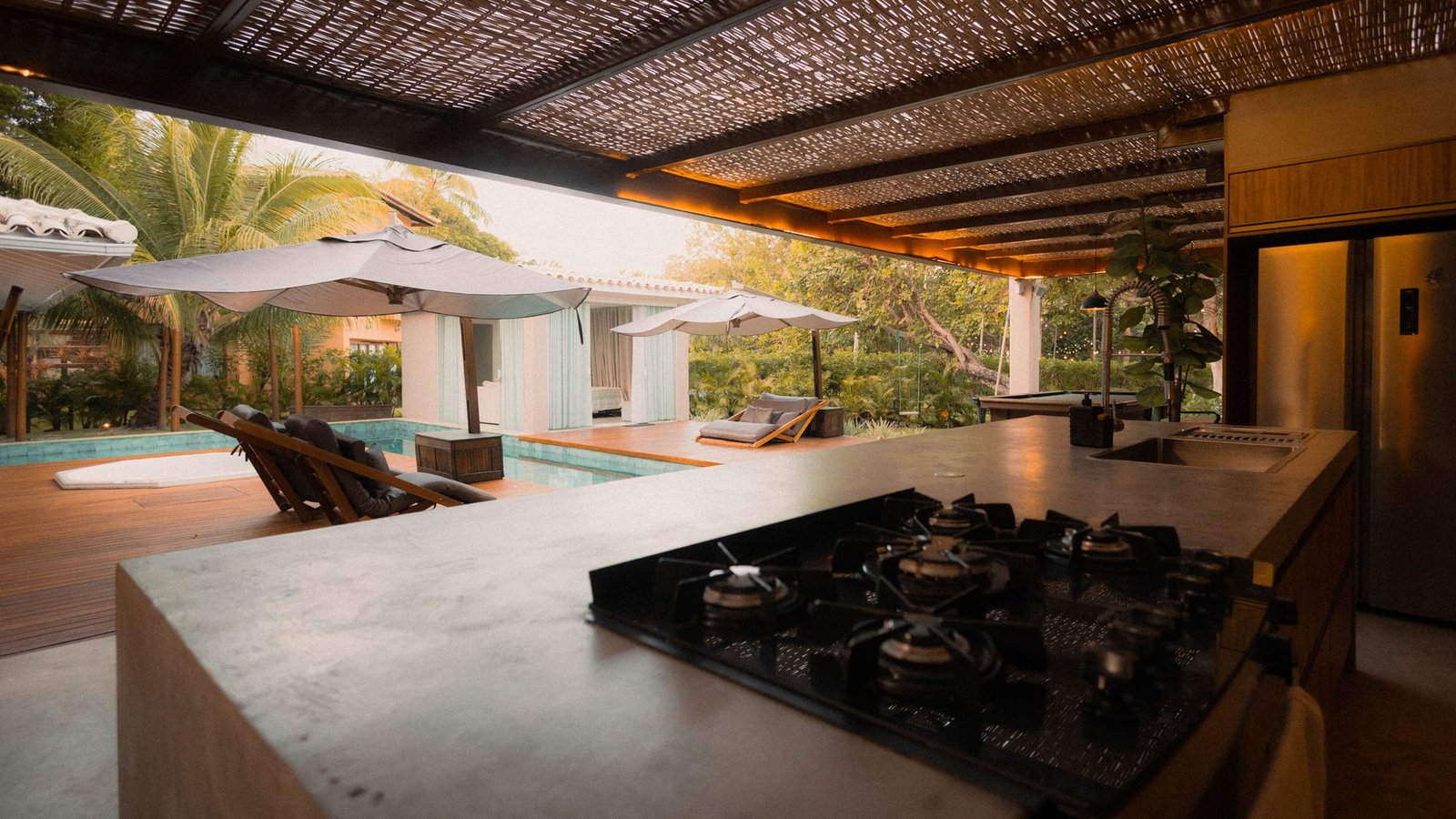
Add it up honestly: block or masonry walls, a stone or concrete top, a grill, a fridge, a sink. RTA's paver patio guide says kitchens commonly exceed 1,000 lbs and that the patio must be able to bear that, or be removed so a concrete footer can go in. Pedestrian patios are built for people, not a point load that never moves.
Check the existing patio before trusting it:
- Base depth. ICPI's spec calls for at least 4 inches of compacted base under patios on well-drained soil, with 2 to 4 inches more on wet or weak soil (ICPI Tech Spec 2). If you do not know what is under yours, lift one paver at the kitchen spot and measure.
- Signs of movement. Dips, rocking pavers and open joints mean the base has already moved under a lighter load.
- Edge restraint. A heavy island leaning on loose edge pavers will push them out.
If the patio passes, a grill cart or a light modular unit is fine. If it fails, fix the base before anything heavy goes on it. Our paver base guide covers depth and compaction.
Start with a cart, not a masonry island
My opinion, and I will stand on it: the cheapest answer is the right one first. A freestanding grill on a cart, plus a rolling prep table, gives you most of what an outdoor kitchen does without a single poured footing. Wheel it off the patio in winter and you have also avoided the single biggest design mistake, which is building something permanent before you know how you cook.
Go built-in only when you will actually use a sink, a fridge and a counter every week. Then do it properly.
Give a heavy island its own footing

A concrete footing under the island carries the weight straight down to firm soil, and the pavers around it never feel the load. That is the best of both worlds: the patio stays flexible, the kitchen stays still.
The key details:
- Excavate the footing below the patio base to firm soil, to a depth set by your local frost and soil conditions (ask your building department).
- Pour or place the footing slightly larger than the island on all sides.
- Build the island on it, then lay and compact the pavers up to the footing. The base around the footing is the ordinary 4 inches or more of compacted aggregate.
- Leave the joint between island and pavers sand-filled, not mortared, so the two can move independently.
This is the order that goes wrong when people reverse it. Pavers laid first and the island dropped on top will settle around the island within a year or two, and the island will end up standing in a shallow bowl.
Run gas, power and water before the pavers
Homeworld Design's hardscape planning guide puts utilities before the patio is finished, and I agree, because the alternative is cutting a trench through new paving. Before the base goes in:
- Mark and call 811 before any digging. It is the free national before-you-dig service.
- Lay conduit for power and lighting, and sleeves for gas and water, under the future paving, with spare capacity.
- Have licensed trades do the gas and the electrical, and get permits where your town requires them.
- Mark every sleeve on a photo, because you will forget where they run.
Slope, heat and grease around the cooking zone
Pavers around a kitchen see water, grease and heat. Slope the surface at least 1.5 percent so rain runs off (ICPI Tech Spec 2), and near the house it must fall at least 2 percent away from the foundation (IRC R401.3). Our patio drainage guide has the layout.
Light colors and textured pavers show less grease and stay cooler underfoot, and if the kitchen sits near a fire feature, heat-resistant pavers are worth reading before you choose. If you put a pergola over it, see paver patio with pergola for post footings, which have the same load problem as the island.
Pour the footing first and pave around it
An outdoor kitchen on pavers is safe when the heavy parts do not rely on the sand bed. Rent the compactor, build the base properly, pour a footing under any masonry island, lay the pavers up to it, and run the utilities before the first paver goes down. If you want the kitchen and are not sure of the patio, start with a cart and learn what you use.
FAQ
Can you put an outdoor kitchen on a paver patio?
Yes, if the patio has a properly compacted base. Light modular units and grill carts are usually fine. Heavy masonry islands are better on their own concrete footing, with the pavers laid up to the footing.
How much does an outdoor kitchen weigh?
Often over 1,000 lbs once you add block or masonry, a stone countertop, a grill and appliances, according to RTA Outdoor Living. The exact weight depends on your materials.
Do you need a concrete slab for an outdoor kitchen?
Not always. A cart or small modular island can sit on a good paver base. A masonry island with a stone counter should have a concrete footing or slab so its weight does not settle the pavers.
What base do pavers need under an outdoor kitchen?
At least 4 inches of compacted aggregate under a patio on well-drained soil, and 2 to 4 inches more on wet or weak soil (ICPI Tech Spec 2), with 1 inch of bedding sand. Heavy islands need a footing in addition.
Should utilities go in before the pavers?
Yes. Lay conduit and sleeves for power, gas and water before the base is built, so you do not have to cut through finished paving later.


