

Last Updated on October 20, 2026 by Umar Farooq
Remove sod for patio work by marking the outline a few inches wider than the patio, cutting the turf into strips about a foot wide, sliding a spade one to two inches under each strip and rolling it up. Use a spade for a small patio, rent a sod cutter for a big one, then keep digging until the roots and dark topsoil are gone too. The sod is only the first inch or two of a hole that ends up about 7 inches deep.
Grass is the most cheerful thing in the whole job and the first thing you have to destroy. It also fights back, mostly by being heavier than it looks.
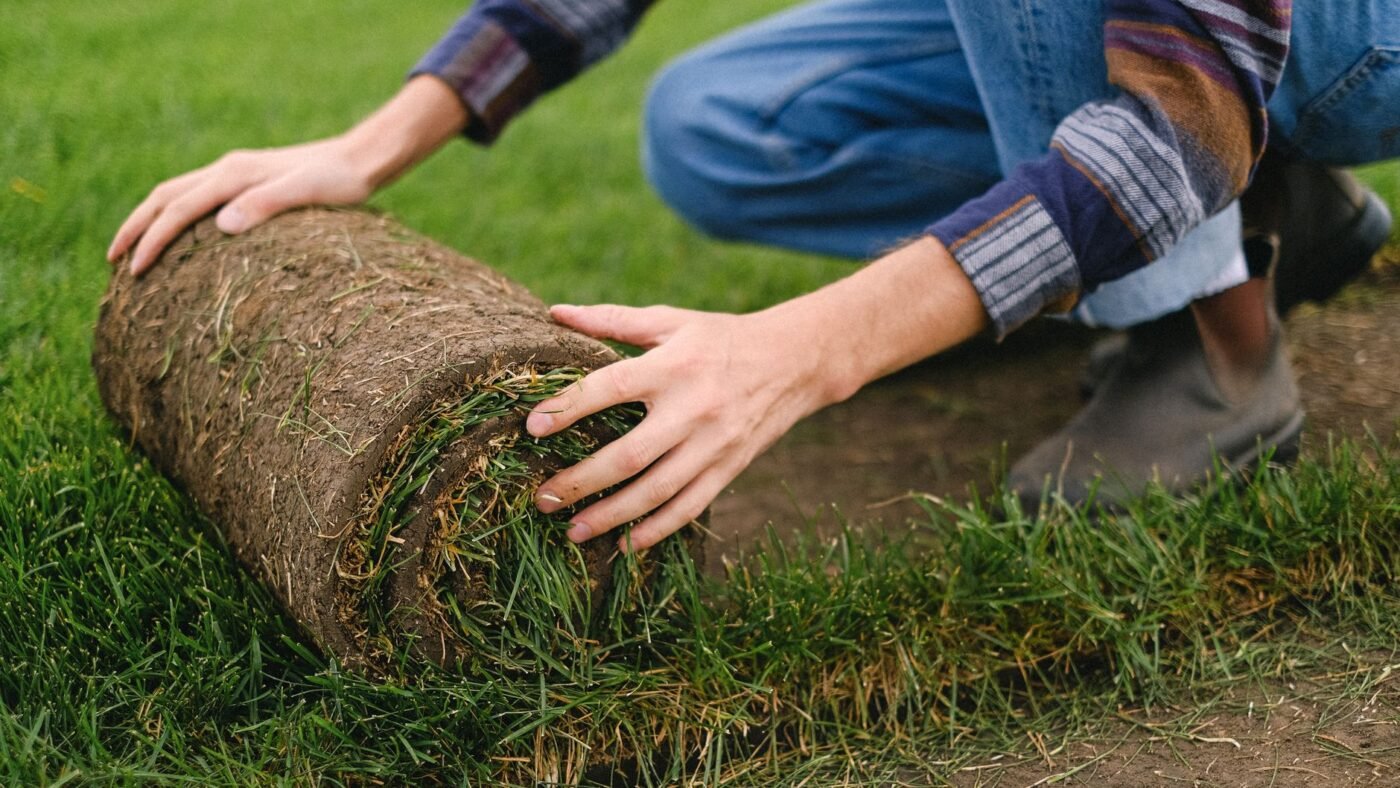
Remove sod for a patio: cut a grid, then undercut each strip
The method is the same whether you use a spade or a machine: cut the turf into pieces small enough to lift, then slice under them at a steady depth. Spear Head Spade's sod guide puts it in six moves, and I have trimmed them to what matters on a patio.
- Mark the outline. Use flags, spray paint or a string line. Water the area the day before if it has not rained. Damp soil cuts cleanly, bone-dry ground shatters, and saturated ground smears onto the blade.
- Cut the outline with the blade held vertical, about 2 inches deep.
- Cut a grid of strips roughly 1 foot wide. That is the width that rolls up without tearing and still lifts comfortably. Cut them into 2 to 3 foot lengths if the turf is thick or wet.
- Undercut each strip with the handle low and the blade nearly flat, 1 to 2 inches below the surface. You are slicing the root layer sideways, not digging a hole.
- Roll as you go like a rug, so the strip never hangs half-attached.
- Shake the soil back onto the open ground before the roll leaves. That clinging soil is real topsoil, and you will want it for the beds around the patio.
Garden Guides takes a rougher route with a grub hoe: chop 1 to 2 inches into the root layer with a short downward swing, pull the handle to lift each piece and work forward as you go. It is fine for a small patch, and its own warning is the useful part: do not swing it like an axe, because you will be tired before the first row is done (Garden Guides, grub hoe method).
Pick the tool by how much lawn is going
I could not find one source that agrees on where a rental machine starts to pay off. Spear Head Spade says a sod cutter earns its trip somewhere between 200 and 500 square feet. LawnStarter sorts cutters by size: a square-edge spade for under 500 square feet, a manual kick cutter for 500 to 1,000, and a motorized walk-behind for most residential projects from 1,000 up (LawnStarter). Both put motorized rental at roughly $80 to $140 a day, which is a US range from those two pages, so check your local yard.
So here is the cheapest option first, as always. A 12 x 16 patio is 192 square feet (my arithmetic). That is a spade job, a Saturday morning and a sore back, with no trailer, no half-day rental clock and no negotiating a few hundred pounds of machine up your side yard. Rent the cutter when the area is clearly past 500 square feet, when the ground is open and flat, and when you can face carrying the strips afterward. The machine cuts quickly. It does not carry.
If you are renting a compactor for the base anyway, check the yard's other gear before you commit to a second rental. The plate compactor rental guide covers what to ask for.
Set a cutter to the shallowest depth that takes all the grass. LawnStarter's range is 1.5 to 3 inches, with 1.5 for plain removal, and deeper cuts make each strip heavier.
Mark the dig wider than the patio
Do not cut the turf to the patio's finished size. The base reaches past the paver edge. Unilock says the base material should extend past the paved edge by a distance equal to the base depth, so a 4 inch base means 4 extra inches on every side (Unilock). For a 12 x 16 patio that makes the dig 12 feet 8 inches by 16 feet 8 inches (my arithmetic). Cut the sod to that line, not the patio line.

Sod is only the first inch or two
Here is the part the short guides skip. Once the sod is off, you are nowhere near done, and the depth is a decision, not a guess. Add the layers from my paver installation guide: at least 4 inches of compacted base for a patio on well-drained soil (ICPI Tech Spec 2), 1 inch of bedding sand, and a 2 3/8 inch paver. That is 7 3/8 inches below the finished surface (my arithmetic), and it lines up with Garden Guides' 7 inches for foot traffic. Their 9 to 11 inches for a paver driveway fits the 6 inch driveway base plus the layers above it.
The sod and the topsoil sit entirely inside that hole. The dark, rooty layer is the part that rots and compresses, so it cannot stay under a patio. I go through finding firm subsoil and building the slope into the dig in how to level ground for pavers. Where the soil is weak or freezes, ICPI adds 2 to 4 inches, so dig deeper.
Sod is heavy, so plan where it goes
The strips from even a small patch add up to several hundred pounds, according to Spear Head Spade. That is a wheelbarrow-and-a-bad-back kind of weight, and it is why people end up with a lawn-sized pile beside the patio for weeks.
Stack the strips grass-side down so the living grass cannot root back, keep them damp and covered, and they break down into loam. Spear Head Spade also says clean turf can go on the compost. I would settle this before cutting, because it is the question you will otherwise answer with a shovel at 4 pm. For the full picture, see artificial turf vs pavers.
Why smothering the grass is the wrong shortcut here
Cardboard and mulch kill grass without any digging, and the same guide says it takes two to four months. For a garden bed that is clever, because the roots stay and decompose into the soil. A paver patio is the opposite problem. Roots and topsoil decomposing under a base are exactly what you cannot have, so the grass has to leave the hole. Smothering is for the bed beside the patio, not under it.
If digging at all is the problem, the real alternative is a no dig paver patio built up from the lawn, and even those start by stripping the sod.
Cut it, roll it, and keep digging until the soil is firm
Strip the grass to a line wider than the patio, take the roots and dark topsoil with it, then stop when you hit firm, light subsoil. I would not hire a machine for a 192 square foot patio. Hire one when the cutter's day rate is smaller than your Sunday.
One last bit of advice from someone who only reads the instructions: call 811 before the spade goes in, because the shallow grid you are about to cut is exactly where irrigation lines and the odd service cable live. You can then get on with rolling up a lawn, which is the one time it is acceptable to treat grass like carpet.
FAQ
How deep do you cut sod for a patio?
Cut the sod itself 1 to 2 inches deep. Spear Head Spade says to undercut 1 to 2 inches below the surface, and LawnStarter's cutter settings run from 1.5 to 3 inches. The full patio dig is deeper, about 7 3/8 inches below the finished surface with a 4 inch base, 1 inch of sand and a 2 3/8 inch paver.
Do I need a sod cutter to remove grass for a patio?
Not for a typical patio. A spade or grub hoe handles a 12 x 16 patio, which is about 192 square feet. Sources disagree on the point where a cutter makes sense, from 200 to 500 square feet up to 1,000, so rent one only for a large, flat, open area.
Can I just kill the grass instead of removing it?
Not under a patio. Smothering with cardboard and mulch takes two to four months and leaves the roots in place to rot. That works for a planting bed, but pavers need the roots and topsoil dug out so the base sits on firm subsoil.
What do I do with the sod after I remove it?
Stack it grass-side down in a damp, covered pile to rot into loam, or compost it. Spear Head Spade notes even a small patch makes several hundred pounds, so plan the pile before you cut.
How far past the patio should I remove sod?
Past the paver edge by the base depth. Unilock's rule is that the base extends beyond the paved edge by a distance equal to the base depth, so a 4 inch base means 4 inches extra on every side, and the sod comes off to that line.


