

Last Updated on October 20, 2026 by Umar Farooq
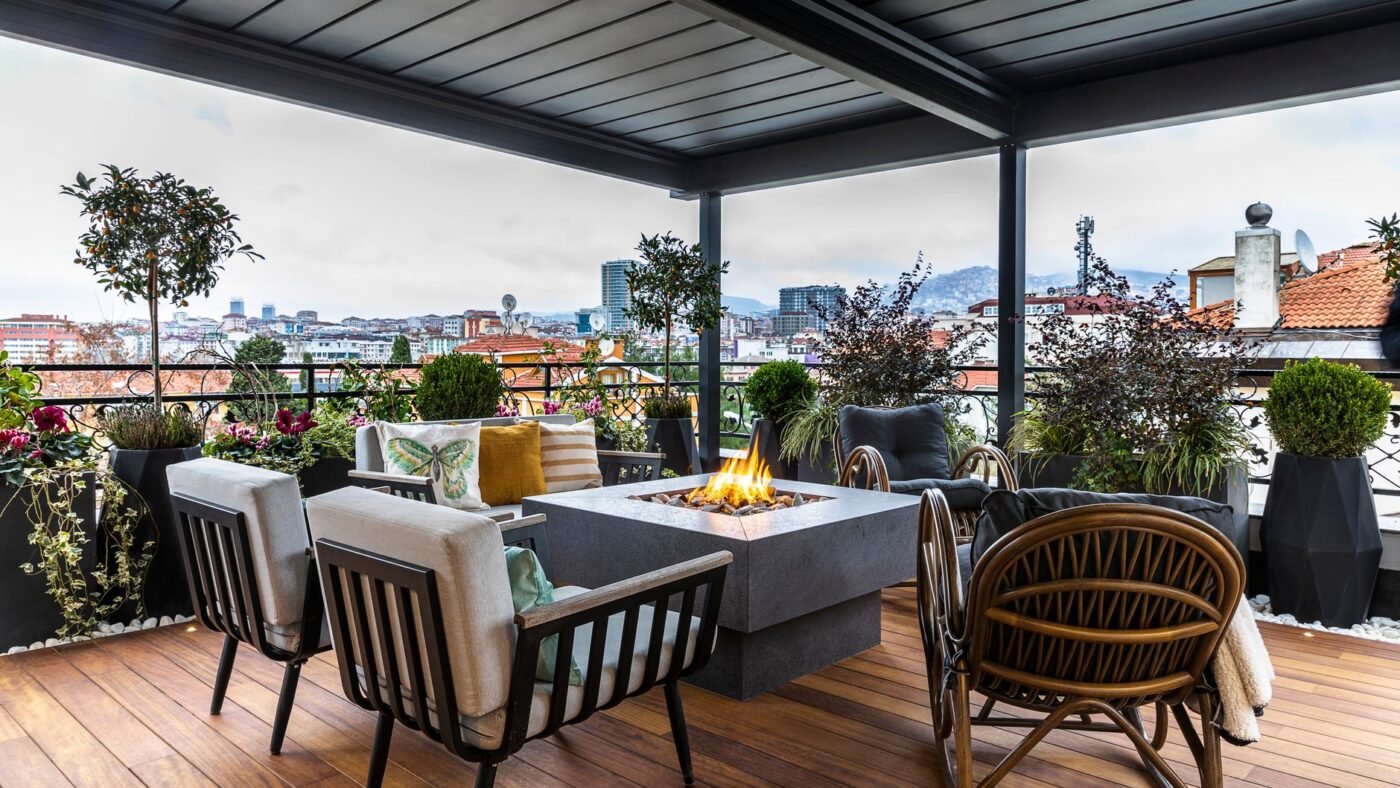
A gas fire table on pavers is fine, as long as the surface is level and non-combustible, the manufacturer's clearances are met, and the table stands on a base that will not settle. Pavers themselves are not the problem. The usual trouble is the thin sand bed under them, the 36 inches of clearance to anything that burns, and a gas line nobody planned for. (Buy the table last. The manual comes first, and it is free.)
Read the manual before you read anything else
I read the clearances from three sources, and the lesson is that there is no single number. They disagree because tables differ in BTU output and in how they are certified.
| Source | Sides | Overhead | Notes |
|---|---|---|---|
| Celestial Fire Glass | 36 in on all sides | 96 in above the burner | 2 in below the burner pan; keep fire out from under vinyl covers |
| Cast in Crete | 36 in to combustibles; 18 to 24 in to brick or concrete | 36 to 80 in depending on the maker and BTU | deck railings 24 to 36 in |
| DreamCast | 36 in to a combustible structure | 84 in to non-combustible roofs, more for combustible | seating 15 to 24 in from the edge, 36 in walkway |
Sources: Celestial Fire Glass, Cast in Crete and DreamCast. Two of these are retailers, and Celestial and DreamCast publish figures for their own products, so none of it replaces your table's manual. Cast in Crete's line is the one worth underlining: overhead clearance is "the most variable and the most important to get right."
Belgard adds a catch-all for the whole job: for gas fire pits, follow local codes, the manufacturer's safety guidelines and HOA regulations (Belgard).
Give the table its own pad on the same base

Outdoor Rooms says gas tables can be placed on a wood deck, concrete or paver patio, and does not go further. Belgard does. It says you can build a fire pit on existing pavers if you use proper insulation and protection, but that it is best to cut out the pavers and place the fire pit on the same base as the pavers, which keeps ash from washing out and reduces settling. That is written for block fire pits, and a table is a different object, but the settling logic carries over.
Here is my reading, flagged as such. A patio is built as pavers on 1 inch of loose bedding sand over a compacted base (ICPI Tech Spec 2 calls for at least 4 inches of base under patios on well-drained soil). That is ideal for people walking, and less ideal for a concentrated load that never moves. I could not find a published weight limit for pavers under a fire table, and none of the sources gave the weight of a loaded table, so I will not invent one. If your table is heavy or filled with lava rock, a cut-out pad with its own base is the cheaper insurance than re-leveling a table later. Our paver base guide covers what that base needs, and how to fix sunken pavers covers the repair if you skipped it.
Heat still reaches the surface, so check the manual for its base rating; our heat resistant pavers article explains why direct flame can crack pavers, and fire pit blocks compares block-built alternatives. Level matters more than usual. A burner that sits tilted is a burner whose flame the manufacturer did not test. We have a separate page on fire pit burn marks on pavers if you need the specifics.
Where the gas comes from
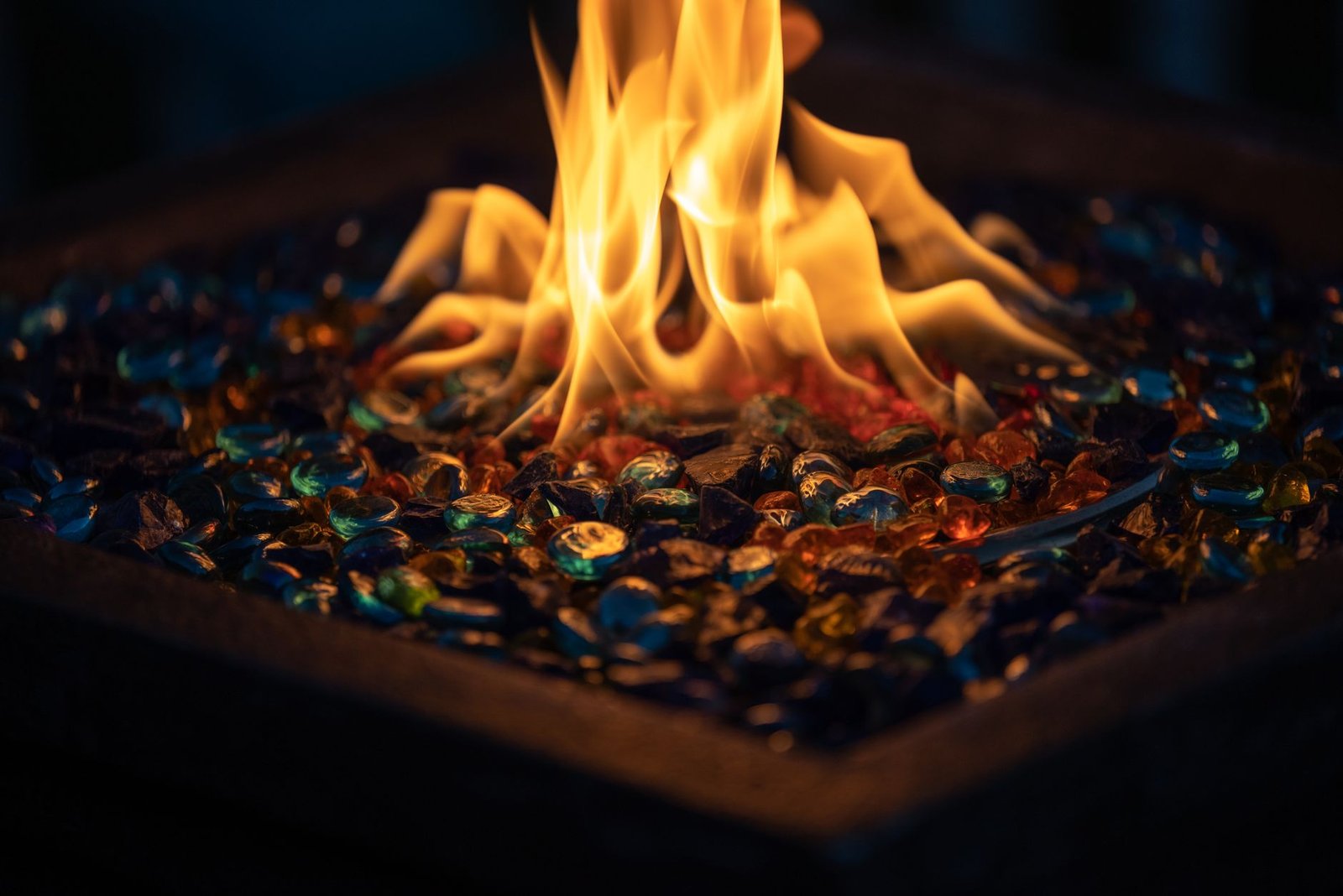
A propane table runs from a tank hidden inside it. A natural gas table needs a line, and that changes the job. Belgard says to hire a certified professional for natural gas connections, and Cast in Crete says a gas line permit and inspection by a licensed plumber or gas fitter is the standard for the piping. Cast in Crete also says portable propane tables usually need no permit for the appliance itself, though a patio build around it might. Before any trench goes in, call 811. It is the free national before-you-dig service, and it is worth doing before cutting into pavers to bury a gas pipe.
Overhead cover, seating and pergolas
Overhead clearance is where the three sources split most, and the ceiling in question is the roof of your pergola or porch. DreamCast gives 84 inches to non-combustible structures and more for combustible ones, and treats overhanging branches as combustible. Celestial gives 96 inches and says not to put a table under a vinyl cover at all, since vinyl is heat-sensitive. If your patio has a roof, measure up from the top of the burner, not from the table top, and use the largest number you find. For seating, DreamCast suggests chairs 15 to 24 inches from the fire pit edge, with a 36 inch walkway around the seating area.
Set the pad, read the manual, then light it
Choose the spot using the biggest clearance in your manual, build a level pad on a compacted base rather than a deep sand bed, and leave the gas work to a licensed pro if it is natural gas. Wait to buy the table until you know its clearances, because nothing is more annoying than a table that fits the patio and not the pergola. Then pour something warm and let the pavers get on with holding things up.
FAQ
Can you put a gas fire pit table on pavers?
Yes. Outdoor Rooms says gas tables can be placed on a paver patio, and Belgard says to keep the base stable and level, follow the manufacturer's guidelines and local codes, and, where possible, set the fire feature on the same base as the pavers.
How far should a gas fire table be from the house?
Celestial and DreamCast both list 36 inches from a combustible structure. Cast in Crete says brick or concrete walls can need only 18 to 24 inches. Your table's manual overrides all of these.
How much overhead clearance does a gas fire table need?
It varies. Cast in Crete gives 36 to 80 inches, DreamCast 84 inches to non-combustible structures, and Celestial 96 inches. Use the largest number and measure from the burner.
Do I need a permit for a gas fire table?
Cast in Crete says a portable propane table usually needs no permit for the appliance, while a natural gas table almost always needs a gas line permit and inspection. Check with your local building department.
Is it safe to put a gas fire table on a wood deck instead?
Some tables are designed for it if the clearances are met, but some need a heat shield or a non-combustible pad underneath. Pavers avoid the question, which is another point for the patio.


