Last Updated on September 23, 2026 by Umar Farooq
How long does paver sealer take to dry? Most sealers are dry to the touch in about 1 to 4 hours. They're ready for foot traffic after 24 hours and for cars after 48 to 72 hours. The surface needs 24 rain-free hours between 50 and 85°F after it goes on. Those are the figures on Techniseal's data sheets, and I read enough other labels to say most land in the same range. Cool, humid or shaded patios take longer. "Dry" and "cured" are different stages, and the gap between them is where most shoe prints are born.
Touch-dry and fully cured are different stages
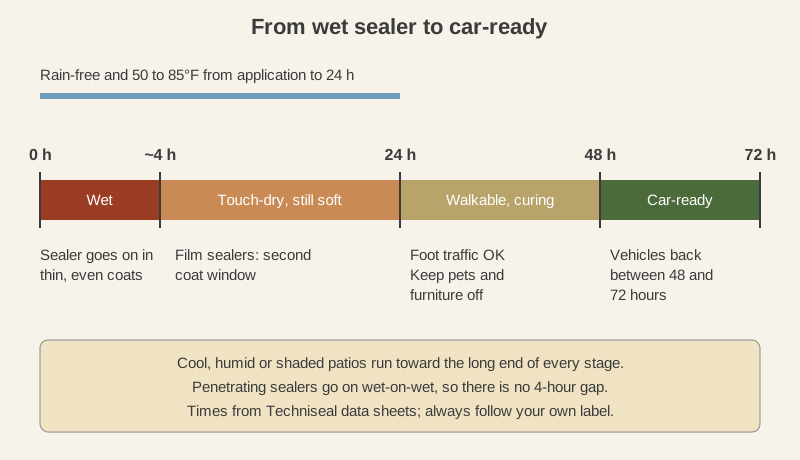
A sealer goes through three stages:
- Touch-dry. The solvent or water has evaporated from the surface. It no longer feels wet, but the coating is soft and marks easily. Dry is a feeling; cured is a fact. For film sealers this is the point to apply a second coat. Techniseal's Wet Look (WL5) data sheet puts it at "+/- 4 hours."
- Walkable. The film or the penetrating treatment has set enough to take shoes without scuffing or tracking. The usual figure is 24 hours.
- Cured. The sealer has reached full hardness and water and oil resistance. Cars, heavy planters, grills and furniture legs go back on now, after 48 to 72 hours.
Many water-based sealers, including Techniseal's natural-look products, go on milky white and dry clear. White still showing after a few hours means the sealer hasn't dried yet. White that appears after drying is a different problem, covered below.
How long does paver sealer take to dry, type by type?
| Sealer type | Touch-dry | Foot traffic | Vehicles | Notes |
|---|---|---|---|---|
| Solvent-based acrylic (wet look) | About 4 hours | 24 hours | 48–72 hours | Second coat once touch-dry |
| Water-based acrylic film (matte/satin) | A few hours; turns from milky to clear | 24 hours | 48–72 hours | Slower in humid weather |
| Water-based penetrating (silane/siloxane) | Soaks in; surface dries quickly | 24 hours | 48–72 hours | Two coats applied wet-on-wet, no wait between |
| Two-part polyurethane | 3–4 hours between coats | 3–4 hours after the final coat | 48–72 hours | Mostly pro-applied |
Timings for the first three rows come from Techniseal's data sheets for its WL5, NS and iN products. The polyurethane figures are from Covertec's paver sealer guide, which also lists shorter vehicle times for some penetrating products. Labels really do vary, and your product's label overrides any table, this one included. (I say that as someone who spent an evening building this one.)
You'll see "coal tar" and "asphalt" dry times in some lists. I chased a few down; they're for asphalt driveway sealcoat, not concrete pavers.
Walking, furniture and cars on fresh sealer
Plan the day around the longest clock:
- People: 24 hours. Earlier, shoes print the soft film and track sealer indoors.
- Pets: 24 hours too. Paws mark fresh sealer and carry it indoors, and the dog has not read the label.
- Furniture, planters and grills: wait 48 to 72 hours. Olympus Concrete Coatings, in its paver sealer drying guide, gives the same window for furniture as for driving. Furniture feet concentrate weight, and a soft film will keep a souvenir of every rubber foot.
- Vehicles: 48 to 72 hours. Techniseal says to "block access during that period." Hot tires turning on a sealer that isn't fully hard are what scuff driveways.
If the sealer still feels tacky after a day, the weather or a heavy coat has slowed it. Give it more time rather than testing it with a shoe.
What rain does in the first 24 hours
Every paver sealer label asks for a rain-free window, and Techniseal's is 24 hours after application. Irrigation counts as rain, so turn the sprinklers off.
When fresh sealer gets wet:
- Within the first hour or two, a heavy shower can wash water-based sealer off the surface or leave it thin and blotchy.
- Before a film has cured, water can cloud it into white or milky patches, often called blushing, or leave spots where the drops landed.
- After it's walkable, light rain usually does no harm; the sealer just isn't fully water-resistant yet.
My view here is firm: a cloudy patch after a surprise shower is not a failed job, and nobody needs to strip the whole patio over it. Water caught in an uncured film usually works its way out as the film finishes curing. So let the pavers dry completely, a day or two, then look in daylight. If the clouding stays, it's still local: call the sealer maker's technical line before trying any fix. Solvent-based and water-based sealers are corrected differently, and the wrong solvent makes it worse.
Heat, cold and humidity
Temperature and humidity set the pace of every stage.
- The window. Techniseal requires 50 to 85°F during application and for the next 24 hours. Unilock's range is 50 to 90°F.
- Too hot. Covertec warns that sealer applied above 100°F will fail. On a hot, sunny slab the sealer skins over before it levels, which traps solvent and leaves bubbles or roller marks. Seal in the morning or early evening.
- Too cool. Below 50°F the film may never form properly, and it stays soft or cloudy.
- Humid or shaded. Water-based sealers dry by evaporation, so humid, shaded, still air slows them. Some crews use fans on shaded areas.
- Dew. An evening application can pick up dew before it's touch-dry. Check the overnight dew point as well as the rain forecast.
Dry pavers first, then time the sealer
The other drying time people miss is the pavers' own. Sealer over damp pavers or wet joints traps moisture and turns cloudy.
- After washing: Unilock asks for at least 24 hours of drying. Olympus Concrete Coatings suggests 24 to 48 hours after pressure washing or rain.
- Clay brick pavers: Techniseal says drying "can take a few days."
- After polymeric sand: wait 30 days before sealing, per Techniseal's data sheets.
The cleaning method affects this too. Our guide to power washing pavers covers the pressure, tips and re-sanding that go before a seal. The whole prep and application order is in paver sealing.
Give it a day for feet and three for cars
Paver sealer is usually dry to the touch within a few hours, but plan on 24 hours before anyone walks on it and 48 to 72 hours before cars or heavy furniture go back. Seal only when the next 24 hours will be dry and between 50 and 85°F. If you're resealing on a schedule, how often pavers should be sealed shows when the next coat is due. Until then, the hardest part of sealing is the bit where you do nothing, and it's also the part you can do from a chair indoors.
FAQ
Can I walk on pavers 12 hours after sealing?
It's better to wait the full 24 hours. At 12 hours most sealers are touch-dry but still soft enough to take shoe prints and scuffs, especially in cool or humid weather. If you have to cross it, walk in socks along one line and touch up any marks.
What happens if paver sealer gets wet before it dries?
Early rain can wash thin sealer off, leave water spots, or turn a film milky white. Let the surface dry completely and check it in daylight. Mild clouding often clears as the film cures. Persistent white patches need a fix that suits the sealer type, so contact the manufacturer.
Why is my paver sealer still tacky?
Usually because the coat was too heavy, the air is cool or humid, or the area is in shade. Tackiness after 24 hours means the film hasn't cured. Keep traffic off, improve airflow if you can, and give it more time. Put on thinner coats next time.
How long after sealing pavers can I put furniture back?
Wait 48 to 72 hours. Furniture feet concentrate weight on small points, and they can mark or stick to a film that's walkable but not fully cured.
Does paver sealer dry faster in the sun?
The surface does, but that isn't always good. In hot sun the top skins over before the coat levels, which can trap solvent and cause bubbles, roller marks or poor adhesion. Mild, dry, breezy weather between 50 and 85°F gives the best results.