Last Updated on September 23, 2026 by Umar Farooq
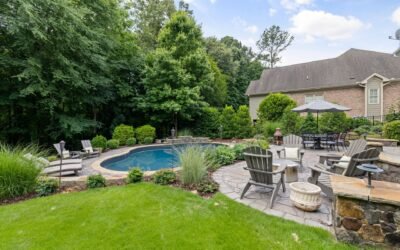
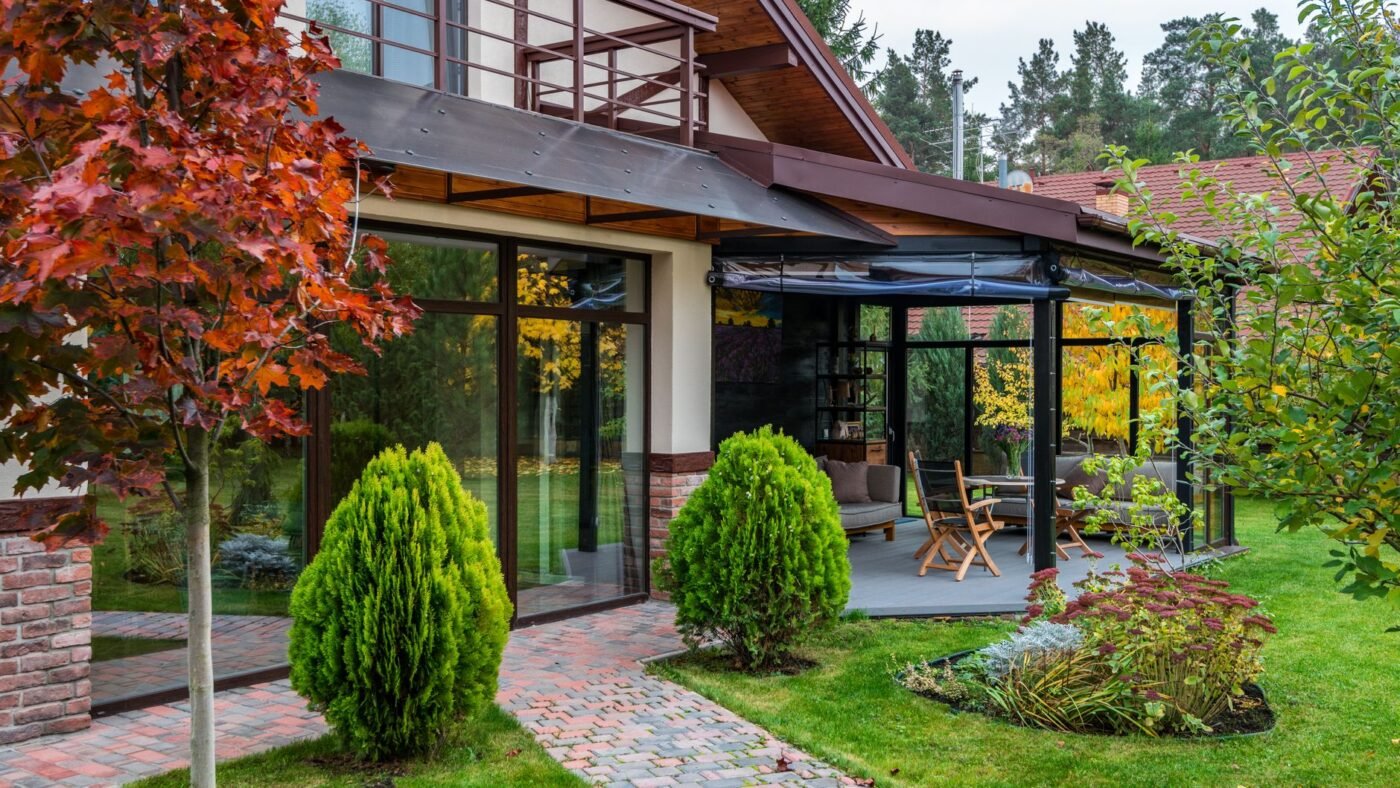
Here is the hardscaping definition in one line, cross-checked against Wikipedia and three manufacturers' glossaries, which agree on remarkably little else: hardscaping is the non-living, built part of a landscape, the patios, walkways, driveways, retaining walls, steps, fire pits and other structures made from stone, pavers, concrete, brick, gravel, wood or metal. Its partner is softscape, the living part: lawn, trees, shrubs, flowers and soil. Most good yards need both, with the hardscape providing structure and the softscape filling around it.
So when someone asks "what is a hardscape?", the short answer is anything in the yard you would build rather than plant. If you have to water it, it isn't hardscape. If you have to water it and it still died, that's a different article.
A fuller hardscaping definition
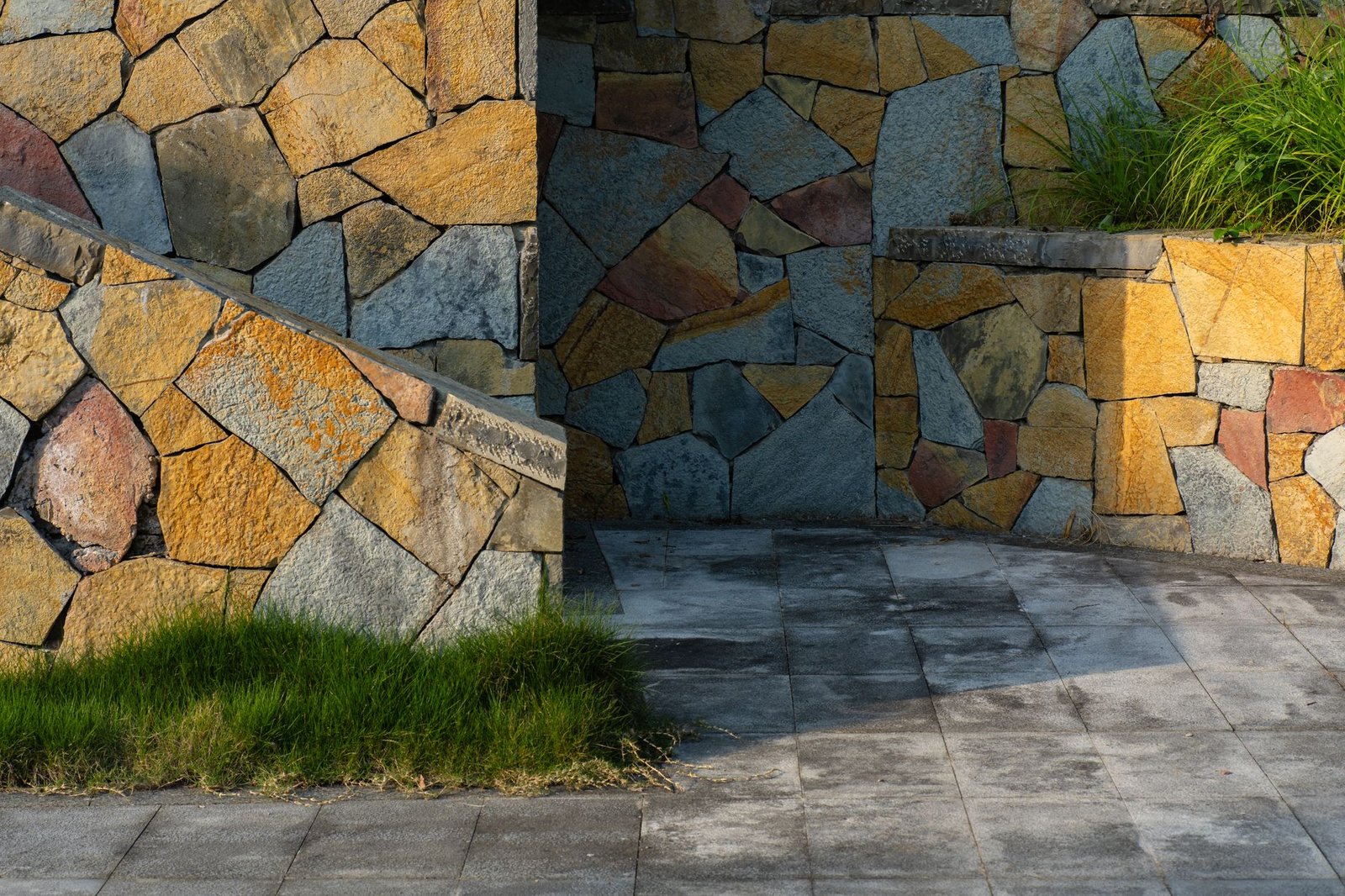
Wikipedia's entry on hardscape describes it as hard landscape materials in the built environment that are incorporated into a landscape, and lists paving, driveways, retaining walls, stairs and walkways as examples. Every landscape company I checked uses the word the same way. Three features set hardscape apart:
- It is not alive. It does not grow, spread or need watering.
- It is built. It has a base, a structure and usually an edge, and stays where it is put.
- It is permanent, or close to it. A well-built paver patio or wall lasts for decades. Moving it means tearing it out.
"Hardscaping" is also a verb for the work itself. A hardscaper builds patios, walls and walks; a landscaper plants and maintains the living parts. Many companies do both, and put both words on the truck.
Hardscape vs softscape vs landscape
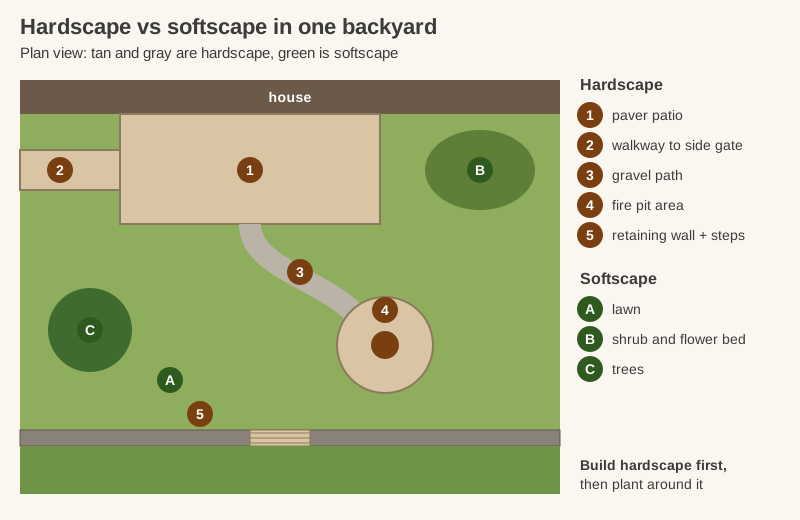
The three terms fit together:
| Term | What it covers | Examples |
|---|---|---|
| Hardscape | non-living, built elements | patios, walkways, walls, steps, driveways, fire pits, pergolas |
| Softscape | living, growing elements | lawn, trees, shrubs, flower beds, ground cover, mulch and soil |
| Landscape | the whole outdoor space | hardscape and softscape together |
Western Interlock puts it simply in its hardscape, softscape and landscape explainer: landscape design is the practice of designing a yard's hardscape and softscape, and a well-designed landscape balances the two. Too much hard surface looks like a parking lot; too little leaves a yard with nowhere to sit and paths worn into the grass.
A practical way to tell them apart is to ask whether it changes with the seasons. Plants grow, flower, drop leaves and die back. A stone wall looks the same in July and January (smugly, some would say).
Seven common hardscape elements
These are what most homeowners mean by hardscaping:
- Patios. The outdoor floor for dining and lounging, usually pavers, natural stone or poured concrete.
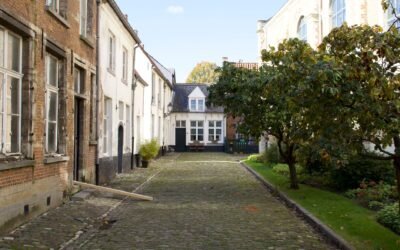
- Walkways and paths. Connect the driveway, front door, gates and garden. They range from formal paver walks to stepping stones in gravel.
- Driveways. The largest hardscape on most lots, in concrete, asphalt or pavers.
- Retaining walls. Hold back soil where the ground changes level, creating flat terraces on a slope.
- Steps and stairs. Link different levels of the yard or lead up to a door.
- Fire pits and outdoor fireplaces. A focal point and a reason to use the yard after dark.
- Seat walls, outdoor kitchens and structures. Low walls, grill islands, pergolas, arbors, fences and edging.
Water features usually count as hardscape too, because their basins and walls are built.
Common hardscaping materials
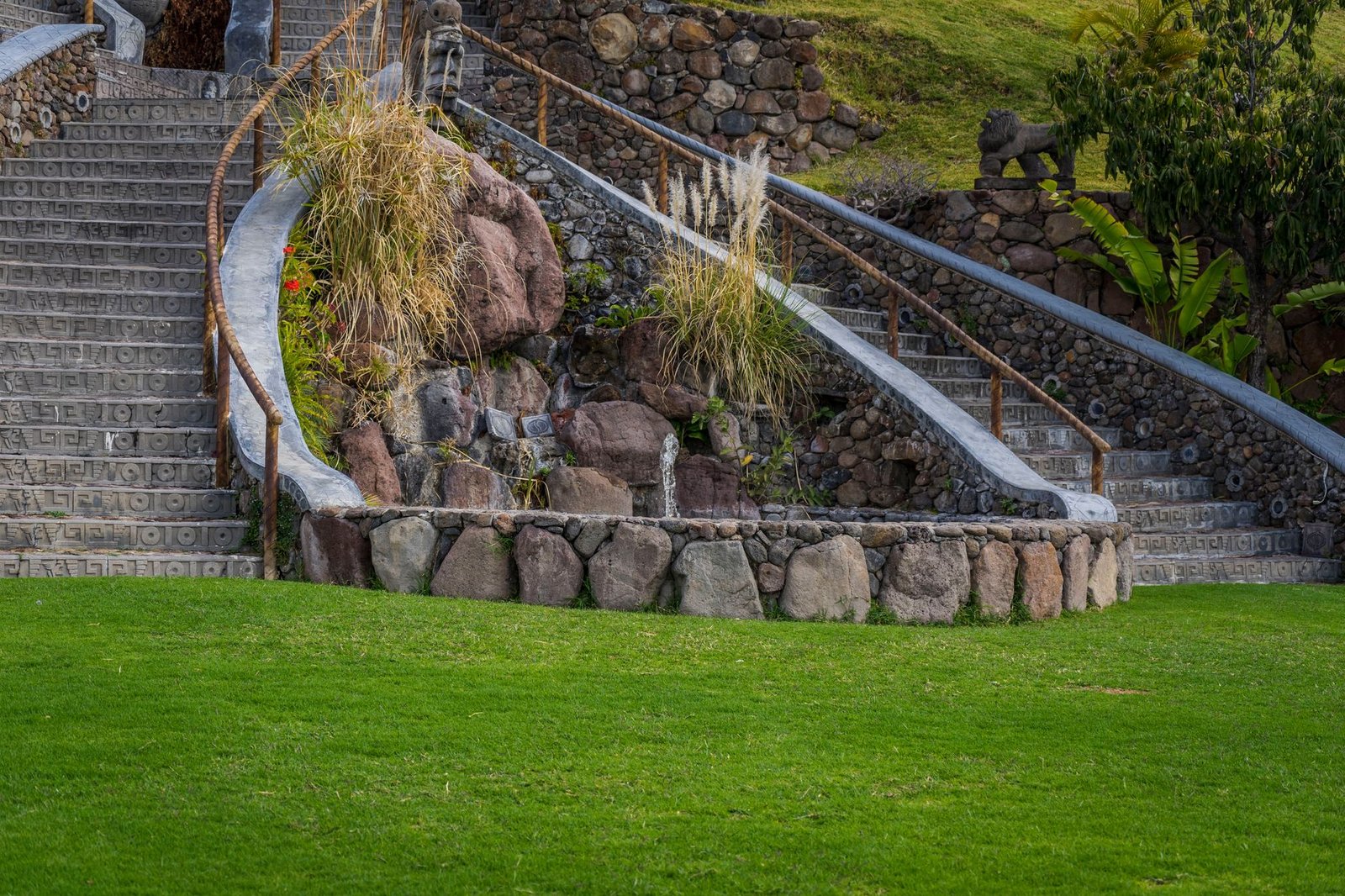
Hardscaping materials fall into a few groups, each with its own look, cost and lifespan:
| Material | Typical uses | Notes |
|---|---|---|
| Concrete pavers | patios, walks, driveways | many colors and shapes; individual units can be lifted and relaid |
| Clay brick | walks, patios, edging | traditional look; color is through the brick |
| Natural stone (flagstone, bluestone, granite, travertine) | patios, walls, steps, caps | premium look and price |
| Poured concrete | patios, driveways, walks | one continuous slab; cracks are hard to hide |
| Gravel and decomposed granite | paths, fire pit areas, drainage | cheapest surface; needs edging to stay in place |
| Segmental wall block | retaining and seat walls | stackable concrete units built on a gravel footing |
| Wood and metal | decks, pergolas, edging | not paving, but still built, non-living elements |
My one firm opinion on materials: for a patio or walk, pick units over a pour. When a poured slab cracks or sinks, you patch it and the patch shows forever. When a paver corner sinks, you lift those pavers, fix the stone under them, and put the same pavers back where they came out. That is an afternoon, not a new patio. The durable ones share a compacted crushed-stone base underneath, and the paver installation guide explains why that base, not the surface material, decides how long a patio lasts.
What "hardscape pavers" means
"Hardscape pavers" is a catch-all supplier term for pavers and slabs made for patios, walkways, driveways and pool decks. In practice it usually means:
- Interlocking concrete pavers, the most common type, in standard 2 3/8 inch patio thickness and thicker driveway pavers.
- Clay brick pavers, made for paving rather than walls.
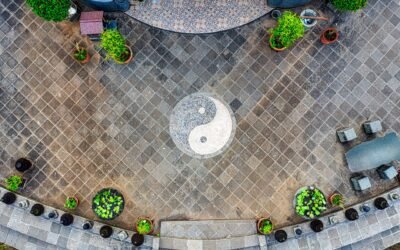
- Natural stone pavers, cut to regular sizes.
- Porcelain pavers, thick outdoor-rated tiles.
- Permeable pavers, with wider joints that let rain drain through into an open-graded stone base.
A hardscape paver differs from indoor tile or wall brick because it sits outdoors on a flexible sand-and-gravel base, takes traffic, and survives freeze-thaw cycles. Many manufacturers call their whole range "hardscape products," including wall blocks, caps, steps and edging.
Why hardscape needs drainage planning
Most hardscape is a surface water cannot soak into, so rain that used to disappear into the lawn now runs off. Wikipedia's entry notes that impervious hardscapes need drainage to carry water away; without it you get pooling, erosion and water heading for the house, which is the one place you least want it.
Good hardscape design handles this from the start:
- Slope surfaces away from the house: at least 2% (roughly 1/4 inch of fall per foot) within 10 feet of the foundation (IRC R401.3), and at least 1.5% elsewhere (ICPI Tech Spec 2).
- Direct runoff to lawn, beds, a swale or a drain, not a neighbor's yard.
- Use permeable surfaces, such as permeable pavers or gravel, where runoff is a problem or local rules limit impervious area.
The guide to patio drainage covers slopes, drains and grading in detail.
Plan the hardscape first, then plant
Hardscape is the permanent skeleton of a yard, so designers lay it out first and plant around it. Building it after planting means digging up beds and hauling stone across the new lawn.
A sensible sequence for a new yard:
- Settle the grades and drainage.
- Build the hardscape: walls, steps, patios, walks, then edging.
- Run irrigation and lighting cables before the final surfaces go down.
- Plant trees, then shrubs and beds, then lawn.
Hardscape also changes upkeep. Replacing a lawn with a patio cuts mowing and watering, but pavers still need sweeping, weed control in the joints, and re-sanding after a few years. Low maintenance is not no maintenance, whatever the showroom said.
Hardscape is the built half of a good yard
The hardscaping definition comes down to this: if it was built rather than planted, it is hardscape. Patios, walks, drives, walls, steps and fire pits give a yard its structure; lawns, trees and beds make it feel alive. Plan the hardscape first, give it a solid base and somewhere for water to go, and leave the softscape room to do its job.
And if anyone at a barbecue asks whether the deck counts, it does. You're welcome to be insufferable about it.
FAQ
What is the difference between landscaping and hardscaping?
Landscaping is the whole outdoor space, or in everyday use the planting side of it. Hardscaping is the non-living, built part: patios, walks, walls and similar features. A landscape design includes both.
Is a deck considered hardscape?
Yes. A deck is a built, non-living structure, so it counts as hardscape even though it is made of wood rather than stone or pavers.
Is mulch hardscape or softscape?
Mulch is usually treated as softscape, because it belongs to planting beds and breaks down over time. Gravel and decorative rock used as a surface or path are counted as hardscape.
What are examples of hardscaping?
Patios, walkways, driveways, retaining walls, steps, fire pits, seat walls, outdoor kitchens, pergolas, fences and water features.
Are hardscape pavers different from regular pavers?
Not really. "Hardscape pavers" is a supplier term for outdoor paving units: concrete, clay brick, natural stone, porcelain and permeable pavers made for patios, walks and driveways.