Last Updated on September 23, 2026 by Umar Farooq
Natural stone pavers are slabs of real quarried rock, most often travertine, granite, bluestone, slate, sandstone or limestone, cut to shape for patios, walkways and pool decks. Each stone behaves differently, and the sample board at the stone yard will not tell you which one sulks in a hard winter. Granite is the hardest and suits driveways and cold winters. Bluestone is the classic northern patio stone. Travertine stays cool underfoot and suits pools. Slate and sandstone give rich color but need more care. Pick the stone for your climate and use first, then the color.
No two pieces match exactly, and that variation is what you are paying for. This guide compares the main stones, the finishes that change how they grip, and how they are laid. For how natural stone fits alongside concrete, clay and porcelain, see our overview of paving stones.
What you get with natural stone pavers over concrete
A concrete paver is molded, so its color sits in a cement paste. A natural stone paver is cut from a block or split along the rock's layers. Three real differences follow:
- Color is the rock itself. It does not come from pigment, so it does not wash out in the same way. Some stones still change over time. Cabo Brick & Stone notes that bluestone can lighten toward gray, and many stones darken or mellow as they weather.
- Every piece varies. Veining and shade shifts run across the whole patio. Order from one lot and blend from several pallets as you lay.
- Thinner units. Sand-set natural stone pavers are usually about 1 1/4 inches (3 cm) thick, against 2 3/8 inches for a standard concrete paver. That is plenty for a patio, but it makes base flatness more important.
The trade-off is cost and care. Stone is usually the most expensive paving material you can buy, and several types need sealing. (The rock took a few million years to make. The invoice suggests it remembers.) NT Pavers' natural stone buying guide ranks granite and slate highest for compressive and flexural strength, sandstone lowest for flexural strength, and marble and limestone as the most prone to acid etching.
Travertine: cool underfoot, sensitive to acids
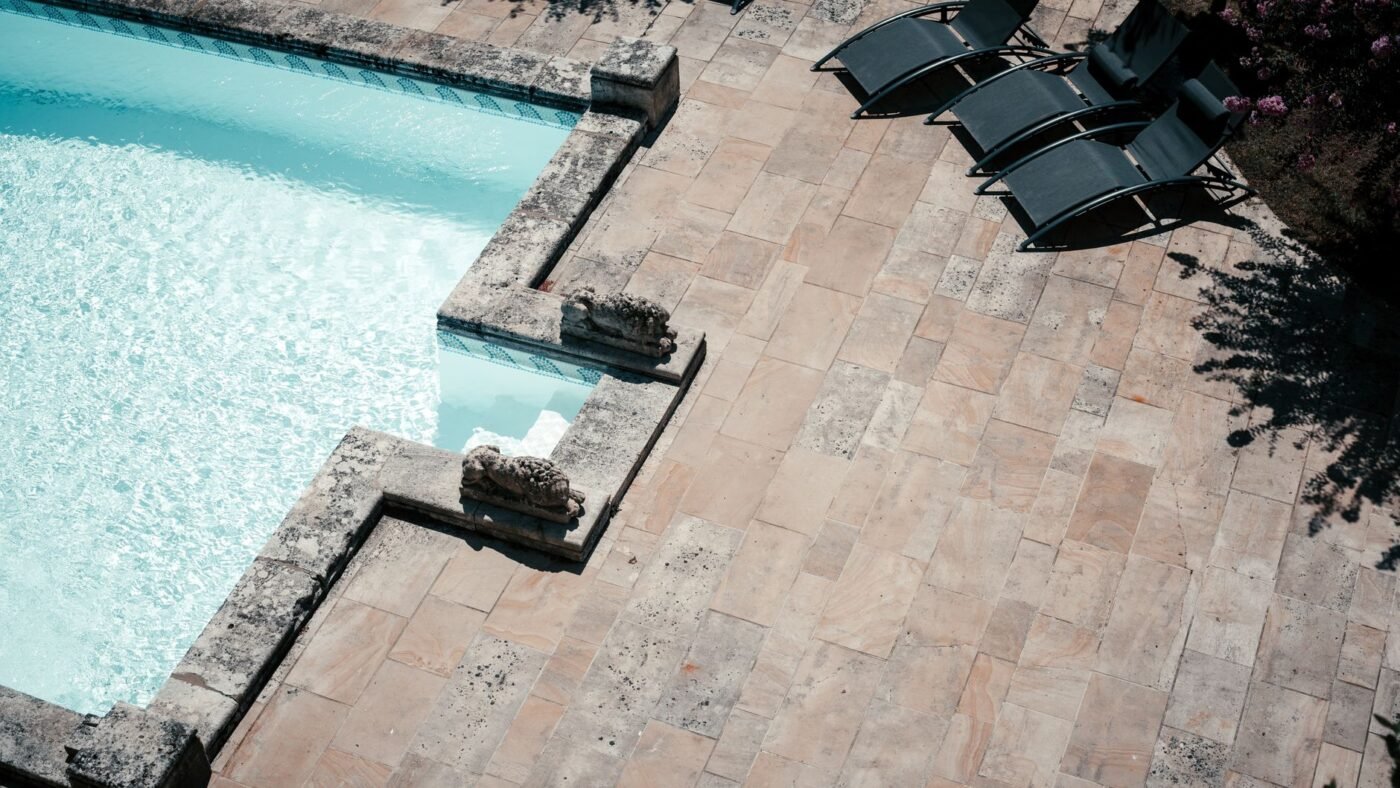
Travertine is a form of limestone laid down by mineral springs, which leaves small natural holes through it. It comes in ivory, beige, walnut and gold tones, often tumbled for a soft edge.
- Best for: pool decks, warm-climate patios and courtyards.
- Strengths: stays comparatively cool in direct sun, and the textured surface grips when wet.
- Watch for: acid. Citrus, wine and acidic cleaners etch the surface. Travertine is a stone that has opinions about your margarita. Suppliers generally steer it to warm climates. In freeze-thaw country, ask whether the supplier backs that grade for frost, and seal it.
Travertine is sold in rectangles and in "French pattern" sets of four sizes that lay out in a repeating random look.
Granite: the hardest-wearing stone for paving
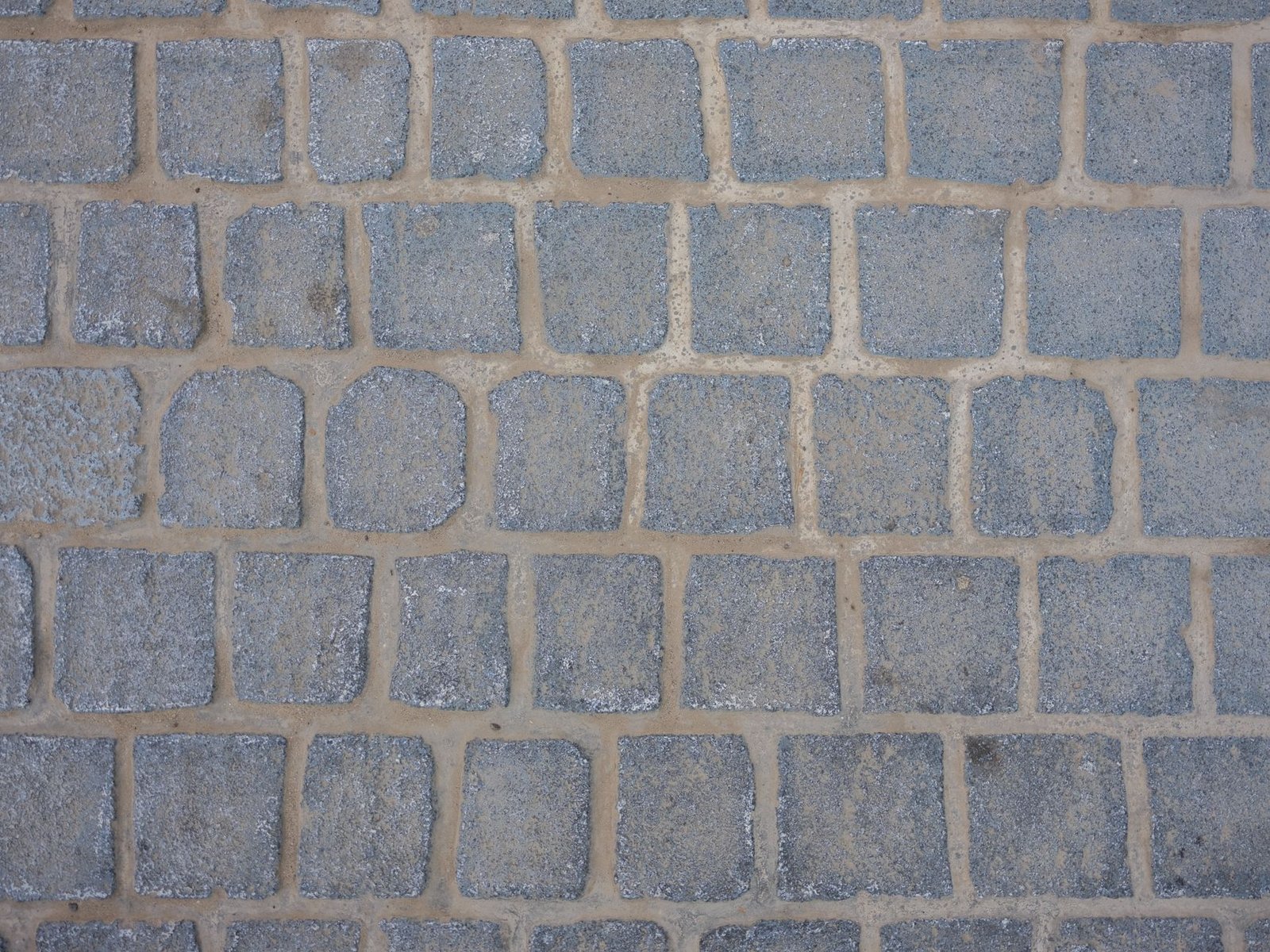
Granite is a hard, dense igneous rock with a speckled grain, usually gray, black, pink or white. It is the stone to choose when the surface takes a beating.
- Best for: driveways, busy walkways, cold climates, and around outdoor kitchens where grease drips.
- Strengths: resists scratching, cracking and staining, and is not etched by acids the way limestone and marble are.
- Watch for: a polished granite face is slick when wet, so outdoor granite comes flamed, bush-hammered or split. Granite is also heavy and hard to cut.
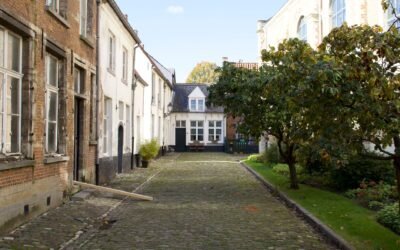
Granite setts like the ones above are laid on sand like any other paver, and give the old-street look concrete cobbles imitate.
Bluestone: the northern patio classic
Bluestone is a dense sandstone quarried mainly in Pennsylvania and New York, named for its blue-gray color, though full-color bluestone also shows lilac, rust and green.
- Best for: cold-climate patios, walks and steps.
- Strengths: a thermal (flamed) finish gives a flat, grippy surface that suits traditional and modern houses.
- Watch for: dark blue-gray stone gets hot in full sun. Color can lighten with age, and some sellers label any gray sandstone as bluestone, so buy from a supplier who names the quarry region. No standard I opened defines "bluestone," which explains a lot.
Bluestone is sold as cut pavers (thermal or natural cleft) and as irregular flagging.
Slate pavers for patios
Slate is a fine-grained metamorphic rock that splits into thin layers. It comes in charcoal, gray, green, purple and copper tones, and a natural cleft face gives it texture.
- Best for: patios and walks where you want a dark, rich color with grip.
- Strengths: good slip resistance on a cleft surface, and strong for its thickness.
- Watch for: some slates flake along their layers, especially softer imports. Check the supplier rates it for exterior paving in your climate. Large-format outdoor slate is scarce.
Sandstone pavers: warm color, softer stone
Sandstone is sedimentary rock made of cemented sand grains, in buff, tan, pink, red and gold. Indian sandstone and Arizona flagstone are both sandstones.
- Best for: patios and garden paths in dry or mild climates, and covered areas.
- Strengths: warm color, a naturally non-slip texture and easy cutting.
- Watch for: it is porous, stains more readily than granite or bluestone, is weaker in bending, and should be sealed. Algae builds up in damp shade.
Limestone: smooth and formal
Limestone gives a smooth, even surface in gray, beige or cream that suits formal designs. Dense limestones perform well outdoors; softer ones wear and etch. Like travertine, it reacts with acids. Ask for density and absorption data before you buy.
Flagstone is not a separate rock but a shape: thin, flat, often irregular slabs of sandstone, bluestone, quartzite, limestone or slate. We cover types, cut vs irregular, and dry vs mortared laying in our guide to flagstones.
Matching the stone to your climate and use
| Stone | Cold, freeze-thaw winters | Pool deck and hot sun | Driveway | Upkeep |
|---|---|---|---|---|
| Granite | Excellent | Good with a textured finish | Yes | Low |
| Bluestone | Excellent | Gets hot; lighter shades are better | Thick units only | Moderate; seal for stains |
| Travertine | Only frost-rated grades, sealed | Excellent; stays cool | Not usually | Moderate to high; avoid acids |
| Slate | Good if rated for exterior use | Dark colors get hot | No | Moderate; seal |
| Sandstone | Fair; porous | Good; lighter tones stay cooler | No | Moderate; seal |
| Limestone | Dense grades only | Good | No | Low to moderate; avoid acids |
Elevate Outdoor's guide to natural stone for patios makes the same split: bluestone, granite and limestone for Midwest and Northeast winters, travertine and sandstone for warm or covered spaces.
Finishes decide how the stone grips
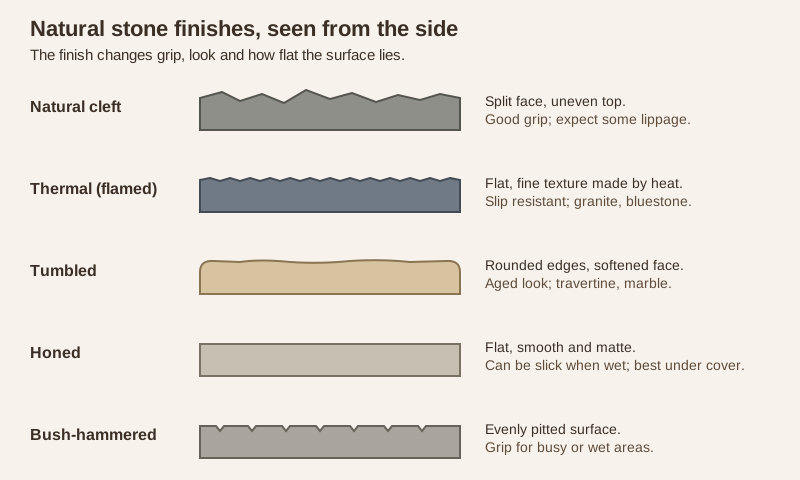
The same stone grips very differently depending on its finish:
- Natural cleft. Split along the grain. Great grip, but uneven, so expect some lippage between pieces.
- Thermal or flamed. Blasted with heat so the surface crystals pop. Flat and slip resistant. Standard for granite and bluestone.
- Tumbled. Rolled with grit to soften edges. The go-to finish for travertine and marble pavers.
- Honed. Ground flat and matte. Slicker when wet, so keep it under cover.
- Bush-hammered or sandblasted. Evenly textured. A good choice for steps and busy paths.
Avoid polished stone outdoors on any surface that gets wet.
Laying natural stone pavers: sand bed or mortar
Natural stone pavers go down in one of two ways, and the stone's thickness decides which.
Sand-set (dry-laid). Stone about 1 1/4 inches (3 cm) or thicker sits on a screeded sand bed over a compacted gravel base, just like concrete pavers. The bed is concrete sand to ASTM C33, a nominal inch thick, screeded and left loose (ICPI Tech Spec 2); stone dust and mason sand don't belong there. NT Pavers' travertine instructions add tight 1/8 to 1/4 inch joints. Because stone is thinner, the base must be flat to within 3/8 inch across a 10-foot straightedge before the sand goes down (CMHA). Our paver base guide covers depth and compaction.
Under it, ICPI asks for a compacted crushed-stone base of at least 4 inches for a patio, 6 for a driveway, and an extra 2 to 4 where the ground is wet or freezes. A thin base under premium bluestone just gives you very expensive wobble. Tap stones down with a rubber mallet. If you use a plate compactor, fit a protective pad and check the stone supplier allows it.
Mortar-set (wet-laid). Thinner stone, around 1/2 inch, is bonded with mortar to a 4 to 6 inch concrete slab, with mortar or grout joints. It is rigid and permanent, and the slab needs its own slope and control joints.
Calibrated stone is far easier to lay flat on sand than hand-split stone.
Sealing and everyday care
Porous sandstone, limestone and travertine benefit from a breathable, penetrating stone sealer. My one strong opinion is about when: seal for a reason, and reseal when water stops beading, not when the calendar says so. NT Pavers suggests every one to two years for travertine, which is fine as a check date, but sealing on a schedule stacks coats until they cloud and peel, and then you're stripping stone you paid to protect. Clean with pH-neutral stone cleaner, never acid or vinegar on limestone, travertine or marble, and sweep grit off so it does not scratch softer stones.
Pick the stone for your winter, then the color
Choose natural stone pavers by climate and use first: granite or bluestone where winters bite or cars park, travertine where the sun is fierce and bare feet matter, and sandstone, slate or limestone where you want their color and can give them a little care. Then buy 1 1/4 inch calibrated pavers, build a flat base, and choose a textured finish for anything that gets wet. The rock has waited a very long time to become a patio; it can wait one more weekend while you get the gravel right.
FAQ
What is the most durable natural stone for pavers?
Granite. It has among the highest compressive and flexural strengths of paving stones, resists staining and acids, and handles freeze-thaw and vehicle traffic. Bluestone and slate rated for exterior use are also very durable.
Are natural stone pavers better than concrete pavers?
They are not stronger in every case, but they hold their natural color, age well and add a look concrete only imitates. Concrete pavers are cheaper, thicker, more uniform and easier to lay. Choose stone for looks and longevity, and concrete for budget and consistency.
Do natural stone pavers need to be sealed?
Porous stones such as sandstone, limestone and travertine should be sealed with a penetrating stone sealer to resist stains and water. Dense granite often does fine without it. Always follow the stone supplier's advice for your stone.
What is the best natural stone for a patio in a cold climate?
Bluestone, granite and dense limestone handle freeze-thaw cycles best. Avoid soft sandstone and non-frost-rated travertine where winters are hard and de-icing salt is used.
How thick should natural stone pavers be?
For a sand-set patio or walkway, use pavers about 1 1/4 inches (3 cm) thick or more. Thinner stone, around 1/2 inch, should be mortared to a concrete slab. For driveways, use thicker units rated for vehicles, such as granite setts.
Can natural stone pavers be used around a pool?
Yes. Travertine is the classic pool deck stone because it stays relatively cool and grips when wet. Choose a tumbled or textured finish and avoid honed or polished faces.