Last Updated on September 23, 2026 by Umar Farooq
To overlay concrete steps with pavers, the steps must be sound, and every paver must be bonded down with mortar or masonry adhesive; loose sand-set pavers on a step are a fall that has already been scheduled. Work out the riser heights first. Adding pavers to the treads raises each step, so the bottom step gets taller and the top step shorter unless the walk and landing are raised too. Get that right, use thin pavers and bullnose caps, and the old gray steps can match your hardscape. Flat slabs are a different job, covered in pavers over concrete.
Check the steps before you cover them
A paver overlay hides the concrete. It doesn't fix it, any more than a nice rug fixes a floor joist. Look for:
- Movement. Steps that have sunk, tilted or pulled away from the house will keep moving and crack the pavers. Reset them first.
- Cracks. Stable hairline cracks are fine. Wide, offset or growing cracks will telegraph through mortar joints.
- Spalling. Scrape off loose concrete and patch it, or the overlay bonds to crumbs.
- Pitch. Treads should shed water slightly forward. If a tread holds a puddle, the overlay will too.
- Paint or sealer. Mortar and adhesive won't bond to a coating. Grind or strip it off.
If the steps pass, my opinion: don't jackhammer sound steps. A flight that hasn't moved in years has already proven the ground under it; a rebuilt one starts that test from zero. Clean them with a stiff brush and pressure washer, degrease any oil, and let them dry if gluing.
The riser height problem at the top and bottom
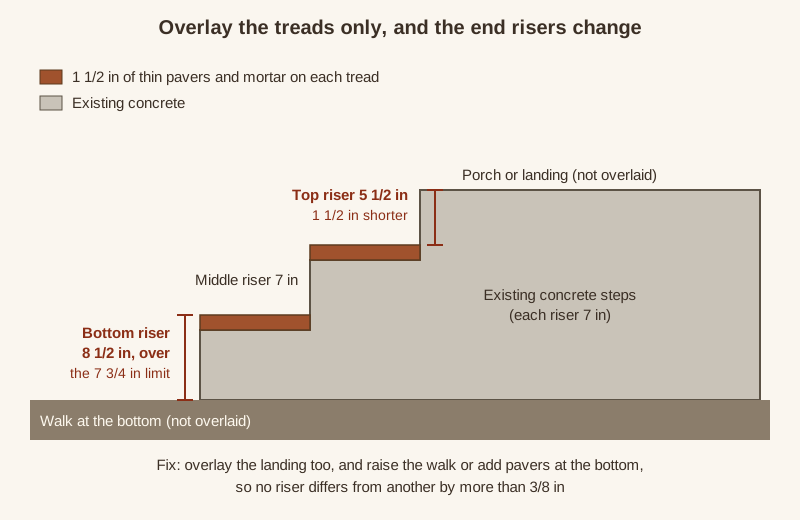
Most overlays go wrong here. I read the stair section of the International Residential Code more carefully than it probably deserved: risers max out at 7 3/4 inches, and within one flight the tallest may not exceed the shortest by more than 3/8 inch. Building Code Trainer's summary of the IRC stair rules sets out the numbers.
Say your steps have 7 inch risers and you add 1 1/2 inches of thin pavers and mortar to each tread:
- Middle risers stay 7 inches, since every tread rises equally.
- The bottom riser grows to 8 1/2 inches, because the walk below didn't rise. That is over the 7 3/4 limit on its own.
- The top riser shrinks to 5 1/2 inches, unless the porch or landing gets the same overlay.
A step taller or shorter than the rest is the one people trip on, usually while carrying groceries. The fixes:
- Overlay the landing or porch at the top with the same build-up.
- Raise the walk at the bottom with pavers, or add a paver landing pad, so the bottom riser matches.
- Use the thinnest build-up you can. Glued thin pavers add less height than full pavers in mortar.
Measure the door threshold too. The IRC keeps the landing at a required exit door no more than 1 1/2 inches below the threshold (up to 7 3/4 if the door doesn't swing over it), and pavers must stay below the sill. Confirm the rules with your local building department.
Mortar or adhesive: bonding pavers to the steps
Both work; choose by concrete flatness and paver thickness.
| Mortar bed | Masonry or construction adhesive | |
|---|---|---|
| Best for | Uneven or patched steps, full-thickness pavers, natural stone | Flat, sound concrete and thin pavers or caps |
| Height added | Paver plus about 1/4 to 1/2 in of mortar | Paver plus a bead of adhesive |
| Can it correct dips? | Yes, within the bed thickness | No; the paver follows the concrete |
| Weather | Needs mild temperatures and no rain while it cures | Some hybrid adhesives cure on damp surfaces |
Hunker's guide to installing pavers on existing concrete steps calls for 1/4 to 1/2 inch of mortar mixed to a peanut-butter consistency and warns that pavers on steps are dangerous unless locked in by mortar. For glued caps, How to Hardscape's overlay guide uses polyurethane adhesive, and caps overlays with 2 inch natural stone because steps take the most wear.
If you mortar the joints, our guide to mortar paver joints covers mixing and tooling.
Thin pavers, riser veneers and bullnose caps

Treads. Thin overlay pavers, around 1 1/4 inches thick, keep the height gain small. Full 2 3/8 inch pavers rarely fit.
Risers. Face each riser with thin pavers or a block veneer, bonded and cut so the face reads as one clean band.
Nosings. The front edge of each tread is what feet hit first, and shins second. A bullnose cap is kinder to both and chips less. Let it overhang the riser face slightly. Under the IRC, where treads are less than 11 inches deep, a nosing projection of at least 3/4 inch and no more than 1 1/4 inches is required, the same on every step.
Use a textured, non-slip face. Smooth or glossy sealed pavers on a wet step are an ice rink you paid extra for.
Overlaying concrete steps with pavers, one step at a time
- Dry-lay each step. Set the cap at the front and fill behind it, with cuts at the back, not the nosing.
- Start at the top. Hunker's method starts at the top step and works down.
- Face the riser first. Set the riser veneer, then the tread cap so it laps over the top of the veneer.
- Set the tread field. Bed the pavers behind the cap, keeping the slight forward pitch, no steeper than 1/4 inch per foot or so.
- Check every step against the next. Measure each riser from the finished nosing and correct drift before the mortar sets.
- Fill joints and cure. Fill with mortar, then keep traffic off for at least a day, longer if the bag says so. I checked the polymeric sand data sheets hoping they'd work here; they want joints at least 1 1/2 inches deep, which a thin paver can't give them.
If the steps are too far gone to overlay, rebuilding them with block risers is often simpler; see how to build steps with pavers.
Plan the risers before you buy the pavers
When you overlay concrete steps with pavers, the job succeeds when the concrete is stable, every paver is bonded, and the risers come out equal. Measure every step, plan to raise the landing and walk, and choose the thinnest paver that looks right. Do the tape-measure bit at the kitchen table first; it's much cheaper there than on the steps.
FAQ
Can you put pavers over concrete steps?
Yes, if the steps are solid, not sinking or pulling away from the house, and the pavers are bonded with mortar or masonry adhesive. Don't sand-set loose pavers on steps.
How much height does a paver overlay add to a step?
Thin pavers of about 1 1/4 inches plus mortar or adhesive usually add around 1 1/2 inches. Full 2 3/8 inch pavers in a mortar bed add closer to 3 inches.
Do you need to overlay the landing as well?
Usually yes. If the treads rise but the top landing doesn't, the top riser gets shorter than the rest, which breaks the IRC's 3/8 inch uniformity rule.
What adhesive holds pavers to concrete steps?
A polyurethane or hybrid masonry adhesive made for pavers and wall caps. Use it on clean, flat, sound concrete; use a mortar bed where the steps are uneven.
Should I use bullnose pavers on steps?
Yes, where possible. A rounded nosing is easier to see, kinder to shins and less prone to chipping than a square paver edge.