


Last Updated on October 20, 2026 by Umar Farooq
When polymeric sand washed out of your joints, the fix depends on how much is gone: if most of the joint is still hard, spot-fill the empty sections, and if the joints are widely hollow, remove the loose sand at least 1 inch down and redo them. Either way, work out why it happened first, because refilling into the same water path just washes the new sand out too. The usual causes are rain before the sand cured, too much water at activation, joints that were never deep enough, and runoff that keeps hitting the same spot.
Read the pattern before you refill

Where the sand went tells you why it went. Walk the surface and note which of these you see:
| What you see | Likely cause |
|---|---|
| Empty joints across most of the area, soon after install | Rain before cure, or too much water at activation |
| Empty joints in one strip under a roof edge or downspout | Concentrated runoff hitting the same line |
| Sand gone only along the outer rows | Water running off and along the edge (check the restraint) |
| Hollow, shallow joints that were never full | Joints too shallow, or sand left low from the start |
| Dips that return after every refill | Settlement below the joint, not a sand problem |
The table is my own reading of the causes, built on what the manufacturers say about rain, water and depth below. Take it as a starting diagnosis, then confirm with the data sheet for your product.
Rain on a fresh install: what each maker's window allows
Makers disagree on how soon rain stops mattering, and the gap between their numbers is the gap between a good and a ruined install.
| Product or setup | Rain window |
|---|---|
| Alliance Gator Super Sand G2 | Rain safe 15 minutes after water activation (data sheet) |
| Alliance Gator, general guidance | No rain within 1 hour on a drainage base, within 24 hours on a non-drainage base |
| Techniseal HP NextGel | Withstands rain 60 minutes after install, needs 24 to 48 hours to dry fully |
| Alliance Gator FAQ | Rain within 24 hours can prevent the joints from hardening properly |
Sources: Alliance Gator's 10-step installation guide and FAQ, the G2 and HP NextGel data sheets. Our guide to how long polymeric sand takes to dry goes into the timeline.
Pick the longest window that applies to your base and your product, not the shortest. A shower at hour two on a non-draining base is the sort of thing that sends you to this page.
Watering is the other way to wash it out yourself
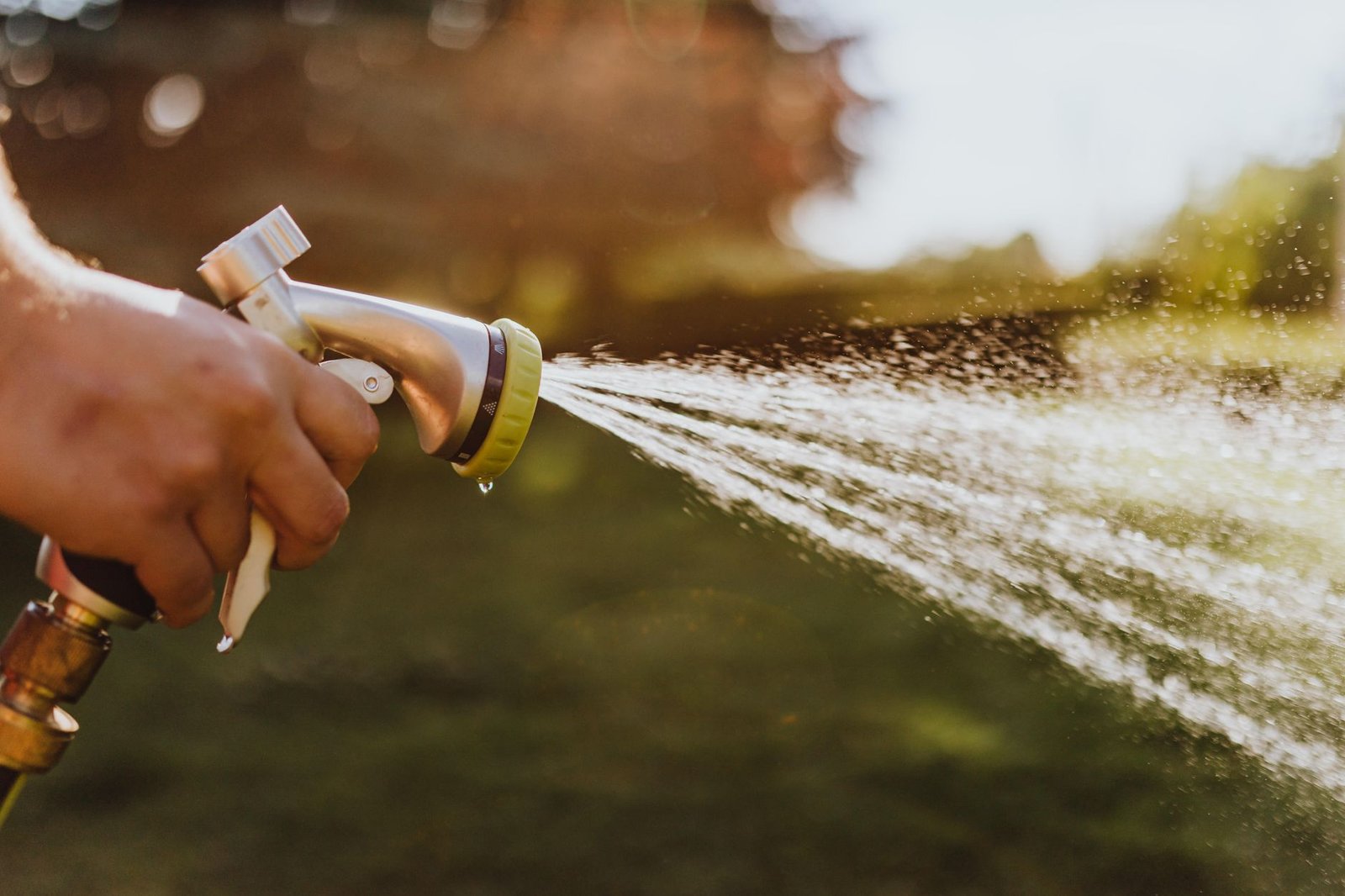
Rain is not the only water that can go wrong. Alliance Gator's installation guide describes a staged approach: a shower spray held about 4 feet high, no more than 3 to 4 minutes between passes, then a rinse at about 2 feet, then a final shower and rinse until a build-up of white foam or puddles appears on the pavers, which signals to stop. It also warns never to let the surface dry out in the middle of the process.
Unilock's polymeric sand guide agrees on the principle: use a sprinkle-head hose, and "mist in passes instead of flooding so you do not wash out corners or create excess sand streaks." A hard jet or a pressure-washer-style stream is the shortcut that undoes the polymers before they bind. If the sand moved while you were watering it in, that was the cause.
Spot repair when most of the joint is still hard
Probe the joints with a screwdriver tip. If the sand is firm in most places and only a section has gone, a local repair is enough.
- Let everything dry. Unilock says the pavers must be dry before sanding and before water is added.
- Clear the loose material out of the empty section, taking out any crumbling sand around it.
- Refill with the same product (matching color) and compact it down.
- Stop 1/8 inch below the chamfer. Alliance Gator recommends polymeric sand be installed "at least 1/8" below the chamfer or rounded edge of the paver," and 3/16 or even 1/4 inch on wider joints.
- Sweep the surface clean, then activate with the staged watering above.
Remember that the sand drops after compaction. Alliance Gator's G2 data sheet says about 30 to 50 percent of the sand drops after the first compaction, so top up and compact again until the level holds. Don't skip the sweep: leftover dust on the paver faces is how a repair turns into a hazy film.
Full redo: pressure-wash down an inch and start over
When joints are hollow across a large area, Alliance Gator's FAQ says adding a thin layer on top is "not ideal," because the existing sand may be old, unknown in condition, or dirty. Its instruction is to remove at least 1 inch of the existing jointing material and then follow the new-installation steps. The method it recommends is a pressure washer with "a 25 degree tip" and "at least 3000psi," and it says it is permissible in most cases to leave any jointing material remaining after the washing and fill the washed-out areas with new material.
Two details save grief. First, wait for the joints and pavers to dry fully before the new sand goes in, because Techniseal's NextGel data sheet asks for dry conditions and above-freezing temperature (above 32°F for 48 hours). Second, pressure washing can move bedding sand if you linger at one spot, so keep the nozzle moving along the joint. That second point is my caution, not a manufacturer's, and the cost of ignoring it is a dip you have to level later.
Joint depth is the quiet cause
Polymeric sand needs somewhere to sit. Alliance Gator's G2 data sheet lists a minimum joint depth of 1 1/2 inches; Techniseal's NextGel sheet lists 1.5 inches too. A shallow joint gives the binder little mass to hold. If your joints look shallow no matter how much you sweep in, the problem may be below the sand. Our guide on polymeric sand problems lists the other failure modes alongside washout, and how to apply polymeric sand covers the right sequence from the start.
When it keeps happening, look under the joint
Recurring washout in one spot usually means water is arriving there faster than it leaves. A downspout discharging onto the patio, a low area that holds a puddle, or a patio surface that is flat instead of sloped will all strip the joints, and no amount of refilling fixes that. Redirect the roof water first. Our guide to patio drainage explains slope and outlets, and if the joint dips because the paver itself has sunk, the real repair is in fixing sunken pavers.
Empty joints are a water problem, not a sand problem
Polymeric sand does not disappear on its own. It leaves because rain arrived before it cured, because the watering was too heavy, because the joint was too shallow, or because a path of runoff targets it. Fix that cause, then spot-fill or redo to 1/8 inch below the chamfer, activate in light passes, and give it a dry day or two. And check the forecast before you open the bag. (Polymeric sand is the only building material that argues with the weather and loses.)
FAQ
Why did my polymeric sand wash away?
Common reasons are rain before the sand cured, too much water or too hard a spray at activation, joints that were too shallow, and concentrated runoff from a downspout or slope. Alliance Gator says rain within 24 hours can prevent the joints from hardening properly.
Can I add more polymeric sand over washed-out joints?
For small empty sections, yes: clear loose material, refill with matching sand to 1/8 inch below the chamfer, and reactivate. For large areas, Alliance Gator says a thin layer on top is not ideal and recommends removing at least 1 inch of old material first.
How long after polymeric sand can it rain?
It depends on the product. Alliance Gator Super Sand G2 is rain safe after 15 minutes of activation; Techniseal HP NextGel withstands rain after 60 minutes but needs 24 to 48 hours to dry fully. On a non-drainage base, Alliance Gator advises no rain within 24 hours.
How do you fix washed-out polymeric sand?
Find and fix the water cause, let the pavers dry, then spot-fill if most of the joint is still hard or pressure-wash out at least 1 inch and refill if it is not. Activate with light, staged passes rather than a hard spray.
Can you use a pressure washer to remove polymeric sand?
Alliance Gator recommends a pressure washer with a 25 degree tip and at least 3000 psi to remove at least 1 inch of existing jointing material before reapplying. Keep the nozzle moving and wait for the surface to dry before refilling.


