Last Updated on September 23, 2026 by Umar Farooq
What is a plate compactor? It is a walk-behind machine with a heavy steel plate on the bottom and a small engine on top, and it is the only tool on a paver job whose entire purpose is to shake things. The engine spins an off-center weight that makes the plate vibrate thousands of times a minute, and that vibration settles loose sand, gravel and crushed stone into a denser layer that won't settle later. On a paver job it compacts the soil, each layer of base stone, and finally the pavers. It works best on granular material. Sticky clay needs a different machine.
How does a plate compactor work?
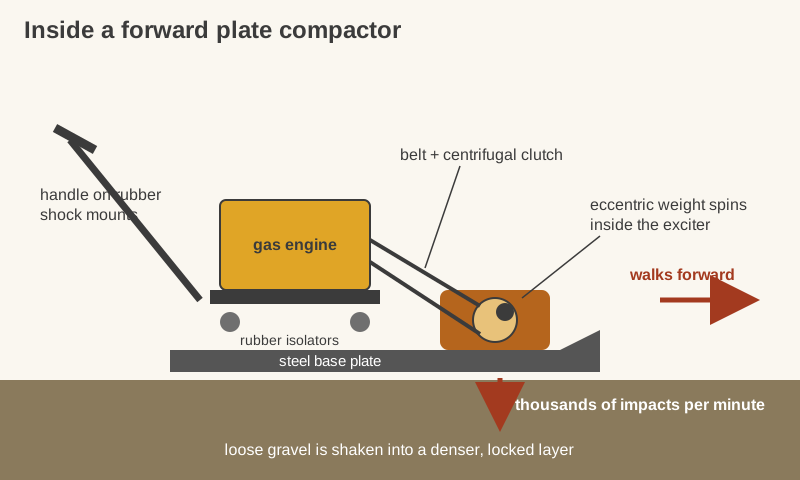
Every vibratory plate compactor has the same four parts:
- Engine. Usually a small gasoline engine. Electric, battery and (on big reversibles) diesel versions exist.
- Belt and centrifugal clutch. When you open the throttle, the clutch engages and the belt drives the exciter. At idle, the plate sits still.
- Exciter. A sealed housing bolted to the plate, with an eccentric (off-center) weight on a shaft inside. As the weight spins, it throws the plate down against the ground and lifts it again, over and over.
- Base plate. A flat steel or iron plate, turned up at the front so it rides over material instead of plowing into it.
Rubber isolators sit between the plate and the engine deck, and between the deck and the handle, so the engine and your hands don't get the full shaking. (Your hands will still get plenty.)
Each impact pushes particles down and sideways into the gaps between their neighbors, driving out air. Moist, angular stone with a range of sizes does this best, because the small pieces fill the voids between the big ones. On a forward plate the exciter sits toward the front, so the machine "walks" forward on its own. You only steer.
A "compactor vibro" or "vibro plate" is the same machine under a trade name.
Centrifugal force, frequency and amplitude in plain numbers
Spec sheets list three numbers. I read more of these sheets than I planned to, and here's what each number actually tells you:
- Centrifugal force (lbf or kN) is how hard the exciter throws the plate. Light forward plates run from about 2,000 to 4,500 lbf. Big reversible plates go much higher.
- Frequency (vibrations per minute, vpm) is how often it hits. Forward plates typically run around 5,000 to 6,000 vpm, which suits sand and gravel.
- Amplitude is how far the plate actually moves up and down. MBW's plate compactor buyer's guide argues it is a truer measure of compaction than force alone, but many spec sheets don't list it.
One common rule of thumb comes from How to Hardscape's hand tamper vs plate compactor comparison: for every 1,000 pounds of force, a plate properly compacts about 1 inch of material. It is a rough guide, not a spec, but the spec points the same way: ICPI's 4 to 6 inch lift assumes a 7,000 lbf reversible plate, and plates around 5,000 lbf need thinner lifts (ICPI Tech Spec 2). A light rental plate sits well below both.
Forward plate vs reversible plate compactor
| Forward (one-way) plate | Reversible plate | |
|---|---|---|
| Direction | Forward only; you turn it around | Forward, reverse and stationary "hover" via a lever |
| Typical weight | About 100–300 lb | About 400 lb and up |
| Force and frequency | Up to about 4,500 lbf, around 5,700 vpm | Up to about 21,000 lbf, 3,000–4,000 vpm |
| Lift it compacts well | Thin granular lifts, a few inches at a time | Thick granular lifts, some models up to 16–32 in |
| Common uses | Patios, walkways, paver compaction, asphalt patching | Driveways, commercial base, trench backfill, clay-heavy soil |
| Rent or buy | The standard DIY rental | A pro machine; needs a trailer |
The weight, force and lift ranges come from Compact Equipment's plate compactor selection article.
For a homeowner, the forward plate is the default, and a rented one at that. A reversible plate makes sense on a driveway base or in a boxed-in space.
Plate compactor weight and what it tells you
Weight is the easiest number to compare, and it tracks force and compaction depth:
- Under 150 lb: light plates, often around 14 inches wide. Good for walkways, small patios and settling pavers with a pad. Keep lifts thin.
- 150 to 300 lb: the typical rental plate, around 20 inches wide. One rental-store spec sheet lists a gas Wacker plate at 190 pounds, 19.5 x 23 inches and 3,375 lbf. It handles most patio bases in 2 to 3 inch lifts.
- 400 lb and up: reversible plates. Too heavy for two people to lift into a pickup without a ramp, however confident the second person sounds.
The weight of a plate compactor also decides how you move it. Our plate compactor rental guide covers sizes, hauling and pickup checks.
Materials it compacts well, and the ones it doesn't
The plate is built for granular material, meaning particles that don't stick together:
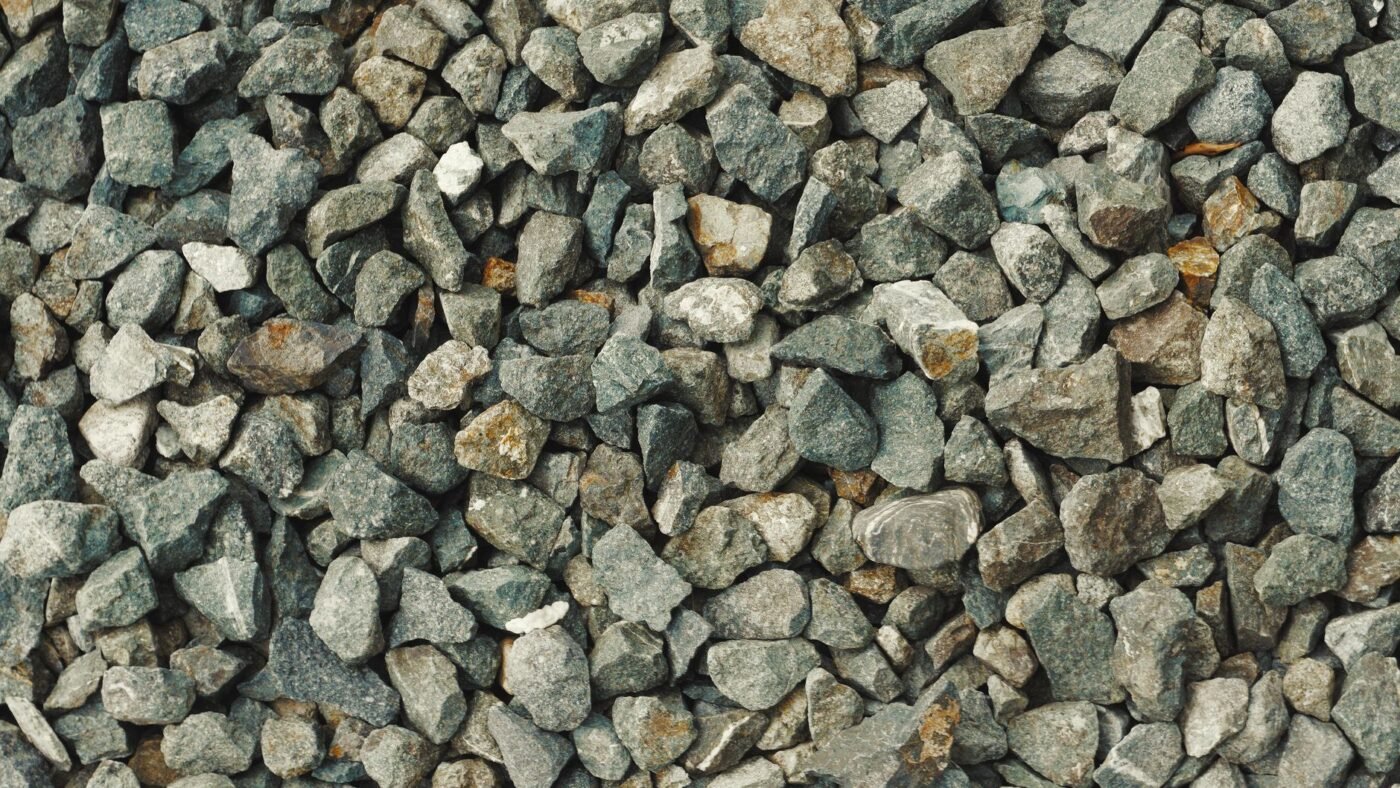
- Dense-graded crushed stone (road base, crusher run, Class 5, QP): the classic paver base. See paver base material for the options.
- Coarse concrete sand and stone dust.
- Sandy and gravelly native soils.
- Asphalt patches, using the water tank so the mix doesn't stick to the plate.
It struggles with cohesive soils such as clay and heavy silt. Clay particles are tiny and stick together, so vibration mostly makes clay bounce and pump rather than pack. Clay does not want to be shaken. It wants to be hit. For clay subgrade and narrow trenches, a rammer's pounding action works better. Our jumping jack vs plate compactor comparison explains when to switch.
Moisture matters too: base stone should be damp, not dripping. Dry stone won't pack; saturated stone turns to mush.
Where the plate goes to work on a paver project
On a sand-set paver patio, the plate runs at three stages:
- Subgrade: the native soil after excavation, before any stone goes down.
- Base lifts: each 2 to 3 inch layer of crushed stone, dampened and compacted before the next one goes on.
- Pavers: after laying, with a urethane pad under the plate, to seat the pavers into the bedding sand. It runs again as joint sand is swept in.
If I could tell every first-time renter one thing, it would be: compact the base in lifts. A thick layer compacted once from the top is not compacted. It has a hard crust over loose stone, which settles later under the pavers. Thin, damp lifts with a small plate, every time.
The one layer it never touches is the screeded bedding sand before the pavers are on it. Compact that sand first and the pavers have nothing loose to settle into.
How to use a plate compactor safely
On any forward plate:
- Wear the gear: hearing protection, safety glasses, gloves and steel-toe or sturdy boots. A dust mask helps on dry stone.
- Only run gas plates outdoors. They produce carbon monoxide, so never run one in a garage, a trench with poor airflow, or an enclosed courtyard. An open door is not ventilation.
- Full throttle, then let it walk. Part throttle makes the clutch slip and the plate bounce. Guide it lightly; don't push or hold it back.
- Overlap each pass by a few inches, and make a second pass at right angles to the first.
- Turn it on the flat, not on a slope or at the edge of a trench, where it can tip.
- Keep feet clear of the plate, especially when pulling it backward to turn.
For lift thickness, moisture and passes, see the dedicated steps for compacting gravel.
A vibrating plate is for loose stone, not clay
A plate compactor is a vibrating steel plate driven by a spinning eccentric weight. Forward plates weighing 100 to 300 pounds handle nearly every DIY patio and walkway; reversible plates are for driveways and thick lifts. Use it on sand, gravel and base stone in thin, damp lifts, and bring in a rammer when the ground is clay or the space is a trench. After that, the machine does the shaking. You just have to do the walking, and there is a surprising amount of it.
FAQ
What is a plate compactor used for?
It is used to compact granular soil, sand, gravel and crushed base stone, and to seat pavers into their sand bed. Road crews also use plates on asphalt patches. It creates a dense layer that won't settle under patios, walkways, driveways, slabs and footings.
How much does a plate compactor weigh?
Forward plate compactors typically weigh about 100 to 300 pounds. The most common rental size, with a plate around 20 inches wide, is usually close to 200 pounds. Reversible plates start around 400 pounds and go well past 1,000 pounds.
What is the difference between a forward and a reversible plate compactor?
A forward plate only travels forward, so you turn it around at the end of each pass. A reversible plate can go forward, backward or hover in place at the flip of a lever. It is heavier and hits harder, and suits driveways, thick lifts and tight spaces.
How deep can a plate compactor compact?
It depends on the weight and force. A light rental plate compacts only a few inches of granular material at a time, which is why paver bases are built in 2 to 3 inch lifts. Heavy reversible plates can compact much thicker lifts, and some manufacturers rate large models for 16 inches or more of granular material.
Can you use a plate compactor on clay?
You can, but it is inefficient. Vibration works on granular particles. Clay tends to bounce and pump under a plate. A jumping jack rammer, or a heavy reversible plate on thin, properly moist lifts, does a better job on clay.
Does a plate compactor need water?
Only in one sense. The material you compact should be damp so particles slide into place. Some plates also have a water tank that wets the plate, but that is for asphalt, to stop hot mix from sticking.