Last Updated on September 23, 2026 by Umar Farooq
Porcelain pavers are outdoor slabs of kiln-fired porcelain, usually 2 cm (about 3/4 inch) thick, that absorb almost no water, never need sealing and resist stains, fading and frost. They can be laid on pedestals over a roof deck, dry-laid on sand or gravel, or bonded to a concrete slab. The catch: they are rigid, so the base must not move, they need a wet saw to cut, and most are not rated for driveways. They are the most forgiving paver to own and the least forgiving to lay, which is a trade I'd take, but only knowingly.
They sit apart from the other paving stones because they are thin, dense and flat, more like an outdoor tile than a block.
What makes a paver "porcelain"
Porcelain is a refined clay body pressed and fired until it is almost glassy. Outdoor porcelain pavers are thicker than indoor tile: 2 cm is standard, with some lines at 3 cm. What that gets you:
- Very low absorption. Aviara's porcelain pavers pros and cons puts it at 0.5% or less, which is why spills wipe off and frost has little water to work with.
- No sealer. The body is not porous, so there is nothing to seal. (The sealer aisle will be sad. It will recover.)
- Any look. Faces are digitally printed to mimic wood, travertine, slate, bluestone or concrete, in large, consistent sizes.
- Light weight for the size. A 2 cm slab is far lighter than a 1 1/4 inch stone paver of the same area, which is what makes rooftop use possible.
Porcelain pavers on pedestals
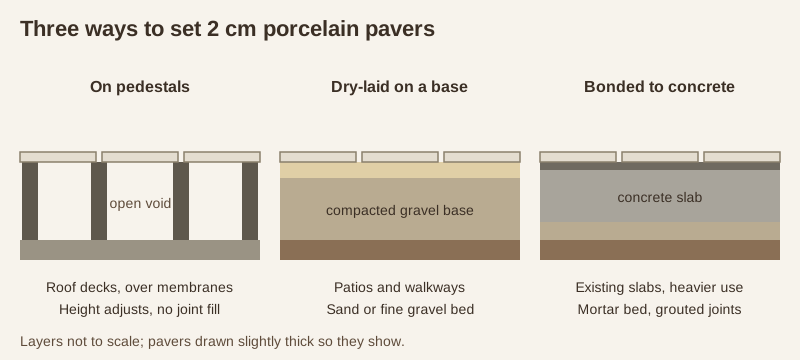
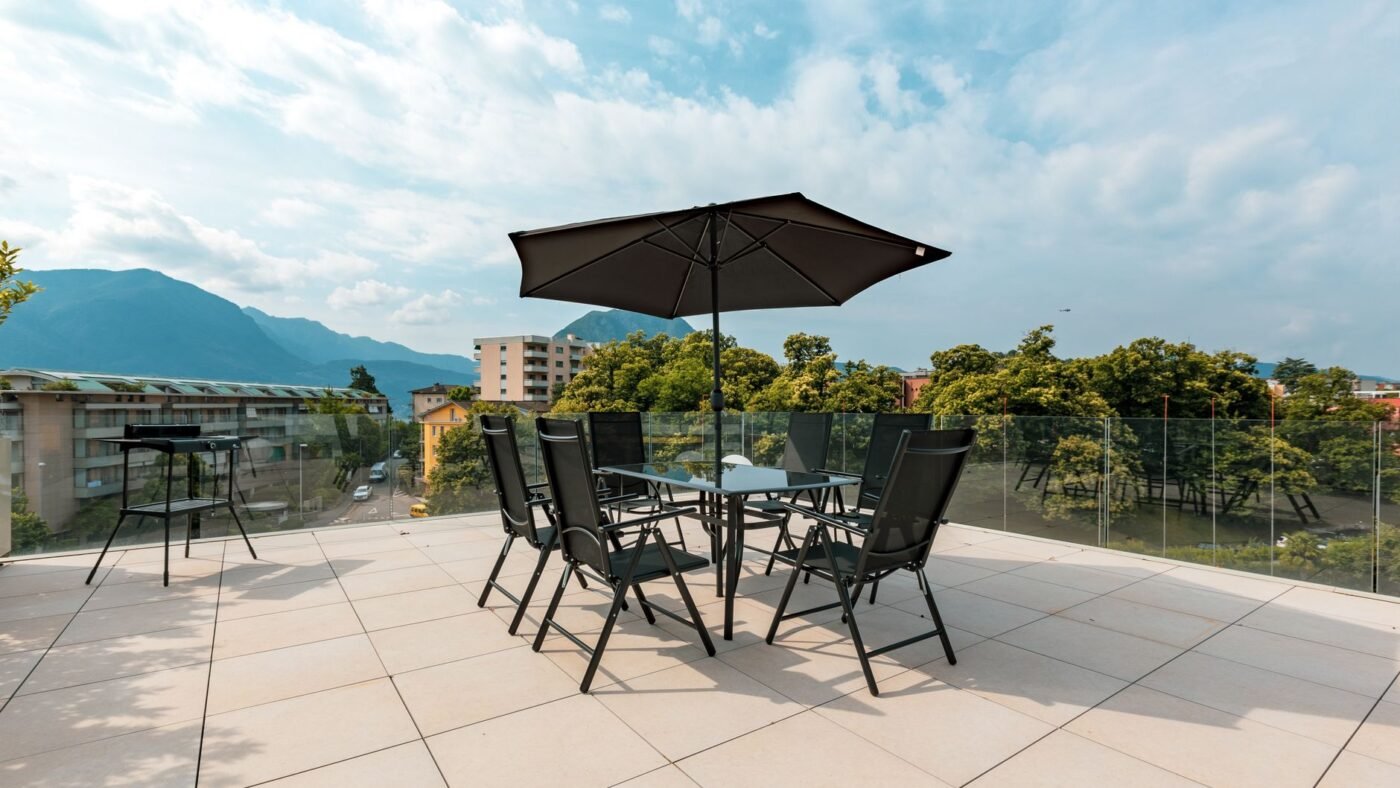
Pedestals are adjustable plastic supports that sit under the corners of each slab. The slabs rest on them with an open void underneath.
- Where it works: roof decks, balconies and terraces over a waterproof membrane, and over an existing slab that is cracked or out of level.
- Why people use it: water drains through the open joints to the membrane, height and slope are set at each pedestal, and cables can run underneath.
- What to check: on a roof, the structure must carry the load. Belgard's porcelain paver best practices recommends consulting an engineer for pedestal systems. Use the pedestal maker's tabs to set joints, and never fill them.
Wind uplift on exposed roofs is a separate engineering question.
Laying porcelain pavers on sand or gravel
This is the everyday patio method, and it looks a lot like laying concrete pavers. Belgard describes several on-grade options:
- Standard paver base. A compacted gravel base with a bedding layer on top, 6 to 8 inches deep in total. That sits comfortably above ICPI's patio floor of a 4-inch compacted base, with 2 to 4 inches added on wet or frost-prone ground. For the bedding, use a nominal inch of concrete sand graded to ASTM C33; skip stone dust and mason sand. This is the one for most patios and any soil that moves or freezes.
- Gravel only. About 2 inches of fine compacted gravel for small patios and stepping paths.
- Sand only. A pre-compacted, lightly moist sand bed, screeded flat, for small patios and walks in dry climates.
- Grass. Individual slabs set as stepping stones.
What changes with porcelain:
- Flatness is everything. A 2 cm slab cannot be beaten down into the bed like a 2 3/8 inch concrete paver. Screed the bedding perfectly flat and set each slab at final height.
- Don't run a plate compactor over it. Belgard allows only light rolling of the finished surface. A vibratory plate on porcelain is a very efficient way of making smaller porcelain.
- Use spacers. Clear disc spacers keep joints even. Joints can stay open, or be filled with polymeric sand or a cement-based grout suited to porcelain.
- Edge restraint still matters. The slabs are held in place by the edge, the joint fill and their own weight, so a firm restraint on every open edge is not optional.
Bonding porcelain pavers to concrete
The third method bonds the slabs to a sound concrete slab with a mortar or thin-set rated for exterior porcelain, with grouted joints. It is the most rigid and permanent option, and the one some manufacturers require before they will approve porcelain for anything heavier than foot traffic.
It also updates an old patio slab, if the concrete is sound, drains, and its control joints carry up through the porcelain. We cover the wider options in pavers over concrete.
Cutting porcelain without chipping
Porcelain is much harder than concrete. Cut it with a wet saw or angle grinder fitted with a continuous-rim diamond blade made for porcelain. Water on the blade keeps the silica dust down, which OSHA requires for crews on any handheld saw cutting masonry (29 CFR 1926.1153), and your lungs don't check whether you're being paid.
- Support the whole slab so it does not snap at the end of the cut.
- Cut slowly on the last inch.
- Smooth cut edges with a diamond pad.
- Don't butt slabs tight. Aviara warns that edges can chip if installed too tightly, so always leave a joint.
A guillotine splitter or a chisel will shatter porcelain.
Outdoor porcelain pavers: pros and cons
| Pros | Cons |
|---|---|
| Absorbs almost no water; stain, frost and fade resistant | Rigid: cracks if the base settles or a corner is unsupported |
| No sealing, easy to clean | Needs diamond wet-cutting and careful handling |
| Consistent size and color, clean modern look | Thin slabs make lippage obvious on a poor base |
| Light enough for pedestals and roof decks | Most lines are not rated for driveways |
| Printed looks of wood and stone without their upkeep | Usually costs more than concrete pavers |
| Textured slip-resistant finishes available | Dark colors get hot in full sun and can glare |
Porcelain around pools and in hot sun
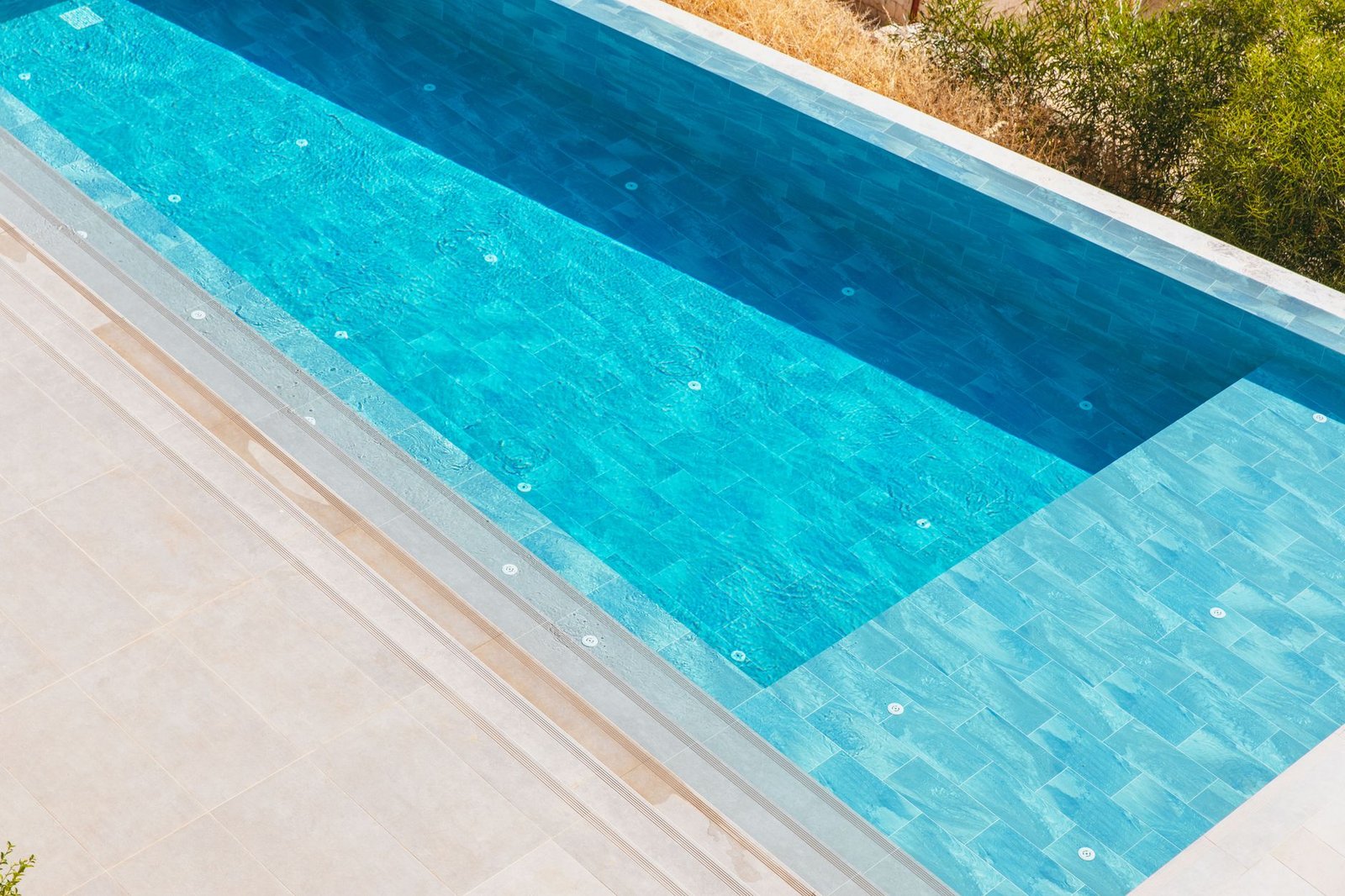
Porcelain is popular around pools because it does not absorb chlorinated or salt water and cleans easily. Two things to check:
- Slip rating. Ask for the wet dynamic coefficient of friction (DCOF) under ANSI A326.3 and choose a product the manufacturer rates for exterior, wet areas. Aviara recommends that classification for pool decks. The smooth "indoor" look belongs indoors.
- Heat. Light colors stay cooler under bare feet. Dark charcoal slabs can get hot and throw glare in full sun.
Can porcelain pavers take a car?
Usually not. Belgard's porcelain range lists patios, walkways, pool decks and rooftops; the driveway line on its page is conspicuously blank. Where a manufacturer does approve vehicles, it typically means a thicker slab mortared to concrete, to their details. For a sand-set driveway, a concrete paver 3 1/8 inches (80 mm) thick is still the right tool.
Choose porcelain for low upkeep, then build a base that never moves
Porcelain pavers are the lowest-maintenance paver you can put outside: no sealer, no fading, almost no staining. My one strong opinion is that sand-set porcelain never goes under a car, whatever the showroom says. A 24-inch slab 2 cm thick has an aspect ratio near 30, and CMHA keeps even concrete pavers at 4:1 or above off driveways. A concrete paver can be vibrated back into line; a 2 cm slab over a soft spot just cracks. Use pedestals on roofs and over tired slabs, a full compacted base on soil, and a mortar bond on sound concrete. And keep them off the driveway unless the manufacturer says otherwise in writing, ideally in a document you can find again.
FAQ
Are porcelain pavers good for outdoor use?
Yes. Outdoor porcelain pavers are made for exterior use, with very low water absorption and resistance to frost, stains and UV fading. Choose a 2 cm product rated for exterior use, with a textured finish for wet areas.
Do porcelain pavers need to be sealed?
No. Porcelain absorbs so little water that it has nothing for a sealer to soak into. If the joints are filled with sand or a cement grout, that joint material may need maintenance.
Can you lay porcelain pavers on sand?
Yes, on a flat, compacted bedding layer over a compacted gravel base. Set each slab at final height with spacers, and do not vibrate it with a plate compactor. A sand-only bed is only suited to small areas in dry climates.
Are porcelain pavers slippery when wet?
It depends on the finish. Textured outdoor porcelain is made to grip when wet. Check the manufacturer's DCOF rating under ANSI A326.3 and choose one rated for wet exterior areas, especially around pools.
How thick are porcelain pavers?
Most outdoor porcelain pavers are 2 cm (about 3/4 inch) thick. Some products come in 3 cm for extra strength.
Can porcelain pavers be used on a driveway?
Most cannot. Only use porcelain on a driveway if the manufacturer approves it, which usually means a thicker slab bonded to a concrete base. Otherwise use concrete or clay pavers rated for vehicles.