Last Updated on September 23, 2026 by Umar Farooq
The patio pavers price you see on a pallet tag is only the start of what a patio costs, in the same way the sticker on a puppy is only the start of what a dog costs. For the pavers alone, Stone Center's published ranges run from about $2 to $8 per square foot for concrete up to $8 to $30 for natural stone. Once labor, excavation and base stone are added, LawnStarter puts a professionally installed paver patio at roughly $10 to $24 per square foot, and Unilock quotes $30 to $40 per square foot for a 400-square-foot patio built to its standards. The pavers are usually the smaller part of the bill.
This guide breaks the price into its parts. If you need a firm count before you price anything, work out how many pavers you need first.
Why three sources give three different answers
I read the three cost guides side by side expecting them to roughly agree. They don't, and it's worth knowing why before you compare quotes.
- They measure different things. Some ranges cover the pavers only. Others are "installed" prices that include labor, base and edging. A $5 paver and a $25 installed square foot can describe the same patio.
- They sample different markets. Coastal-metro and small-town labor rates are far apart, and labor is the biggest line.
- They assume different builds. Unilock's figure assumes a patio built to its own installation standards on its own premium product lines. A national average blends quick installs with careful ones.
Use the ranges below to understand the proportions. Use local quotes for the actual number, because nobody's national average has seen your backyard.
Patio pavers price by material
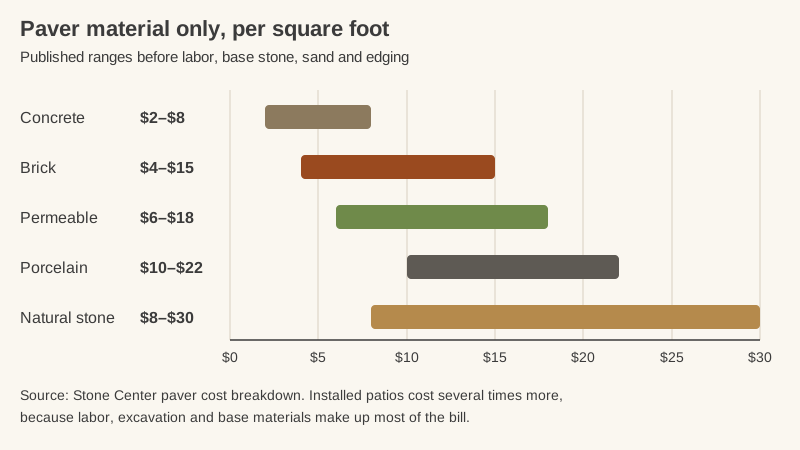
These are the material-only ranges from Stone Center's paver price per square foot breakdown. They cover the pavers themselves, nothing else.
| Paver material | Material price per sq ft (Stone Center) | What drives the price within the range |
|---|---|---|
| Concrete pavers | $2–$8 | Plain gray holland stone at the bottom; textured, tumbled or color-blended faces at the top |
| Brick (clay) pavers | $4–$15 | Standard red wire-cut at the bottom; reclaimed, tumbled or specialty colors at the top |
| Permeable pavers | $6–$18 | Unit design and brand; the special base costs extra on top |
| Porcelain pavers | $10–$22 | Slab size, finish and brand |
| Natural stone pavers | $8–$30 | Stone type, thickness and whether edges are sawn or natural |
Concrete pavers: the budget and mid-range tier
Concrete is the default for most US patios because it spans the widest price range. The cheapest units are plain rectangles in one color. Price climbs with surface treatments (tumbled, textured, smooth), color technology that resists fading, and larger formats. Unilock, for example, groups its own products into three tiers, from its traditional pavers up to premium lines with engineered wear surfaces. For thickness, a standard patio paver is 2 3/8 inches (60 mm), and thicker driveway units cost more per square foot.
Brick: a narrower but steadier range
Clay brick pavers usually cost more than basic concrete but less than good natural stone. The color is fired through the whole brick, so it does not fade like some surface-colored concrete. The trade-off is fewer shapes and more edge chipping when cut.
Porcelain and large-format slabs
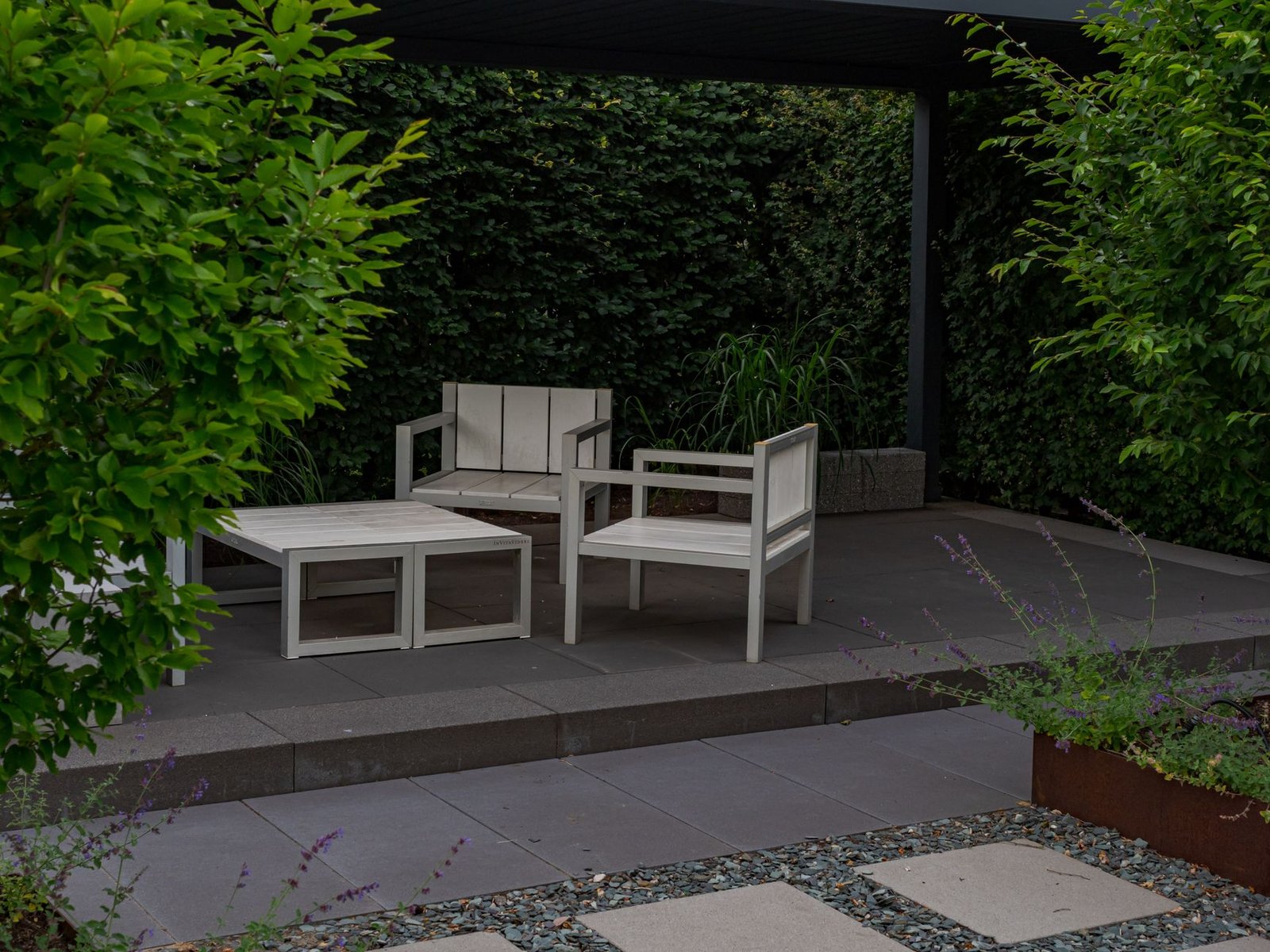
Porcelain sits in the upper-middle tier. It is thin (usually about 2 cm), dense, and uniform in color. Large concrete slabs cost less than porcelain but share its main hidden cost: big units show every dip in the base, so the base has to be flatter and the labor is slower. A big-slab patio is rarely cheap even when the slabs are.
Natural stone: the widest spread
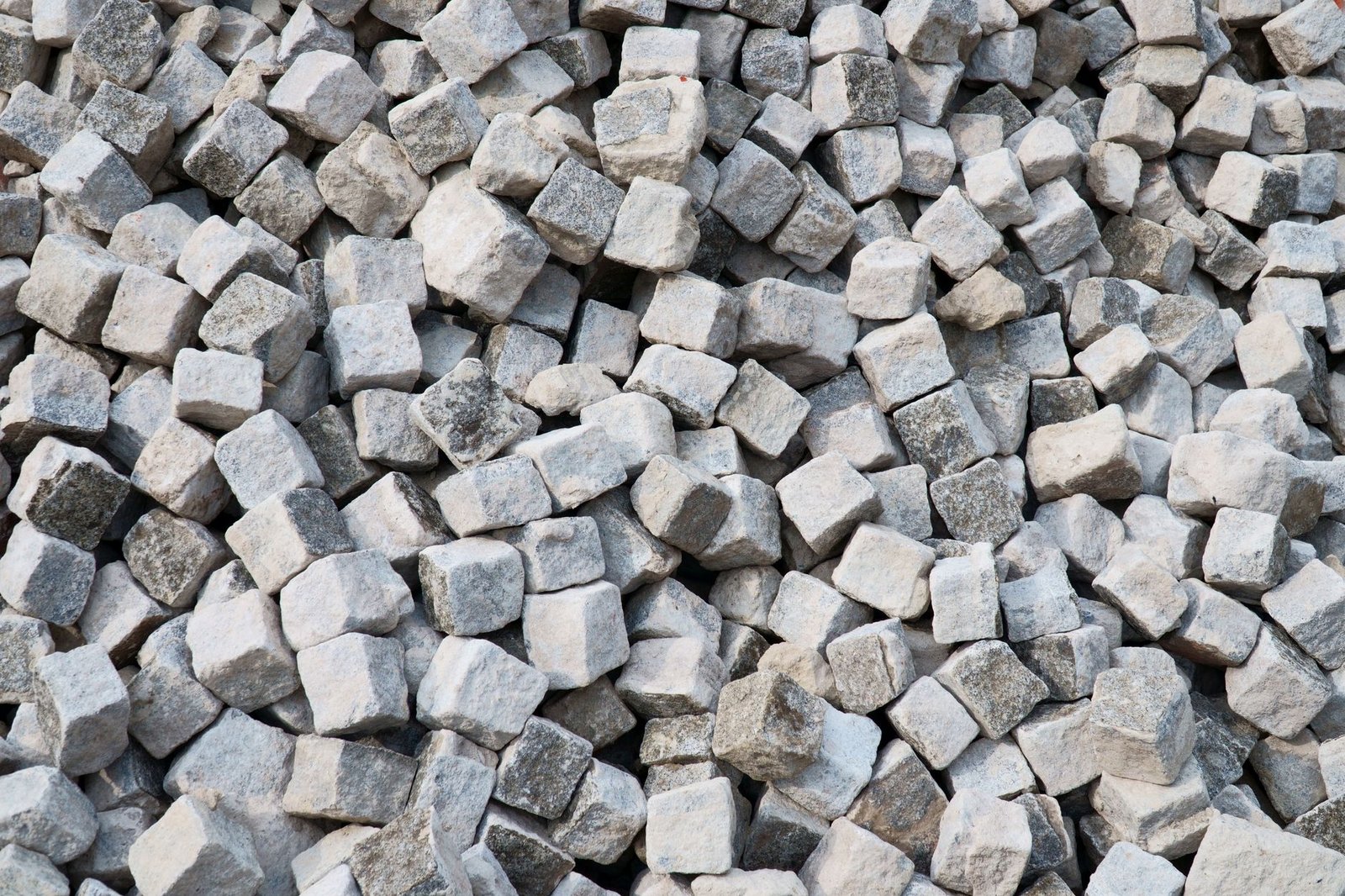
Natural stone covers everything from locally quarried flagstone to imported travertine and granite. The $8 to $30 range is wide because the product is. Irregular flagstone can be cheap to buy but slow to fit, which moves the cost from material into labor. (Flagstone is a jigsaw puzzle where every piece weighs 40 pounds and none of them came with the box.) Sawn, gauged stone costs more to buy but installs faster.
Installed price versus DIY price
Labor and base work are what turn a $4 paver into a $15 to $25 square foot. The published figures show how much of the budget they take.
- Unilock says the pavers make up only about 20% of total project cost. The other 80% goes to labor, excavation, base preparation and other materials. Its guide to paver patio cost puts a 400-square-foot patio at around $12,000 to $16,000.
- LawnStarter lists installed paver patios at $10 to $24 per square foot, with installed ranges of $8–$16 for concrete, $14–$24 for brick and $12–$30 for natural stone. Its paver patio pricing guide estimates DIY at $12 to $17 per square foot against $20 to $27 for a professional, and lists typical rental prices for a sod cutter, wet saw and plate compactor.
- Stone Center separates the installation part: roughly $3 to $8 per square foot for DIY and $7 to $15 per square foot for professional installation, on top of material.
The pattern is the same in every source. DIY saves the labor line, but not the base stone, sand, edging, tool rental or dump fees. It also puts the risk on you. A patio with a thin or badly compacted base sinks, and the repair costs more than doing it right the first time. I went looking for a documented figure on how fast that happens and found only contractor blogs quoting each other, so I won't give you one.
When a pro quote is worth paying
A pro makes more sense when the site needs heavy excavation, sits on clay, slopes toward the house, or has poor access. It also makes sense for large-format slabs, where the base tolerance is tight. Small, flat, rectangular patios on well-drained soil are where DIY pays off most.
The costs a paver quote leaves out
Compare quotes line by line. When one is much cheaper, it has usually dropped or thinned one of these items:
- Excavation and haul-off. A patio is dug 7 to 12 inches deep, depending on base depth. That spoil has to go somewhere, and dumpster or trucking fees add up.
- Base stone. Budget for a compacted crushed-stone layer of 4 inches or more under a patio on well-drained soil (ICPI Tech Spec 2), and 2 to 4 inches more on clay, wet ground or where it freezes. That can run to several tons even on a modest patio. Our paver base guide shows how to estimate the volume.
- Geotextile fabric. It is needed on clay and silty soils.
- Bedding sand. Plan on an inch of C33 concrete sand under the whole patio; stone dust and mason sand aren't substitutes.
- Edge restraint. Plastic, aluminum or concrete edging with spikes runs along every edge that is not against a wall.
- Joint sand. Polymeric sand costs more per bag than plain sand but resists weeds and washout.
- Waste allowance. Order 5 to 10% extra for a simple pattern, and more for herringbone or curves.
- Delivery. NT Pavers lists delivery at about $60 to $200 per order, depending on distance and size.
- Tool rental. A plate compactor and a wet saw for a weekend, plus blades.
- Permits and utility locates. Most patios do not need a permit, but some towns do, especially for raised patios, and some HOAs require approval. Call 811 before you dig; locates are free.
Sealing is optional and can come later. Budget for it only if you want the color enhanced or you expect oil and grease stains. It is the one line item that gets cheaper the longer you ignore it.
What pushes a patio above the average
Stone Center reports that complex patterns such as herringbone and curved layouts add 15 to 40% to project cost, and that difficult access adds $2 to $4 per square foot. The other upward drivers are predictable:
- Shape. Curves and angled edges mean more cuts, more waste and more labor.
- Slope. A sloped yard may need steps, a retaining wall or extra base to level it.
- Soil. Clay needs a deeper base and fabric.
- Features. Seat walls, fire pits, steps, lighting and borders are priced separately and can double a budget.
- Size, in reverse. Small patios cost more per square foot, because setup, delivery and equipment are fixed costs spread over fewer square feet.
How to get the best price on pavers
The best price on pavers is rarely the lowest price per square foot. It is the lowest cost for a patio that stays flat:
- Buy by the full pallet. Suppliers price partial pallets higher and charge the same delivery.
- Stick to one standard size or a common pattern kit if the budget is tight. Multi-size kits and herringbone raise waste.
- Ask about overstock, discontinued colors and seconds. Many yards sell them at a discount; just buy enough, because a discontinued color cannot be topped up later.
- Compare quotes on the same spec. Ask each contractor to state base depth, compaction method, edging type and joint sand. A quote with a 2-inch base is not cheaper; it is a different, weaker patio.
- Do the demolition or cleanup yourself and have a contractor do the base and laying.
A plate compactor is the one tool you should not skimp on for DIY, and also one you shouldn't buy for a single patio. Rent it for a weekend and plan the base and the final paver pass inside the rental. Compact the base in lifts sized to the machine; 4 to 6 inches per lift is ICPI's figure for a 7,000 lbf plate, and a smaller rental needs thinner ones. Our plate compactor rental guide covers what to ask for.
Budget for the base first, then choose the paver
My one strong opinion on this: spend on what's underground first. The compacted stone carries the patio and the pavers only spread the load across it, which is why Unilock's own 20% figure makes sense. Fund a properly dug and compacted base first, then choose the best paver the rest of the budget allows. A mid-range concrete paver on a solid base will outlast premium stone on a thin one. The pavers will still get all the compliments. Let them have it.
FAQ
How much are patio pavers per square foot?
For the pavers alone, Stone Center lists about $2 to $8 per square foot for concrete, $4 to $15 for brick, $10 to $22 for porcelain and $8 to $30 for natural stone. Installed, LawnStarter puts a paver patio at $10 to $24 per square foot, and premium builds can cost more.
Are pavers cheaper than a concrete patio?
Usually not upfront. A plain poured slab costs less to install than pavers. Pavers make up some of the gap over time, because a single sunken or cracked area can be lifted and relaid, while a cracked slab has to be patched or replaced.
How much does a 12×12 paver patio cost?
A 12×12 patio is 144 square feet. Multiply that by the installed range for your material, then add a margin, because small patios cost more per square foot. Using LawnStarter's $10 to $24 installed range gives about $1,440 to $3,460 before extras such as steps or walls.
Is it cheaper to lay pavers yourself?
Yes, because labor is the largest cost. You still pay for base stone, sand, edging, delivery and tool rental. DIY only saves money if you dig deep enough and compact the base properly.
What is the cheapest paver for a patio?
Standard concrete pavers in a basic shape and a single color are the cheapest option. Simple 4×8 holland stones or common square units laid in running bond keep both material cost and cutting waste low.